
Bohol
Philippines · Asia
About Bohol
Bohol is the main island of Bohol Province, which also includes 75 smaller islands. The island lies southeast from Cebu Island and southwest of Leyte Island in the Central Visayas region. This oval-shaped island is the tenth largest of the Philippine archipelago.
Bohol is a haven of tropical natural beauty. The coastline of the island is skimmed by gentle coves and white sand beaches. Bohol is well-known locally as a paradise for divers and snorkelers, though it's not as internationally famous as Boracay. Dolphin watching and whale watching tours are popular with both residents and visiting tourists. The best season is from March to June, but dolphins can be seen year-round. Bohol is famous for its Chocolate Hills; its tarsiers, which may be the world’s smallest primate; its heritage sites and old stone churches.
Bohol travel guide
Getting there
By plane
Panglao Island International Airport (TAG IATA) opened in late November 2018, replacing Tagbilaran Airport. It connects Bohol to Manila, Clark, Cebu, Boracay, Cagayan de Oro, and Davao. Some airlines operating here are: Cebu Pacific, Philippine Airlines and Air Asia. You can get private drivers easily after you get out from the arrival hall, if you don't have transportation arranged with your accommodation. Otherwise, you can take bus or jeepneys from the right side. The bus should come every 20 minutes, bringing you to Tagbilaran Central Terminal for ₱50. From there you can take bus to other destinations.
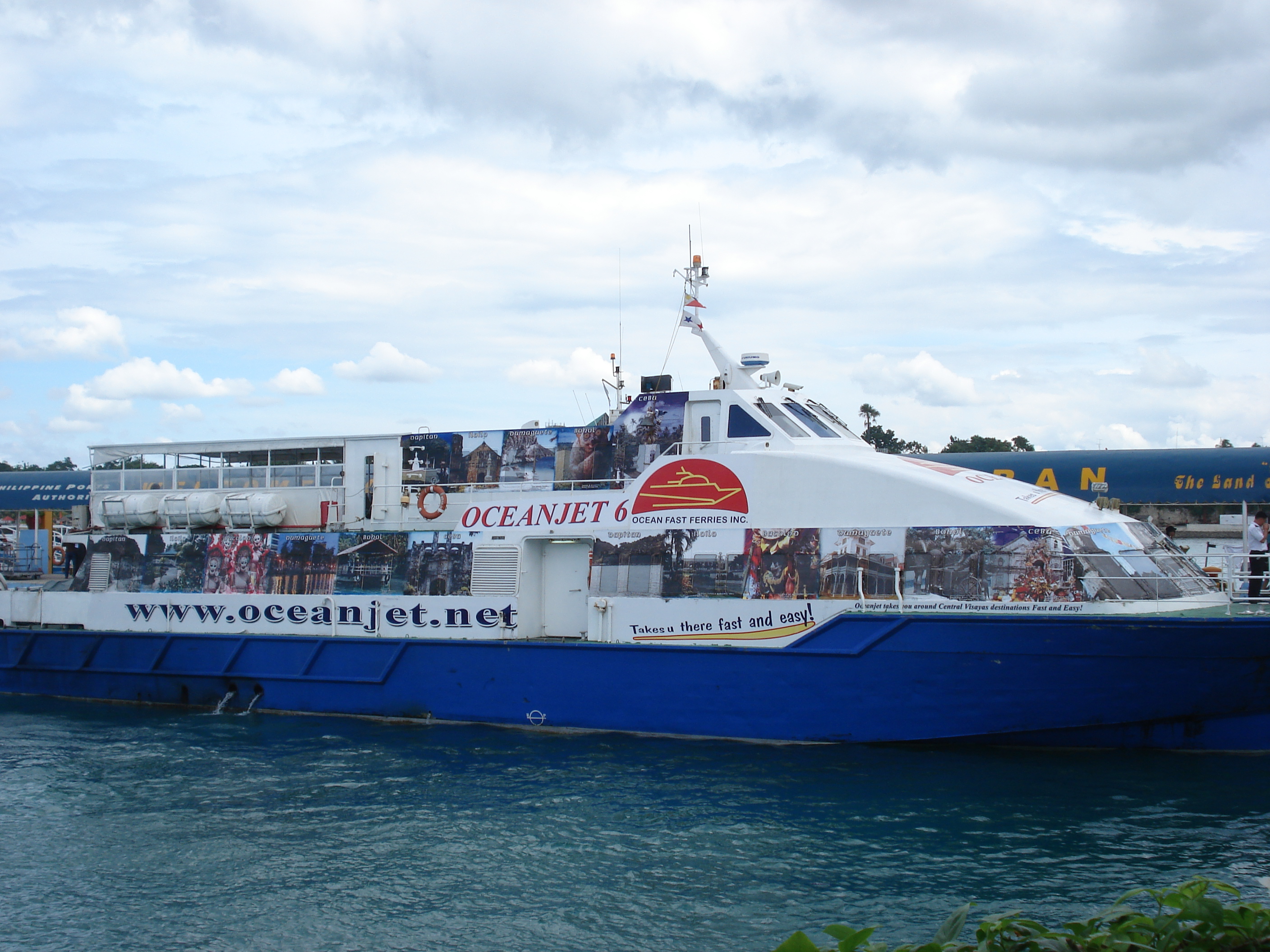
By boat Most tourists reach the island via neighboring Cebu Island. The Tagbilaran City Pier handles more than 4,000 travellers on a daily basis. There is a ₱20 terminal fee for departures from the pier, that must be paid in cash. Seating is often non-existent on the first floor, but there is much more seating on the second floor of the terminal.
Lite Shipping lines has daily connection to Cebu City at noon and 10PM, to Siquijor & Plaridel on M W Sa at 8PM. Oceanjet - daily connections to Cebu City at 7:05AM, 8:20AM, 9:20AM, 11:40AM, 1PM, 2PM, 3:30PM, 4:20PM, 5:30PM, 6:30PM and to Dumaguete daily 10:30AM. This service frequently runs late in the evening. Trans Asia Shipping ferries to Cebu City on Sunday at 10PM and to Cagayan de Oro on M W F at 7PM. 2GO Supper Cat ferries to Cebu City at 6:30AM, 9:25AM, 11:15AM, 5:25PM. 2GO Travel to Metro Manila one time a week. In addition to Tagbilaran, Bohol has four sea ports with regular connections to other Philippine cities:
1 Jagna — ferries to Camiguin, CDO and Butuan 2 Getafe — ferries to Mactan Island in Metro Cebu 3 Tubigon — ferries to Cebu City 4 Ubay — ferries to Bato, the port area of Maasin on Leyte island. Except for Jagna, which provides the main route to Bohol from the south, none of these are of much interest to most travellers, but they are an alternative for some. Bachelor Express bus li
Getting around
Bohol Island is easily accessible by jeepney, private car, bus, taxi, rental car, or motorcycle. Many of the towns in Bohol have a bus terminal where you can get a ride to other towns. Tagbilaran City, the capital of Bohol, has an integrated bus terminal located in Dao, where you can get a bus ride to most towns in Bohol. Most bus lines follow daily schedules. An airport bus travels from the Tagbilaran Island City Mall to Panglao Airport and Alona Beach for ₱50. A van service called UV Express (formerly GT Express), which operates nationwide, often beats a bus ride, since people travelling in public vehicles are always cramped together like farm animals. Most resorts and hotels in Bohol offer day tours which include all the popular tourist spots. There are more motorcycles than cars; you can either rent a motorcycle or take a habal-habal (motorcycle taxi). In Tagbilaran City, commuters usually get from place to place with a tricycle or multicab. Taxis are available sparingly; they usually stand waiting for fares at the two major malls, Bohol Quality and Island City Mall.
See
Tarsiers
For the past 45 million years, tarsiers, a type of primate, have inhabited rainforests around the world, but now they exist on only a few islands in the Philippines, Borneo and Indonesia. In Bohol, the Philippine tarsier (Carlito syrichta) was a common sight in the southern part of the island until the 1960s. Once protected by the humid rainforests and mist-shrouded hills, these mysterious primates struggle to survive, due to poaching and forest clearance for crop growing. Tarsiers are one of the rarest animals in Bohol. The Philippine Tarsier Foundation has acquired 7.4 hectares of land in Corella for a tarsier sanctuary. With the Department of Environment and Natural Resources playing an oversight role, the foundation has asked other Bohol towns with tarsier populations to donate 20 hectares (49.4 acres) of forestland for conservation. It also runs a Tarsier Research and Development Center, which serves as a visitor center and venue for research, as well as a habitat preserve. At the sanctuary, a spacious net enclosure keeps a number of Philippine tarsiers for feeding, captive breeding and display. Here, visitors can observe the Philippine tarsier in their natural habitat. Within the sanctuary, the Philippine tarsiers roam freely and all of them have got used to a 7 ft (2.1 m) high fence that circumscribes the territory and which serves mainly to protect them from predators like feral cats, while maintaining a theoretical chance for tarsiers to leave the enclosure and return as their wish. Tarsiers are totally nocturnal, and sleep during the day. Sanctuaries will request that you refrain from making loud noises or disturbing the Tarsiers.
Chocolate Hills
The Chocolate Hills are probably Bohol's most famous tourist attraction. The hills, which look like giant mole hills, are an unusual geological formation with at least 1,268 individual mounds scattered throughout the municipalities of Carmen, Batuan, and Sagbayan. The hills range from 30 to 50-m h
Do
It is quite possible to have a fine time on Bohol without going scuba diving. The island has fine food and drink and a variety of tourist attractions; see other sections for those. However, Bohol is well-known as a diving destination; it has many fine diving sites, and there are many diving centers which rent equipment, provide guides and boats, and offer training courses at various levels. All can provide the basic Open Water Certificate, and many have more advanced courses as well. See our articles on individual towns and islands for details. There is at least one adventure park: Danao Adventure Park (E.A.T. Danao), Barangay Magtangtang, Danao. 8AM-4PM. Extreme/eco/educational adventure park that offers various activities for all ages. It boasts a sky-ride, zip-line, river tubing, caving and trekking activities. Rates vary depending on choice of package or activity.
There are several uninhabited islands to explore a ten-minute boat ride from Panglao Island. They have no accommodations or infrastructure, but do have fine beaches and are unspoiled, peaceful and rather charming. Virgin Island is a sandbar. Even during low tide, the center part of this crescent moon shaped islet is submerged under 6 inches (15 cm) of water. This flooding divides island into two islets. The submerged part of the islet is a good spot to take photographs because it gives an illusion of walking over the water.
Buy
Bohol is known for its bee farm. The honey they produce has become a popular treat. It is also believed that honey from the Bohol Bee Farm has medicinal uses. Some honey-based local delicacies are available in markets and stores. Peanut Kisses, a confectionery made of peanuts and egg whites, are one of the island's most popular exports and available in stores across the island.
Eat
Kalamay: A sweet, sticky delicacy made from glutinous rice, coconut milk, and sugar. Peanut Kisses: Bite-sized coo
Overview adapted from Wikipedia, travel guide fromWikivoyage (CC BY-SA). Photography via Wikimedia Commons.