
Ban Houayxay
Laos · Asia
About Ban Houayxay
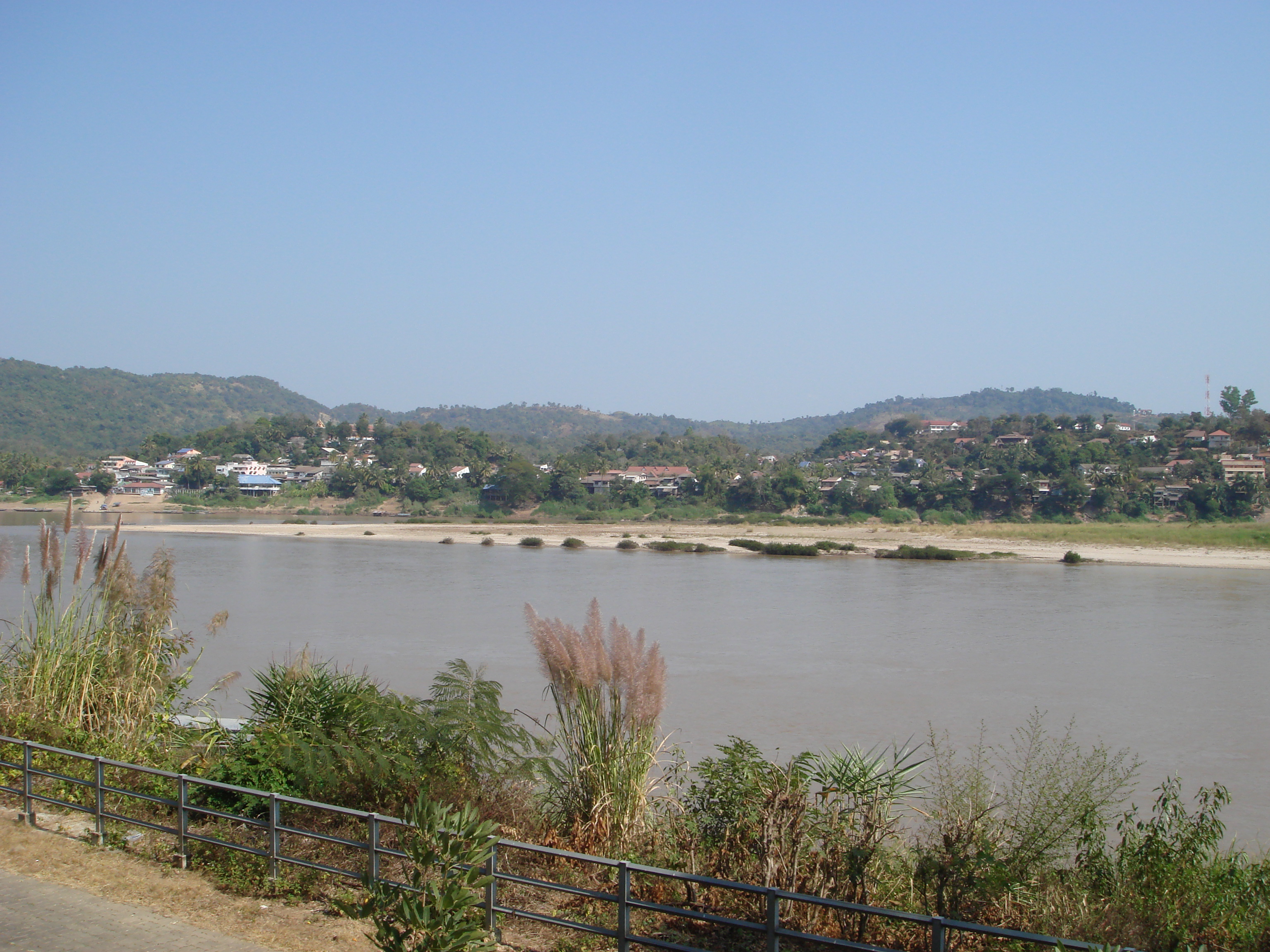
Huay Xai (also Houayxay, Houei Sai etc.) is the capital of the Laos province of Bokeo. It lies on the banks of the Mekong River, which forms the border to Thailand. For most tourists it is seen as a transport stop-over, which is a pity. While there is not much to see in this small town, it's a good place to adapt to Lao life: sit on the banks of the Mekong, have a Beerlao and watch the river flow past, or even better, see the hordes of tourists float past.
Ban Houayxay travel guide
Understand
Huay Xai is right across the river from Chiang Khong, Thailand.
Getting there
Border crossing from Thailand to Laos 1 New Friendship Bridge 4. This bridge is the border crossing between Thailand and Laos. While the border is open from 06:00 to 22:00, the buses only operate from 08:00 to 18:00 which could leave you stranded. (updated May 2017) From Chiang Rai the bus costs 90 baht (Dec 2024) to Chiang Khong town or 140 baht (Dec 2024) to go with the bus directly to the border. If going to Chiang Khong from there you can get a tuk tuk for 50 baht (Dec 2022) per person to the Thai border checkpoint. The bus is as bad as you can imagine and the legs of an average person won't fit.
After completing Thai immigration, you must take a shuttle bus across the bridge (08:00-18:00; 20 baht/person or 25 baht on weekends and after 16:00; 40 baht after 18:00). As it only leaves when reasonably full, you might have to wait for up to an hour. Walking or cycling across the bridge is not allowed. Bikes are transported inside the bus for 100 baht, sometimes including the per-person-fee. At the Laos border checkpoint, an immigration form must be filled out and the passport and a passport-sized photo must be handed to the official (they ask 20 baht fee for stamp). The photo can be obtained in Chiang Khong or in Chiang Rai near the bus station; if you arrive without a passport photo, the official will use a scan of your passport photo (80 baht fee). Most nationals can obtain a 30-day visa-on-arrival. Its price in 2022 was US$40 (cheaper for Thai and Vietnamese nationals). The amount in euros tends to be the same as in US dollars, as the Lao authorities ignore differences in exchange rate. Baht and kip are also accepted, but at a poor rate(40 baht per dollar). There is an official extra "overtime fee" of 10,000 kip / US$1 on weekends and after 16:00. Even if none of this is the case you will still likely be asked for the extra fee, but it is often possible to avoid it by arguing with the official or just walking out fast once the visum is stamped. Still in Dec 2
Getting around
You can walk the main street. For longer distances take a bike taxi. A one-way fare to the Chinese morning market should cost 10,000 kip.
See
1 Fort Carnot. On top of the hill, dominating the Mekong, the French colonial-era Fort Carnot era has undergone some conservation work, but it is still quite dilapidated. One of the towers can be climbed, providing a good view of the Mekong (in 2018 the tower was not accessible due to much scrub). Though not spectacular at all, it's a good way to start one's travel in Laos and remember that the country has been a favorite playground of Western powers for decades. See the view from the temple tower at the top of the hill on the main street, near the border crossing.
Do
1 The Gibbon Experience, main street, Huay Xai, [email protected]. A forest conservation project that raises funds by taking guests into the Bokeo Nature Reserve, home to the Laotian black crested gibbon. Once thought extinct, it is now known that up to 400 people live in this forest. The Reserve is mostly primary monsoon dry deciduous forest, but also contains some lowland slash-and-burn agriculture. The Gibbon Experience is the only way to visit the Reserve. Every other day there is a truck covering the 3½ hours to the last village, where you start your hike to the project. Accommodation is provided in terrific tree houses in giant trees over 40 m high. To access the houses, you glide on a cable from a surrounding hilltop. There is an extensive cable network set up to explore the canopy, providing breathtaking views of the scenery. You can book at their office in Huay Xai or by emailing them. 2 days/1 night: 1,400,000 kip, 3 days/2 nights: 2,450,000 kip. (updated May 2015) 2 Golden Triangle Special Economic Zone (mid-way between Huay Xay and Tachileik; Myanmar). The provincial economy is now dominated by the Golden Triangle Special Economic Zone (GT SEZ). In 2007, the Chinese-owned Kings Romans Group entered into a 99-year lease for 10,000 hectares on the banks of the Mekong. The company was granted 3,000 of these hectares as a duty-free zone, now the SEZ. As gambling is illegal in China, and the SEZ is only a two-hour journey by road from China, casinos and hotels catering to a Chinese clientele were built. As an unintended consequence, a robust industry involving trafficking in endangered animals has grown up around the Chinese tourist trade. Several restaurants in the SEZ serve exotic meats: tiger, pangolin, bear cub and python. Menus openly include such fare as bear paw, monitor lizards, geckos, snakes and turtles. Tiger bone wine is also frequently served. Shops in the SEZ sell animal parts, stuffed animals and ivory, all in contravention of the CITES
Buy
The most important thing to buy is something to eat & drink for the slow-boat journey to Luang Prabang, although nowadays food and drinks are available on most boats. Food is not great, but acceptable.
Money: There's a small bank office offering change for cash and travellers' cheques next to the immigration office. It has no commission and good rates, better than in the town. Most guest houses and restaurants in town deal in baht, kip, and US dollars at decent rates. There are ATMs on the main road straight up the hill from the immigration office with a maximum withdrawal per transaction of 1,000,000 kip. It is better to get baht from Thailand and exchange them here because of the higher limits in Thailand. The official money exchange counter within the border building complex on the Lao side of the bridge has very good exchange rates (less than 2% added to baht rate and less than 1% added to euro rate compared to the exchange rates published by a bank; as of 2015). The bus ticket office at the Thailand side of the border changes baht to kip at market rate. They also change some other currencies. (Nov 2022). Most hotels and mini markets in town change baht to kip but in bad rates. You'd be very lucky to find a rate with just 2.5% overcharge with most of them trading at a 5.5% overcharge. Paying for food directly in baht can easily result in more than 20% overcharge. ATM: BCEL ATMs charge 20,000 kip withdrawal fee (warning: they proceed with transaction even if you press "cancel"!) and exchange currency about 5-6% lower than market rate. Phongsavanh ATM charge 20,000 withdrawal fee and gives maximum of 2,000,000 kip. (Dec 2024)
Eat
Most of the guest houses provide simple meals. Watch the sunset over the Mekong river from a riverside restaurant.
The restaurant next door to the Gibbon Experience office is home to the expat crowd in town. It has a nice garden restaurant and terrace overlooking the Mekong. Daauw Home (go up the steps to the temple and take the first dirt road on the left; you'll see it on the right side). Small bar and restaurant run by Project Kajsiab (a non-profit organisation that seeks to improve the health of the Lao people in Bokeo Province). Dinner 70,000-100,000 kip for
Overview adapted from Wikipedia, travel guide fromWikivoyage (CC BY-SA). Photography via Wikimedia Commons.