

Sri Lanka
Capital: Sri Jayawardenepura Kotte · Asia
Sri Lanka is an island nation in the Indian Ocean, famed for tea, Buddhist culture and tropical scenery. South of India, with about 22 million people, this 'Pearl of the Indian Ocean' produces the world-renowned Ceylon tea. Rich Buddhist heritage, ancient cities and beaches make tourism thrive. After decades of civil war and rebuilding, Sri Lanka recently fell into a severe debt crisis, becoming a case study in small-nation debt and geopolitical rivalry. Sitting astride Indian Ocean shipping routes, where Indian and Chinese influence meet, its trajectory shapes the whole region's strategic map.
Sri Lanka in world rankings
- 61st largest by population in the world (of 219)
- 124th largest by area in the world (of 219)
- 67th largest economy (GDP) in the world (of 178)
- 112th highest GDP per capita in the world (of 178)
- Capital
- Sri Jayawardenepura Kotte
- Population
- 21,444,000
- Area
- 65,610 km²
- Currency
- Sri Lankan rupee
- GDP
- $108.8B
- GDP per capita
- $5,002
- Life expectancy
- 77.7 yrs
- Urban population
- 21%
- Calling code
- +94
- Internet users
- 55%
- Forest cover
- 34%
- Languages
- Sinhala, Tamil
Sri Lanka compared with Taiwan
How Sri Lanka measures up against Taiwan — home to 23.3 million people across 36,193 km².
Countries bordering Sri Lanka

Latest news — Sri Lanka
More news →Sri Lanka Approves Constitutional Amendment to Extend Senior Judges' Tenures
Sri Lanka’s parliament has approved a significant constitutional amendment aimed at extending the service terms of senior judges by two years. The legislat
Sri Lanka Court Convicts 15 Men Over 2019 Easter Sunday Bombings
Sri Lanka’s High Court has convicted 15 men in connection with the devastating 2019 Easter Sunday bombings, marking a significant legal milestone in one of
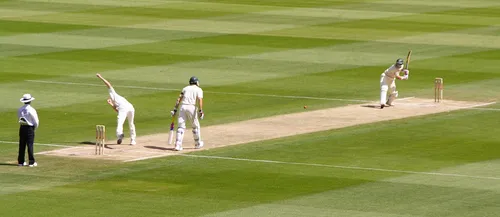
India Women’s Cricket Team Wins Asia Cup, Declines Trophy from Pakistani Official
India’s women’s cricket team clinched its eighth Asia Cup title on Sunday after a decisive 72‑run victory over Sri Lanka in the final held in Colombo. In
Supreme Court cancels monk's pardon, demands completion of prison term
The Supreme Court of Sri Lanka has annulled the 2019 presidential pardon that had granted Buddhist monk Galagoda Aththe Gnanasara a suspended sentence, ord
Panama‑flagged bulk carrier Ocean Winner capsizes; two crew rescued by Indian Coast Guard.
A Panama‑flagged bulk carrier, the MV Ocean Winner, capsized and sank in the Bay of Bengal off eastern India’s coast on Wednesday, 19 August 2024. Two crew

Island of Serenity: A Hidden World of Ancient Ruins and Vibrant Culture
Deep in the Indian Ocean, a gem of an island nation lies hidden, its rich history, vibrant culture, and breathtaking landscapes waiting to be discovered. S
Country profile
Background
The first Sinhalese arrived in Sri Lanka late in the 6th century B.C., probably from northern India. Buddhism was introduced circa 250 B.C., and the first kingdoms developed at the cities of Anuradhapura (from about 200 B.C. to about A.D. 1000) and Polonnaruwa (from about A.D. 1070 to 1200). In the 14th century, a South Indian dynasty established a Tamil kingdom in northern Sri Lanka. The Portuguese controlled the coastal areas of the island in the 16th century, followed by the Dutch in the 17th century. The island was ceded to the British in 1796, became a crown colony in 1802, and was formally united under British rule by 1815. As Ceylon, it became independent in 1948; the name was…
Location
Southern Asia, island in the Indian Ocean, south of India
Climate
tropical monsoon; northeast monsoon (December to March); southwest monsoon (June to October)
Terrain
mostly low, flat to rolling plain; mountains in south-central interior
Natural resources
limestone, graphite, mineral sands, gems, phosphates, clay, hydropower, arable land
Ethnic groups
Sinhalese 74.9%, Sri Lankan Tamil 11.2%, Sri Lankan Moors 9.2%, Indian Tamil 4.2%, other 0.5% (2012 est.)
Religions
Buddhist (official) 70.2%, Hindu 12.6%, Muslim 9.7%, Roman Catholic 6.1%, other Christian 1.3%, other 0.05% (2012 est.)
Languages
Sinhala (official) 87%, Tamil (official) 28.5%, English 23.8% (2012 est.)
Government
presidential republic
Economy
economic contraction in 2022-23 marked by increased poverty and significant inflation; IMF two-year debt relief program following 2022 sovereign default; structural challenges from non-diversified economy and rigid labor laws; heavy dependence on tourism receipts and remittances
Sri Lanka · Travel guide
Understand
History The indigenous inhabitants of the island are the Vedda people. Groups ancestral to the modern Veddas most likely as far back as 40,000 years ago. Today, Vedda people are a tiny minority and their languages and culture are on the verge of extinction due to cultural assimilation. Sri Lanka has more than 2,500 years of continuous written history, beginning with the historical epic Mahawansha, and was also mentioned in several ancient Indian texts. One of the most famous is the Ramayana, in which the island, which was referred to as Lanka, was the island fortress of the king Ravana, who captured the wife of Rama, an incarnation of the Hindu god Vishnu. Legend has it that Hanuman the monkey flew over to Lanka and destroyed the capital by setting it on fire, while Rama and his remaining troops later crossed over from the mainland by building a land bridge across the sea. The island's dominant ethnic group, the Sinhalese, arrived in Sri Lanka in the late 6th century BC, probably from Bengal or Maharashtra. Buddhism came to the island from the middle of the 3rd century BC, and a great civilization developed in cities like Anuradhapura (kingdom from c. 200 BCE to c. 1000 CE) and Polonnaruwa (c. 1070 to 1200). The oldest of Buddhist monuments date to the Anuradhapura period. It was a period where Sri Lanka traded with other civilisations in Asia and Europe, including the Roman Empire. Most notably, Sri Lanka exported cinnamon to the rest of the Old World. Other later famous kingdoms are the Dambadeniya, Yapahuwa, Gampola, Kandy and Jaffna Kingdoms. The second-largest ethnic group in Sri Lanka, the Tamils, began to arrive shortly after the Sinhalese, and their influx was accelerated by the British. Occupied by the Portuguese in the 16th century and the Dutch in the 17th
See
Admission fees for foreigners to many of the tourist sites are up to ten times those for locals. And nowadays even the remotest Buddha statue or waterfall charges Rs 300 or more. Temple of the sacred tooth relic (Dhaladha Maligawa) is a historical structure built around the 16th century to treasure the sacred tooth relic of Lord Buddha. It was b
Getting there
Visa rules Nationals of most countries can apply for an Electronic Travel Authorization (ETA) online, except for nationals of Maldives, Seychelles and Singapore, who do not need an ETA. It allows a stay in the country for 30 days and is valid for six months.Apply before entering the country via the official government website. The applicant will receive an Electronic Travel Authorization (ETA). Visa charges are US$20 for SAARC countries (South Asian Association for Regional Cooperation: Bangladesh; Bhutan; India; Maldives; Nepal and Pakistan) and US$50 for others (2025), plus $2 processing fee. ETA is supposed to be ready in 2 days, though in practice they can be issued in only 10-20 minutes after the payment is received. Transit visas for up to 48 hours are issued free. As of May 2026, citizens of 40 countries are eligible for free ETAs. Alternatively, a tourist visa can be obtained without getting a prearranged ETA right at the Bandaranaike International Airport (at a visa desk in the arrival zone before customs) for US$60. Therefore, online visa is not a pre-condition to board a flight/vessel to Sri Lanka. As of 2025, the required return ticket, as noted in the visa instructions, was not checked for most (if not all) Westerners arriving at the airport. Even if it was and you didn't have one, you should be able to book one on the spot using the airport's WiFi. Important: immigration authorities at Colombo airport are very demanding with respect to the accuracy of the passport number on your electronic travel authorization obtained online. A single digit mistake is taken as a reason to force you to buy a new visa and refer you to some obscure government office in Colombo for refunds of your online payments. Be careful about 1 vs. I and 0 vs. O. The number should exa
Getting around
Sri Lanka has a strong public transport network linking nearly all tourist destinations, making independent travel very easy. Roads can be terrifying due to local driving traditions — see #Stay safe. Together with occasional massive crowds (especially on holidays), often lacking luggage space, buses may not seem like the most appealing way of travel for some. Yet, they offer great opportunities for interaction with locals, are cheap, plentiful and have different price points (express/local; public/private). Harassment of women travelling alone was frequent in the past, but Sri Lanka seems to have grown up since then.
By bus Bus travel in Sri Lanka is cheap. For those on a budget, buses are everywhere, although their safety and ease of use are questionable. As a foreigner you may be overcharged — simply ask for a ticket to your destination to get the correct fare, or ask a local beforehand. After a few days you will get a feel for the correct prices. As a guideline, the price for a normal local bus should be about Rs 5–10/km, the farther the cheaper (5 km ~ Rs 50; and 40 km ~ Rs 200), everything way beyond that is an indication of you getting overcharged. Buses run late, especially in cities, with services ending around 22:00. Google Maps displays incomplete information regarding bus routes and timetables on listings for bus stops. The best bus timetable information on Google Maps appears at bus depots; roadside stops typically have no routes indicated. Check the reviews, as sometimes reviewers attach photographs of the timetables available at the bus stop. There are three categories of buses in Sri Lanka: Public, Private, and Luxury. Public buses are run by the Sri Lanka Transport Board, and are basic, plain, red-painted buses. Routes and timetables for the public bu
Cities & destinations in Sri Lanka 21
World Heritage in Sri Lanka 6
Museums in Sri Lanka 6
National parks in Sri Lanka 6
Airports in Sri Lanka 18
Tallest buildings in Sri Lanka 4
Caves in Sri Lanka 4
Nature reserves in Sri Lanka 12
Ports in Sri Lanka 5
Railway stations in Sri Lanka 12
Hospitals in Sri Lanka 12
Hotels in Sri Lanka 12
Shopping malls in Sri Lanka 6
Stately homes & country houses in Sri Lanka 1
Churches in Sri Lanka 12
Gardens in Sri Lanka 2
City parks in Sri Lanka 12
Music venues in Sri Lanka 5
Town halls in Sri Lanka 1
Racecourses in Sri Lanka 1
Cemeteries in Sri Lanka 5
Observatories in Sri Lanka 1
Prisons in Sri Lanka 4
Mines in Sri Lanka 2
Reservoirs in Sri Lanka 12
Zoos in Sri Lanka 4
Canals in Sri Lanka 1
Palaces in Sri Lanka 1
Botanical gardens in Sri Lanka 6
Monuments & memorials in Sri Lanka 12
Libraries in Sri Lanka 8
Forts & fortresses in Sri Lanka 12
Tunnels in Sri Lanka 4
Power stations in Sri Lanka 12
Archaeological sites in Sri Lanka 7
Monasteries in Sri Lanka 6
Hindu temples in Sri Lanka 12
Mosques in Sri Lanka 5
Cathedrals in Sri Lanka 8
Tallest towers in Sri Lanka 10
Tallest dams in Sri Lanka 12
Explore Sri Lanka by category
Country fields from Wikidata (CC0); flag via Wikimedia Commons; profile from the CIA World Factbook (public domain); travel guide from Wikivoyage (CC BY-SA); GDP, GDP per capita and life expectancy from World Bank Open Data (CC BY 4.0).