

Samoa
Capital: Apia · Oceania
Samoa in world rankings
- 186th largest by population in the world (of 219)
- 177th largest by area in the world (of 219)
- 167th largest economy (GDP) in the world (of 178)
- 103rd highest GDP per capita in the world (of 178)
- Capital
- Apia
- Population
- 200,010
- Area
- 2,842 km²
- Currency
- Samoan tālā
- GDP
- $1.3B
- GDP per capita
- $5,873
- Life expectancy
- 71.8 yrs
- Urban population
- 18%
- Calling code
- +685
- Forest cover
- 58%
- Languages
- Samoan, English
Samoa compared with Taiwan
How Samoa measures up against Taiwan — home to 23.3 million people across 36,193 km².
Latest news — Samoa
More news →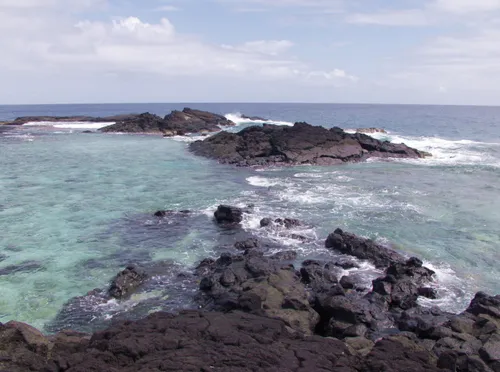
Uncovering the Hidden Gem of the Pacific: The Ancient Culture of Samoa Revealed
Tucked away in the South Pacific Ocean, Samoa is a hidden gem that boasts a rich history, vibrant culture, and breathtaking landscapes. Located about halfw
Country profile
Background
The first Austronesian settlers arrived in Samoa around 1000 B.C., and early Samoans traded and intermarried with Fijian and Tongan nobility. The fa’amatai system of titles and nobility developed, which dominates Samoan politics to this day; all but two seats in the legislature are reserved for matai, or heads of families. A Dutch explorer was the first European to spot the islands in 1722. Christian missionaries arrived in the 1830s and were followed by an influx of American and European settlers and influence. By the 1880s, Germany, the UK, and the US had trading posts and claimed parts of the kingdom. In 1886, an eight-year civil war broke out, with rival matai factions fighting over…
Location
Oceania, group of islands in the South Pacific Ocean, about halfway between Hawaii and New Zealand
Climate
tropical; rainy season (November to April), dry season (May to October)
Terrain
two main islands (Savaii, Upolu) and several smaller islands and uninhabited islets; narrow coastal plain with volcanic, rugged mountains in interior
Natural resources
hardwood forests, fish, hydropower
Ethnic groups
Samoan 96%, Samoan/New Zealander 2%, other 1.9% (2011 est.)
Religions
Protestant 54.9% (Congregationalist 29%, Methodist 12.4%, Assembly of God 6.8%, Seventh Day Adventist 4.4%, other Protestant 2.3%), Roman Catholic 18.8%, Church of Jesus Christ 16.9%, Worship Centre 2.8%, other…
Languages
Samoan (Polynesian) (official) 91.1%, Samoan/English 6.7%, English (official) 0.5%, other 0.2%, unspecified 1.6% (2006 est.)
Government
parliamentary republic
Economy
ower middle-income Pacific island economy; enormous fishing and agriculture industries; significant remittances; growing offshore financial hub; recently hosted Pacific Games to drive tourism and infrastructure growth
Samoa · Travel guide
Understand
The main islands are the result of countless volcanic eruptions, leaving easily visible volcanic cones all over both islands. None of the volcanoes are active, but small earthquakes often rock the island, reminding people of the volcanoes' presence. In September 2009 the south coast of Upolu Island was hit by a devastating tsunami, with much loss of life. The last volcanic eruption was in 1911, on Savaii. The eerie, lifeless lava fields that remain from this event can be visited easily, since the only sealed road on Savai'i goes right through the middle. Both islands are almost entirely covered by lush vegetation, although almost none of it is the original rainforest that covered the island before humans arrived. Most of the land area is given over to farms or semi-cultivated forest, providing food and cash crops for the locals. Since Samoa has been inhabited for over three thousand years, the cultivated lands around villages can often seem like deepest, darkest jungle. The population is around 205,000 in 2021, but many more Samoans live outside the country, particularly in New Zealand, Australia and the United States.
Climate The climate is tropical with a rainy (and tropical cyclone) season from October to March and a dry season from May to October. The country has an average annual temperature of 26.5°C. This makes Samoa an ideal winter holiday destination for tourists living in the southern hemisphere.
History
Samoans arrived from Southeast Asia around 1500-1000 BC. The oldest known site of human occupation dates back to that time and is at Mulifanua on Upolu island. In 1830 missionaries from the London Missionary Society, notably John Williams, arrived and Samoa rapidly embraced Christianity. The Church of Jesus Christ of Latter-day Saints (sometimes referre
See
This is just a summary of what to see. Consult Apia, Savaii and Upolu for more detailed information.
National Parks. There are several national parks in both Upolu and Savaii. These offer tropical vegetation, numerous birds and some interesting lakes. Falealupo Rainforest Preserve on Savaii has a short canopy walkway and you can sleep in the trees. Lake Lanoto'o National Park on Upolu has a fascinating lake where introduced goldfish thrive and grow to amazing sizes. At O le Pupu Pue National Park you can find Togigoiga Waterfalls, the Ma Tree and the Coastal Lava Cliff Walk.
Waterfalls. The inland areas of Savaii and Upolu have some spectacular waterfalls, some with 100m drops. Those on Upolu are a bit more accessible. Papase'ea Sliding Rocks on Upolu have only a slight drop but the vegetation on the falls permits an interesting slide into the pool below. Blowholes. Savaii has some spectacular blowholes caused by the sea forcing water up through tubes in volcanic rocks. Caves. There are interesting caves on both islands. Lava Fields. Parts of Savaii are covered by lava rock, following various eruptions by Mt. Matavanu. There is a large lava field at the end of the O le Pupu Pue National Park Coastal Lava Cliff walk and also some interesting cave like formations at the To Sua Ocean Trench. Villages. Although Western-style buildings are gaining in popularity, traditional Samoan fales are still found everywhere. These are of an oval or circular shape with w
Getting there
Entry requirements Citizens of all countries may visit Samoa without a visa for up to 60 days provided they have a passport that is valid for at least 6 months on their date of entry, an onward or return ticket out of Samoa and a bank statement with proof of sufficient funds to cover their stay. They must also never have been deported from any country, and must not have any serious health issues.
By plane
The main international airport, Faleolo (APW IATA), is approximately a 45-minute drive from Apia. There are several banks at the airport and changing money on arrival is no problem, even though many flights arrive at inconvenient times. Most of the major hotels provide a transfer service on request, often free of charge. There are abundant taxis, and local buses during daytime. If you want to use the local bus, head straight to the main road and go where the locals wait. Ignore taxi-drivers who will want to make you believe there are no local buses. Air New Zealand provides six flights per week from Auckland. Fiji Airways has three flights a week from Nadi in Fiji, and one a week from Honolulu. QANTAS Virgin Australia If flights permit, try to arrive in daylight. From above, the lagoon is a stunning aquamarine colour. The journey between the airport and Apia is also very attractive. Note that shops and restaurants close early and most hotels do not offer 24-hour room service. So if you arrive late at night still hungry after airline food it might be a good idea to pick up something at the airport.
By boat There is a weekly ferry from Pago Pago in neighbouring American Samoa. A twice-monthly service by the MV Tokelau connects Apia Harbour with Tokelau. Depending on the season, people sail their yachts to Samoa and dock at Apia. There are good facilities close t
Getting around
By taxi Generally your best bet. They are cheap and plentiful. The Samoa Tourism Authority, to be found in front of the Government office complex on Beach Road, Apia, has a price list for Apia. Do agree on a price in advance; if they think you look rich they may try to overcharge you. You can get one for a whole day for about the same price as a rental car.
By car Traffic in Samoa drives on the left. Samoa changed from driving on the right-hand side of the road in 2009. Since then there has been an avalanche of cheap, reconditioned cars from Japan and traffic jams, previously unknown, are now common in the capital, Apia. Even on the roads outside the capital traffic tends to move slowly, due to the cautious and inexperienced drivers and to the numerous speed bumps. As international driving licences are not accepted you need to obtain a temporary local licence. These are easy to get from the Samoa Tourism Authority (STA) office at the airport or in Apia, the Land Transport Authority (LTA) in Apia or direct from a number of car rental firms. The cost is WST$21 and it is valid for one month. Details on car rental firms are provided on the pages on Upolu and Savaii.
By scooter As per cars above, international driving licences are not accepted you need to obtain a temporary local licence. These are easy to get from the Samoa Tourism Authority (STA) office at the airport or in Apia, the Land Transport Authority (LTA) in Apia or direct from a number of car rental firms. The cost is WST$21 and it is valid for one month. Details on scooter rental firms are provided on the pages on Upolu and Savaii.
By bus Buses are cheap and a ride on one will be a memorable experience. Buses on Upolu fan out from two locations in Apia, close to the main market and behind the flea mar
Cities & destinations in Samoa 2
Museums in Samoa 2
National parks in Samoa 4
Airports in Samoa 4
Nature reserves in Samoa 3
Churches in Samoa 3
City parks in Samoa 2
Notable schools in Samoa 1
Monuments & memorials in Samoa 1
Libraries in Samoa 2
Power stations in Samoa 1
Archaeological sites in Samoa 2
Cathedrals in Samoa 1
Tallest dams in Samoa 1
Explore Samoa by category
Country fields from Wikidata (CC0); flag via Wikimedia Commons; profile from the CIA World Factbook (public domain); travel guide from Wikivoyage (CC BY-SA); GDP, GDP per capita and life expectancy from World Bank Open Data (CC BY 4.0).