
Arvfurstens palats
Sweden · Europe
About
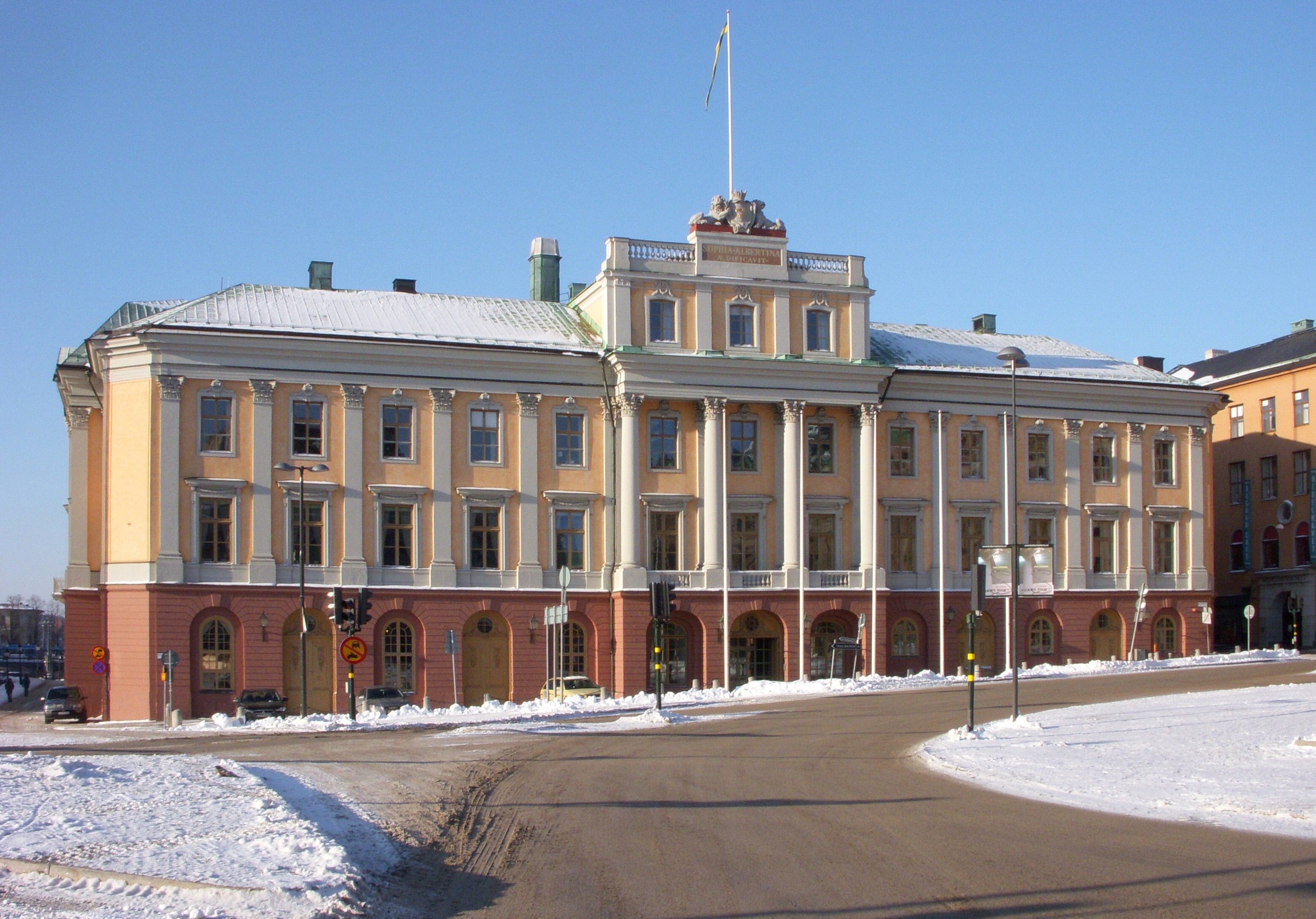
Arvfurstens palats (lit. 'Palace of the Hereditary Prince') is a palace located at Gustav Adolfs Torg in central Stockholm. Originally a private residence, it has been the seat of the Swedish Ministry of Foreign Affairs since 1906. Designed by Erik Palmstedt, the palace was originally the residence of Princess Sophia Albertina. It was built 1783–1794 and declared a historical monument (byggnadsminne) in 1935 and subsequently restored by Ivar Tengbom in 1948–52. The palace is facing the square Gustav Adolfs torg, with the Royal Swedish Opera on the opposite side. Located near the palace are the Sager Palace, official residence of the prime minister, and Rosenbad, official office of the government. The bridge Norrbro stretches past the building of the Riksdag on Helgeandsholmen and further south to Stockholm Old Town and the Royal Palace.
Lennart Torstensson (1603–51), a successful general, bought the area west of the square and had his palace built there 1646–51. The main entrance of this building was facing Fredsgatan, the street passing north of the site, while the southern part of the site was still occupied by one-story wooden structures. This was a German-Dutch Renaissance palace in brick in a style widely favoured all over Europe at this time. One of the rooms from this era is still preserved; the former kitchen now serving as the office of the Chief of Protocol. Lennart's son Anders, governor of Estland, made unsuccessful attempts to sell the property to save his economy, and the palace was subsequently taken over by the Crown in 1696 but eventually given back to Torstensson's heir. King Gustav III's sister Princess Sophia Albertina bought the property in 1793. The king, who wished to give his sister a residence in accordance to her station, commissioned architect Erik Palmstedt to create a new palace which should include the old and adopt the plans for the area north of the Royal Palace. The architect not only had to create a copy of the building on the opposite side of the square, he was also ordered to ensure the old Renaissance palace would be included into the new, a demand which reflects Gustav III's passion for Gustavus Adolphus and his era. While Sophia Albertina, before her death in 1829, had the palace bequeathed to the Swedish heir presumptive (i.e. the hereditary prince), it was during the ensuing decades used by court officials and as offices for various authorities, a faith which would eventually prevail. Before Oscar II became king in 1872, he and his wife Sofia used the palace as their residence, where their son, Gustav V, and other members of the royal family, including Prince Eugén, spent parts of their childhood. The ministry for Foreign Affairs moved there in 1906, but had to share the building with several other authorities until 1936. A comprehensive restoration was made 1948–1952, which among other things resulted in the addition of a building on the courtyard.
During the era of the Swedish Empire, Gustav Adolfs torg, the square in front of the palace, was developed into one of the most prominent public spaces in Sweden. It is centred on the equestrian of Gustavus Adolphus by Pierre Hubert L'Archevêques. This project was based on Tessin the Younger's plans for the rebuilt Royal Palace and its immediate surroundings. East of the square, a new opera building was erected in 1782 (demolished in 1892) and the façade on the western side was designed as a copy of the former, echoing its pilasters and the columns of the accentuated central portion. The entire setting was inspired by the Place de la Concorde in Paris. And like in the French capital, several other aristocratic residences were built in the surrounding area. Some of the grand visions Tessin developed were carried through with the construction of the bridge Norrbro, even though the centrepiece in his plans, a royal church on the northern side of the square, remained a dream. A large Renaissance sandstone portico from the original Torestensson Palace on the northern side, was restored in the 20th century, and its present appearance thus reflects the original design of Diedrich Blume from 1647. An identical portico is still found on the courtyard.
Adapted from Wikipedia (CC BY-SA). Photography via Wikimedia Commons.