
Ardfinnan Castle
Ireland · Europe
About
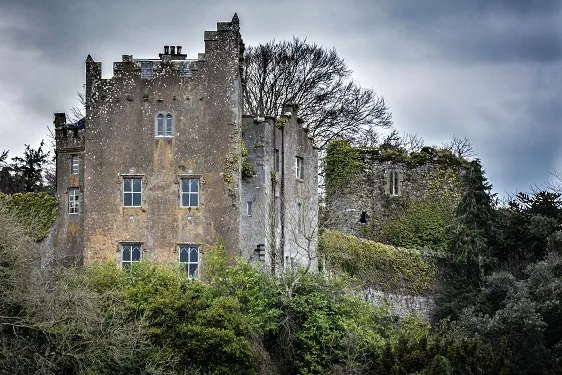
Ardfinnan Castle, is a castle built in 1185 with its sister Lismore Castle, by the river crossing at Ardfinnan (Ard Fhíonáin in Irish) in County Tipperary, Ireland. It is situated on the River Suir, four miles south of Cahir and seven miles west of Clonmel. One of the earliest Norman castles in Ireland, Ardfinnan and Lismore represent the oldest castles built by the Norman Crown in Ireland. The castle and grounds are a private residence and not open for public viewing. The Anglo-Norman castle is positioned on a large rocky incline above a ford in the river, looking out over the Suir valley with the Knockmealdown Mountains to the south, and the Galtee Mountains to the northwest. The castle is a parallelogram in shape with a fortified entrance gateway, keep and circular 13th century preceptory at its eastern corners, while to the west are ruins of two towers and a great hall. The full extent of its structure is hidden by the trees of the Castle Wood. The castle is bound at the riverbank, bridge and road by its old watermill.
The castle was built in 1185 by Prince John of England, then first Lord of Ireland, during his first expedition to Ireland. Ardfinnan and Lismore appear to be the first castles built and occupied by a member of the English Crown in Ireland. To guard the northern border of Waterford from the Gaelic kingdom of Thomond, John's father Henry II of England proposed Ardfinnan and Tybroughney on the fording of the river Suir, with Lismore on the Blackwater as key positions to erect castles, following his visit to these sites with Hugh de Lacy in 1171. He may have handed management of Ardfinnan to the Knights Templar in this year as he did with other sites downstream in Waterford and Wexford. Ardfinnan and Lismore were scenic early-Christian monastic sites on Saint Declán's 5th century pilgrim path developed into important abbeys by Saint Mochuda around 632 AD. John arrived in Waterford in April 1185 and built Ardfinnan castle on the former site of Ardfinnan Abbey, twelve miles directly north of its sister at Lismore Castle, constructed around the same time that year. Lismore Castle was also built over its former abbey. Maurice de Prendergast protected the royal castle of Ardfinnan or “Castrum de Harfinan” as its governor. John issued royal charters during his brief stay at the castle, with Hugh de Lacy as witness. One of these is signed "King of Limerick" and may be the first instance a member of the English crown titled himself a king of territory in Ireland. Numerous raiding parties were launched from the castle into the surrounding north and western territories. In opposition to John's construction of the castles, Lismore Castle was taken by surprise in an attack by the Irish, and its governor, Robert de Barry, was slain along with his entire garrison. King of Munster Donal O'Brien, King of Connacht Rory O'Conner and King of Desmond Dermod MacCarthy, now headed for Ardfinnan. Opposite the imposing castle and on the other side of the river, O'Brien became aware that he would not be able to take it by force. Feinting retreat, he was pursued by the small garrison of knights holding Ardfinnan Castle. Having drawn them out of their stronghold, he swiftly turned back towards Ardfinnan and surrounded the now exposed knights, slaying a large portion of them and subsequently taking Ardfinnan Castle. After this and further successive defeats against the Irish Kings, John's original force of 300 men was decimated and by December 1185, he was summoned back to England by his father, leaving Hugh de Lacy at Ardfinnan. Ardfinnan is subsequently referred to as an administrative cantred, under Philip of Worcester. Philip had been Governor of Ireland from 1184 and would subsequently replace Hugh de Lacy who died in 1186. As land was secured to the north, Philip was granted the barony of Kiltenenan in 1194, of which Cahir Castle, 4 miles north of Ardfinnan Castle, became the chief seat. Ardfinnan Castle under Norman control, an enquiry led by King John in 1206 reasserted its ownership by the English Crown. The cantred of Ardfynan (Ardfinnan) was again granted in 1215 to Philip of Worcester by Henry III, but three years later was again a possession of the English Crown. Philip's nephew, William of Worcester paid a fee of contract for the cantred of Ardfynan in 1225 to Henry III, indicating the continued royal status of Ardfinnan Castle and its surrounding cantred. The castle had a continued presence of the monastic military order of the Knights Templar, and later the Knights Hospitaller. The Hospitaller's later credit Philip of Worcester and the king for the origin of their estate at Ardfinnan, after it passed to them from the Templars but it is not known if they existed here simultaneously. Maurice de Prendergast, as said to be the castle's first Governor was also an early Grand Prior of the Knights Hospitaller in Ireland at the Grand Priory at Kilmainham in 1203. In 1177 he gave Prendergast Castle in Wales to the Knights Hospitaller. The Templars had two watermills on the River Suir as part of their first chartered land grants in Ireland in 1172 and may be indicative of their presence at Ardfinnan for its monastic watermill and fertile land in the centre of the mountain valley. While the Templars managed this important pass into Waterford and between the ecclecsiatical centres of Cashel and Lismore, they constructed the castle's surviving round tower or Templar preceptory in the late 12th or early 13th century. The tower has been identified as a chief preceptory of the order when they first came to Ireland according to McCurtin's Annals. It's traditionally believed the Templars established the Ardfinnan woollen mills in the 12th century, alongside a fulling mill, to finish locally woven cloth around the confines of the castle while also corn milling at the ancient monastic mills on the river bank below the castle. As a vertically integrated system it would have been an early woollen mills. They had established numerous fulling mills in England for the first time in 1185, the same year Ardfinnan Castle was officially built. This would have supported earlier traditions and infrastructure brought by the monasteries and even reused a mill race and weir from the former Ardfinnan Abbey. The 13th to 16th century also saw a boom in exports of woollen Irish cloaks to mainland Europe from the port of Waterford, on which border Ardfinnan Castle defended and was directly navigable downstream via the river Suir. Dyers principally ran fulling mills in this era. A freeman (skilled artisan) named William le Teynturer (Norman English: William the Dyer) is recorded in the town of Ardfinnan in 1295. Following dissolution of the Templars in 1312, their estates were transferred to the Hospitallers and according to the Hospitaller's register of chapter acts 1326–1339 were in possession of "the burgages in the town of Arfinan (Ardfinnan) and the church and all the tithes and appurtenances thereof" and as part of a charter agreed to a free church with appointment of a chaplain to minister daily. The scale of the economic success of the Hospitallers is evident when Ardfynan was exempted from customs and sanctions by an act of the Parliament of Ireland passed in 1449.
Adapted from Wikipedia (CC BY-SA). Photography via Wikimedia Commons.