
Abbasid Palace
Iraq · Asia
About
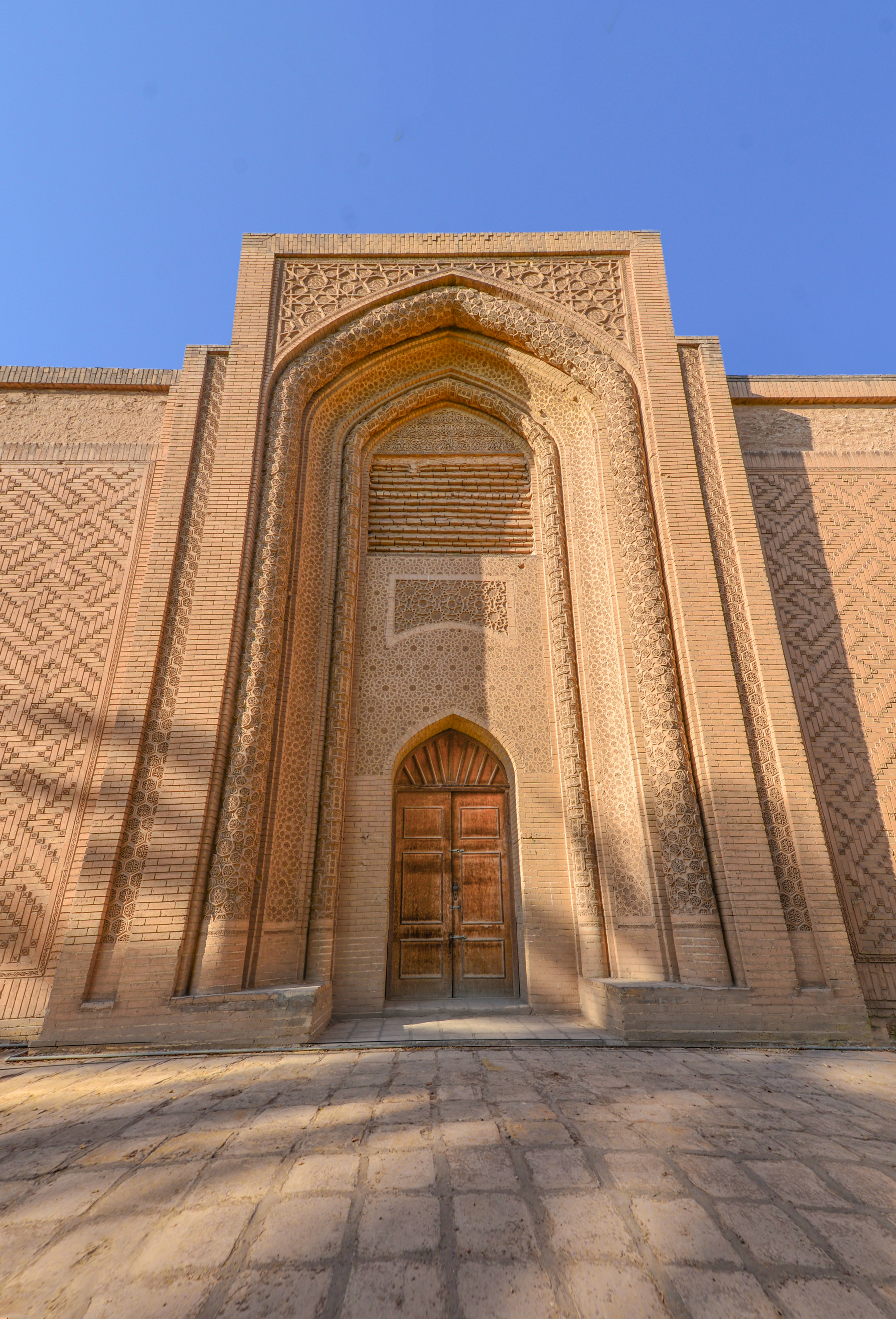
The Abbasid Palace (Arabic: القصر العباسي, romanized: al-Qaṣr al-ʿAbbāsī) is the conventional name of a late Abbasid-era brick complex in Baghdad, Iraq. Its original identity and function remain disputed. It has been identified as either a palace of the Abbasid caliph al-Nasir or a madrasa commonly identified as the Sharabiyya Madrasa. The building stands near the eastern bank of the Tigris in the al-Rusafa district and is generally dated to the late 12th or early 13th century. North of al-Mutanabbi Street and a part of al-Maidan area. The palace dates back to the late 12th or early 13th century. It was most likely built by the Abbasid caliph al-Nasir (although this is disputed). Fortified walls with elevated walkways and vantage points surround the complex. The Abbasid Palace is one of the few remaining examples of Abbasid-era buildings in Baghdad along with the Mustansiriyya Madrasa and others. After falling into ruin, it was heavily reconstructed during the 20th century. The Abbasid Palace is considered one of the most important archaeological buildings in Baghdad due to its age and Islamic architecture. The area in which the palace is located in, as well as the palace itself, are a part of a tentative UNESCO World Heritage Site.
The palace was said to be built under the reign of Abbasid Caliph al-Nasir and includes special examples of Islamic architecture and façade of that time. During the early 20th-century, the German archeologist Ernst Herzfeld would examine the complex for the first time. At the time, he referred to it as "Iwan al-Qal'ah" since the only remains of the complex are the large gate and the courtyard with vague inscriptions. Several excavation and restoration missions would then materialize over the complex between 1933 and 1970. But the palace was left mostly untouched until 1980 under the leadership of former president Saddam Hussein when the palace was restored to its current form and also served as the headquarters for the former Iraqi House of Culture and Arts.
During the many episodes of archeology, restoration, and excavations, many discoveries were made such as the northern side of the courtyard is occupied by a structure that is topped by six domes suggesting Ottoman-like features. But no epigraphic evidence was found to suggest this was a caliph's palace or to back up its origins in general. Due to this, researchers and historians studying the complex gave it many names according to their opinions and research. It was first called Iwan al-Qal'ah or the Palace of the Castle. They also debated on which of the Abbasid palaces this one was if it was one. Some historians, including Iraqi historians Mustafa Jawad and Ya'qub Sarkis, supported the idea that it was the palace of caliph al-Nasir, relying on historical and schematic evidence, including what Andalusian traveler Ibn Jubayr mentioned on his trip to Baghdad where he reported seeing Caliph al-Nasir as he descended with his boat to his palace at the top of the eastern side on the Tigris River's shore. This matches with the location of the palace as it is at the top of the eastern side along with the old wall of Baghdad that still has its foundations remaining in the wall of the palace. Al-Nasir demolished the walls and built this palace in its place between 1180 and 1184. The architecture of the complex is also an important factor as it mirrors the architecture of another Abbasid structure, the Mustansiriyya Madrasa. Factors such as the gate, the iwans, and the structure suggest it dates back to the Abbasid Caliphate. Traditionally, its considered a place where the caliph would meet dignitaries and visitors. Although it was also argued that the palace may belong to Caliph al-Mustansir or that the building was a madrasa called the "Sharabiyya Madrasa" instead of an Abbasid caliph's palace. Many scholars have rejected the idea that this complex was intended to be a palace. Suggesting that it was the Sharabiyya Madrasa, or at the very least a madrasa, instead due to its architectural similarities to the Mustansiriyya Madrasa. Mainly, the architecture and the two levels contain side rooms that are large enough to be classrooms and house students. Despite arguments that the complex was allegedly a madrasa, there is also evidence that challenges this perspective. The historical sources suggest that the complex's location was home to the old Baghdad citadel and historically has been an administration center. Furthermore, historical sources have been silent on the alleged madrasa and that medieval complexes often share typological features. Therefore, it has been agreed that the complex may have been at least an Abbasid palace.
Adapted from Wikipedia (CC BY-SA). Photography via Wikimedia Commons.