
Shangri La Museum
United States · Americas
關於
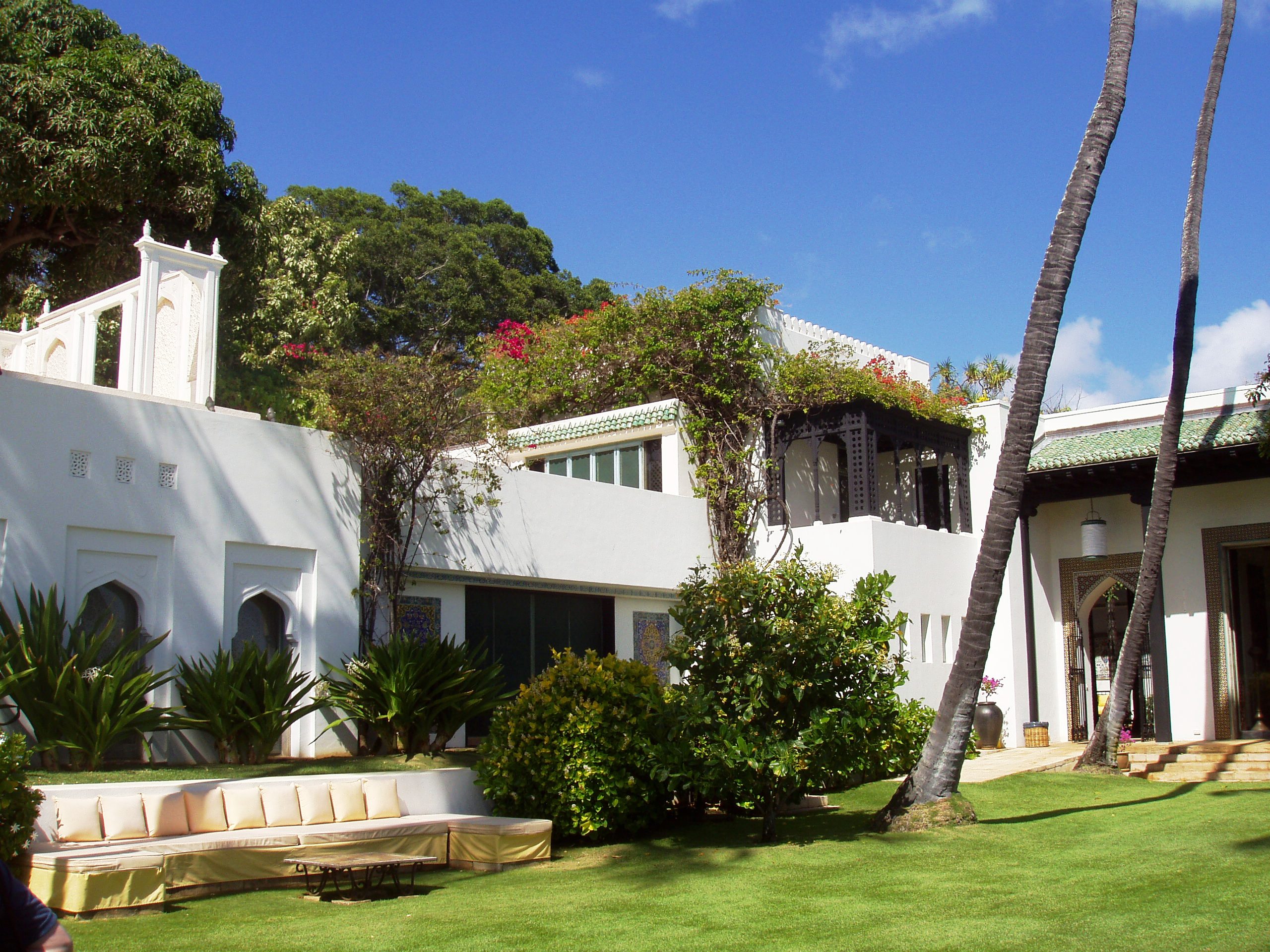
The Shangri La Museum of Islamic Art, Culture & Design is housed in the former home of Doris Duke near Diamond Head in Honolulu, Hawaii. It is now owned and operated as a public museum of the arts and cultures of the Islamic world by the Doris Duke Foundation for Islamic Art (DDFIA), a branch of the Doris Duke Foundation. Guided tours depart from the Honolulu Museum of Art, which operates the tours in co-operation with DDFIA.
Construction of Shangri La took place from 1936 to 1938, after Doris Duke's 1935 honeymoon, which took her through the Islamic world. Her travels through Egypt, India, and the Middle East inspired her to design a home that reflected the beauty, diversity, and craftsmanship of Islamic art and architecture. Duke's experiences across North Africa and South and Southeast Asia also shaped her vision of combining Islamic design with the natural landscape of Hawaiʻi.
For nearly 60 years, Duke commissioned and collected artworks for the space, eventually forming a collection of over 4,000 objects. The structure was designed by Marion Sims Wyeth, and Duke personally collaborated with artisans to incorporate Moroccan ceilings, Persian tilework, and Mughal-style gardens into the home’s design. Over time, she expanded her collection to nearly 4,500 artworks, particularly strong in ceramics, wood, glass, and textiles dating from 1600 to 1940 CE.
An artistic reflection of the construction of Shangri La can be found in Kiana Davenport's novel Song of the Exile. The building was opened to the public as a museum, the Shangri La Museum for Islamic Art, Design & Culture, in 2002. It remains the only museum in the United States dedicated exclusively to Islamic art, continuing Duke’s wish that Shangri La be open to students, scholars, and others interested in the appreciation and study of Islamic art.
The building was opened to the public as a museum, the Shangri La Museum for Islamic Art, Design & Culture, in 2002.
內容改寫自 Wikipedia (CC BY-SA)。照片來自 Wikimedia Commons.