
Sollipulli
Chile · Americas
關於
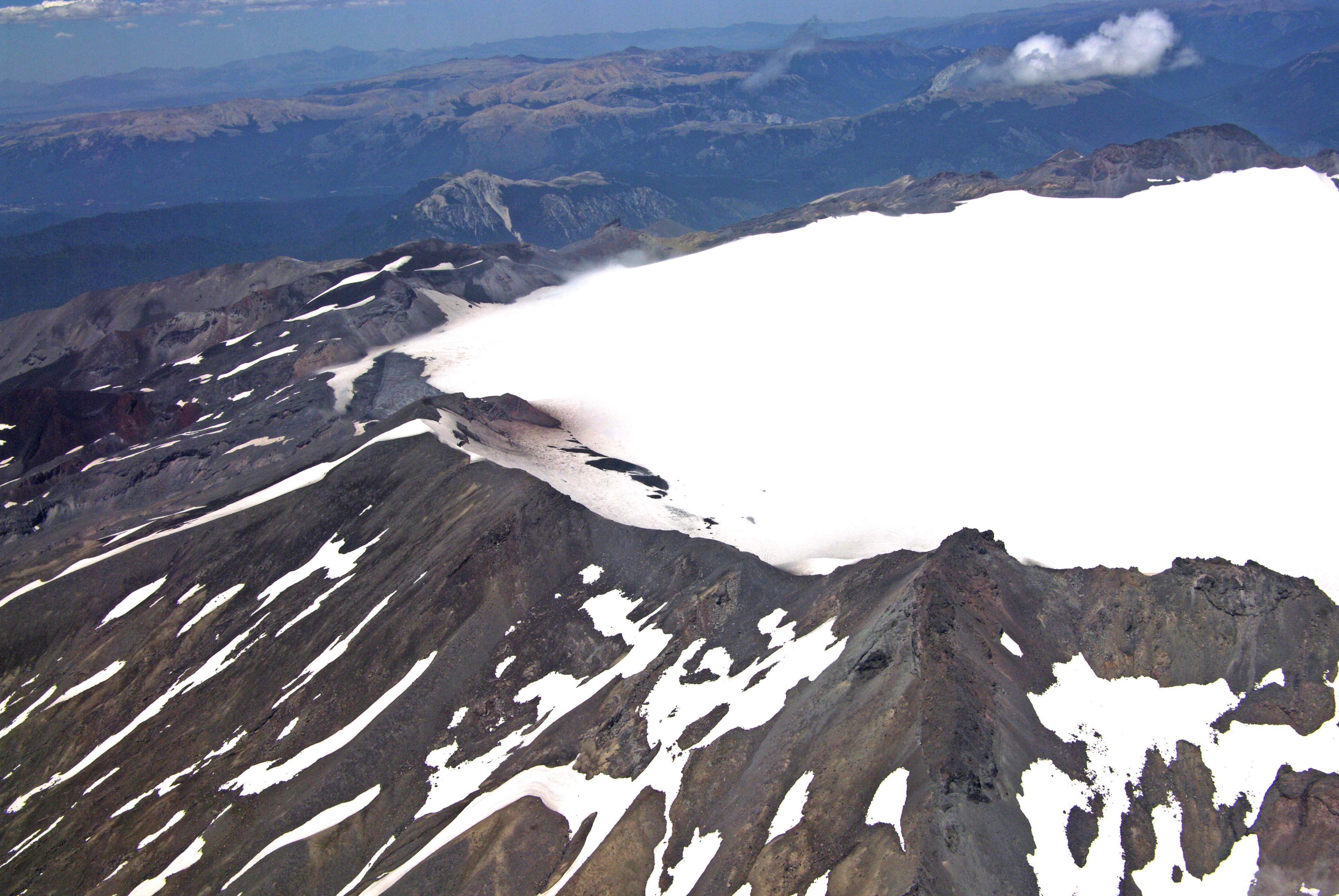
Sollipulli (Spanish pronunciation: [soʝiˈpuʝi]; lit. 'reddish mountain' in the Mapuche language) is an ice-filled volcanic caldera and volcanic complex, which lies southeast of the small town of Melipeuco in the La Araucanía Region, Chile. It is part of the Southern Volcanic Zone of the Andes, one of the four volcanic belts in the Andes chain.
The volcano has evolved in close contact with glacial ice. It differs from many calderas in that Sollipulli appears to have collapsed in a non-explosive manner. The age of collapse is not yet known, but it is presently filled with ice to thicknesses of 650 m (2,130 ft). The ice drains through two glaciers in the west and the north of the caldera. Sollipulli has developed on a basement formed by Mesozoic and Cenozoic geological formations.
Sollipulli was active in the Pleistocene and Holocene epochs. A large Plinian eruption occurred 2,960–2,780 years before present, forming the Alpehué crater and generating a high eruption column and ignimbrite deposits. The last activity occurred 710 ± 60 years before present and formed the Chufquén scoria cone on the northern flank.
內容改寫自 Wikipedia (CC BY-SA)。照片來自 Wikimedia Commons.