
Mount Mazama
United States · Americas
關於
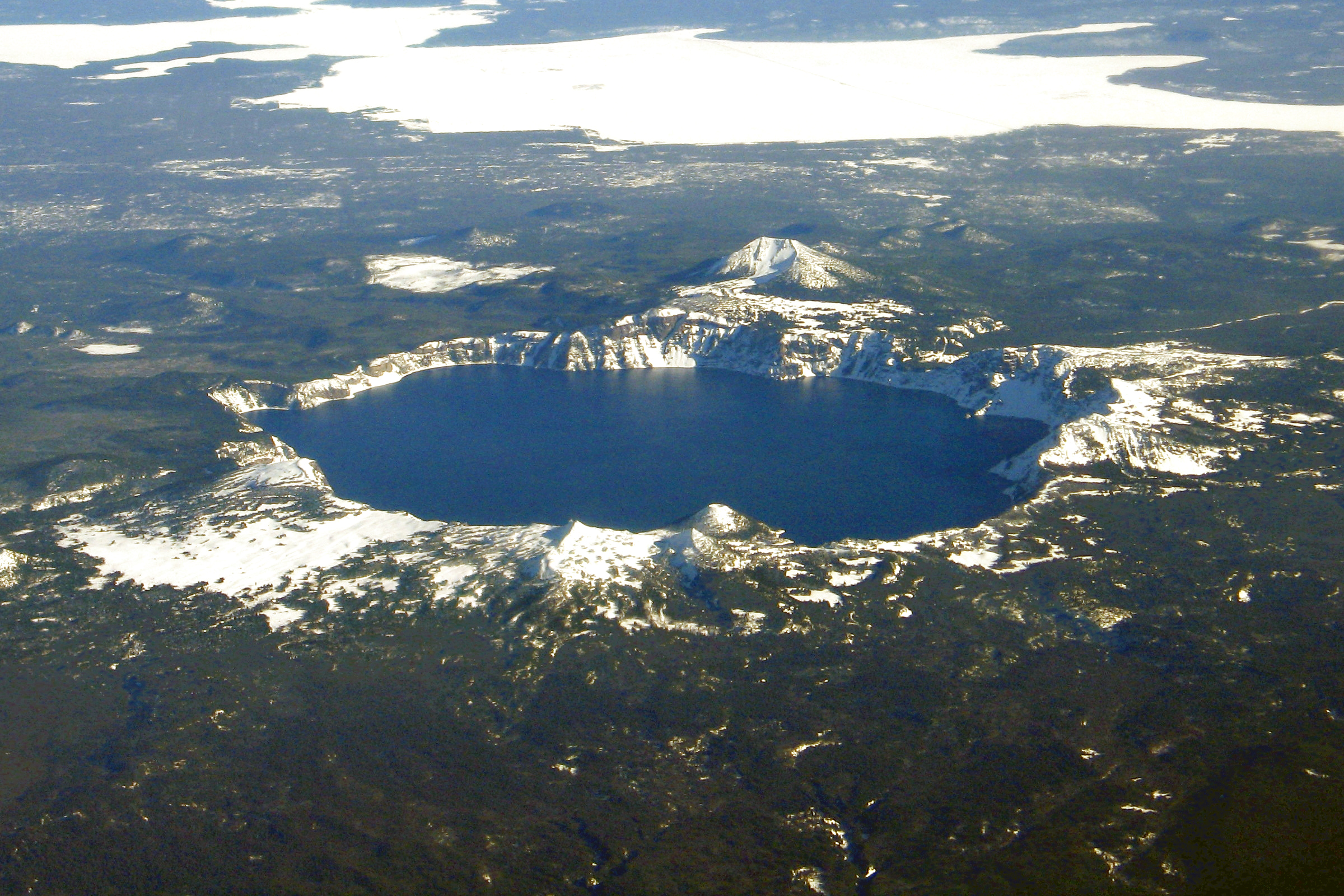
Mount Mazama (Klamath: Tum-sum-ne) is a complex volcano in the western U.S. state of Oregon, in a segment of the Cascade Volcanic Arc and Cascade Range. The volcano is in Klamath County, in the southern Cascades, 60 miles (97 km) north of the Oregon–California border. Its collapse, due to the eruption of magma emptying the underlying magma chamber, formed a caldera that holds Crater Lake (Giiwas in the Klamath language). Mount Mazama originally had an elevation of approximately 12,000 feet (3,700 m), but following its climactic eruption this was reduced to 8,157 feet (2,486 m). Crater Lake is 1,943 feet (592 m) deep, the deepest freshwater body in the United States and the second deepest in North America after Great Slave Lake in Canada.
Mount Mazama formed as a group of overlapping volcanic edifices such as shield volcanoes and small composite cones, becoming active intermittently until its climactic eruption 7,700 years ago. This eruption, the largest known within the Cascade Volcanic Arc in a million years, destroyed Mazama's summit, reducing its approximate 12,000-foot (3,700 m) height by about 1 mile (1,600 m). Much of the edifice fell into the volcano's partially emptied neck and magma chamber, creating a caldera. The region's volcanic activity results from the subduction at the Cascadia subduction zone, and is influenced by local extensional faulting. Mazama is dormant, but the U.S. Geological Survey says eruptions on a smaller scale are likely, which would pose a threat to its surroundings.
Native Americans have inhabited the area around Mazama and Crater Lake for at least 10,000 years and the volcano plays an important role in local folklore. European-American settlers first reached the region in the mid-19th century. Since the late 19th century, the area has been extensively studied by scientists for its geological phenomena and more recently for its potential sources of geothermal energy. Crater Lake and Mazama's remnants sustain diverse ecosystems, which are closely monitored by the National Park Service because of their remoteness and ecological importance. Recreational activities including hiking, biking, snowshoeing, fishing, as well as cross-country skiing are available; during the summer, campgrounds and lodges at Crater Lake are open to visitors.
內容改寫自 Wikipedia (CC BY-SA)。照片來自 Wikimedia Commons.