
Verona
Italy · Europe
關於
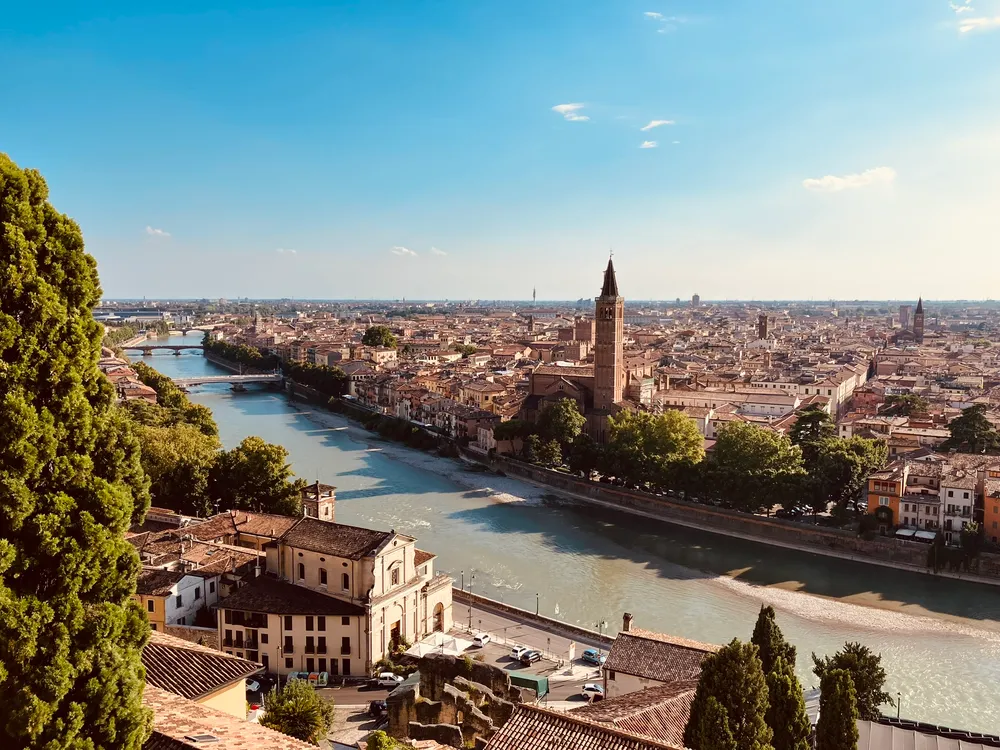
Verona ( və-ROH-nə, Italian: [veˈroːna] ; Venetian: Verona or Veròna) is the largest city in the region of Veneto in Italy, with 255,131 inhabitants. It is one of the seven provincial capitals of the region, and is the largest city municipality in the region and in northeastern Italy. The metropolitan area of Verona covers an area of 1,426 km2 (550.58 sq mi) and has a population of 714,310 inhabitants. It is one of the main tourist destinations in Northern Italy because of its artistic heritage and several annual fairs and shows as well as the opera season in the Arena, an ancient Roman amphitheater.
Between the 13th and 14th centuries, the city was ruled by the della Scala family. Under the rule of the family, in particular of Cangrande I della Scala, the city experienced great prosperity, becoming rich and powerful and was surrounded by new walls. The della Scala era is preserved in numerous monuments around Verona.
Two of William Shakespeare's plays are set in Verona: Romeo and Juliet (which also features Romeo's visit to Mantua) and The Two Gentlemen of Verona. It is unknown if Shakespeare ever visited Verona or Italy, but his plays have lured many visitors to Verona and surrounding cities. Verona was also the birthplace of Isotta Nogarola, who is said to be the first major female humanist and one of the most important humanists of the Renaissance. In November 2000, the city was declared a World Heritage Site by UNESCO because of its urban structure and architecture.
內容改寫自 Wikipedia (CC BY-SA)。照片來自 Wikimedia Commons.