
Shushtar Historical Hydraulic System
Iran · Asia
關於
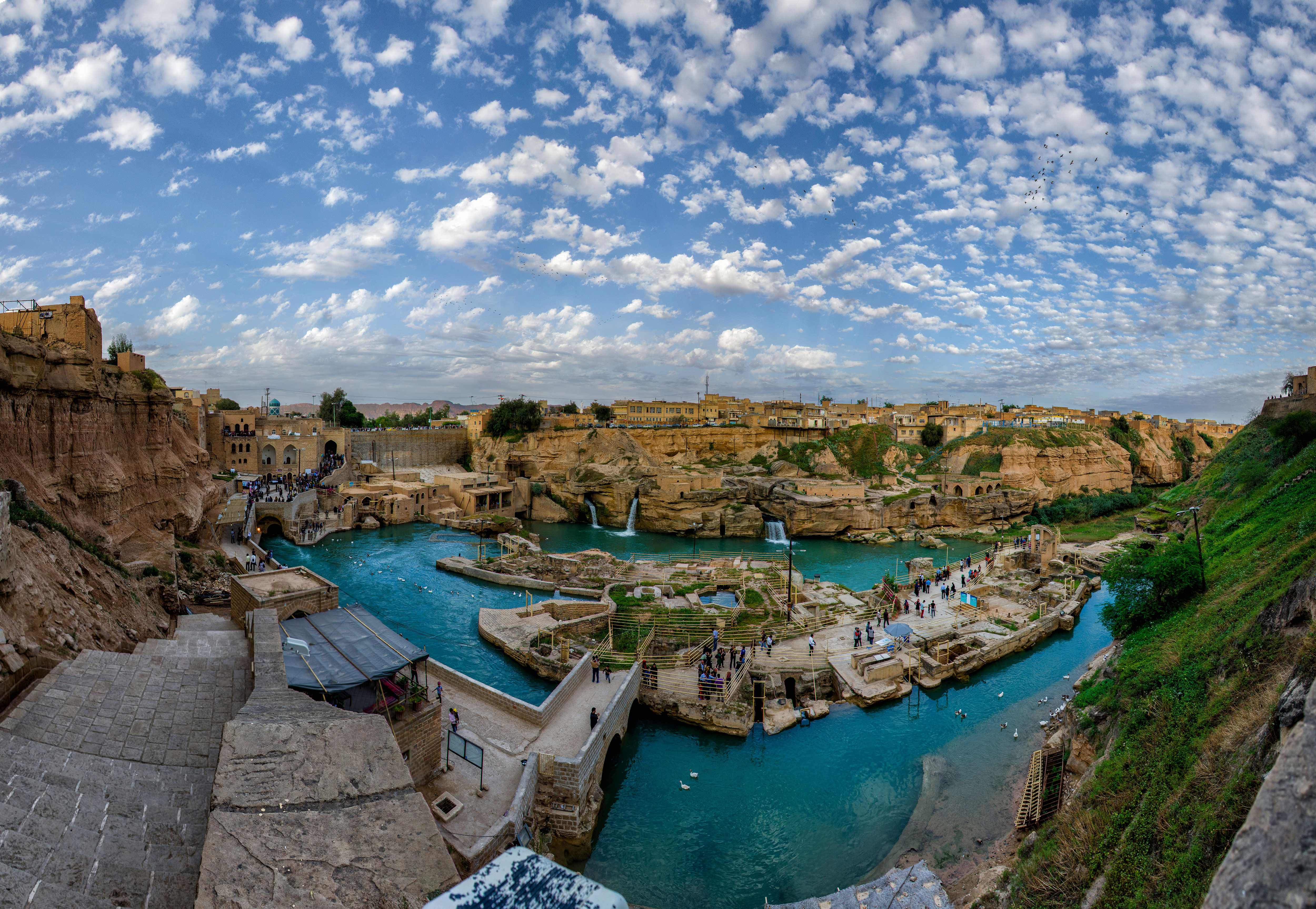
The Shushtar Historical Hydraulic System (Persian: سازههای آبی شوشتر) is a complex irrigation system of the island city Shushtar from the Sasanian era. It consists of 13 dams, bridges, canals and structures which work together as a hydraulic system.
Located in Iran's Khuzestan province, it was registered on UNESCO's list of World Heritage Sites in 2009 and is Iran's 10th cultural heritage site to be registered on the United Nations' list.
This engineering masterpiece is unique both in Iran and in the world. The Sassanids, whose economy was mainly dependent on agriculture, developed extensive irrigation systems in this region.
Infrastructure included water mills, dams, tunnels, and canals. Gargar Bridge-Dam was built on the watermills and waterfalls. Bolayti Canal is situated on the eastern side of the falls, and functions to supply water from behind the bridge-dam's ridge to the east side of the watermills, channeling the water to prevent damage to the mills. Dahaneye Shahr Tunnel (city orifice) is one of the three main tunnels which channel water from behind the Gargar Bridge-Dam into several water mills. The Seh kooreh Canal directs water from behind the bridge-dam to the western side of the complex. In the water mills and waterfalls, we can see a perfect model of haltering to run mills.
The Band-e Kaisar ("Caesar's dam"), an approximately 500-metre (1,600 ft) long Roman weir across the Karun, was the key structure of the complex which, along with the Mizan Dam (Band-e Mizan), retained and diverted river water into irrigation canals in the area. Built by a Roman workforce in the 3rd century AD on Sassanid orders, it was the most eastern Roman bridge or Roman dam and was the first structure in Iran to combine a bridge with a dam.
內容改寫自 Wikipedia (CC BY-SA)。照片來自 Wikimedia Commons.