
Rjukan–Notodden Industrial Heritage Site
Norway · Europe
關於
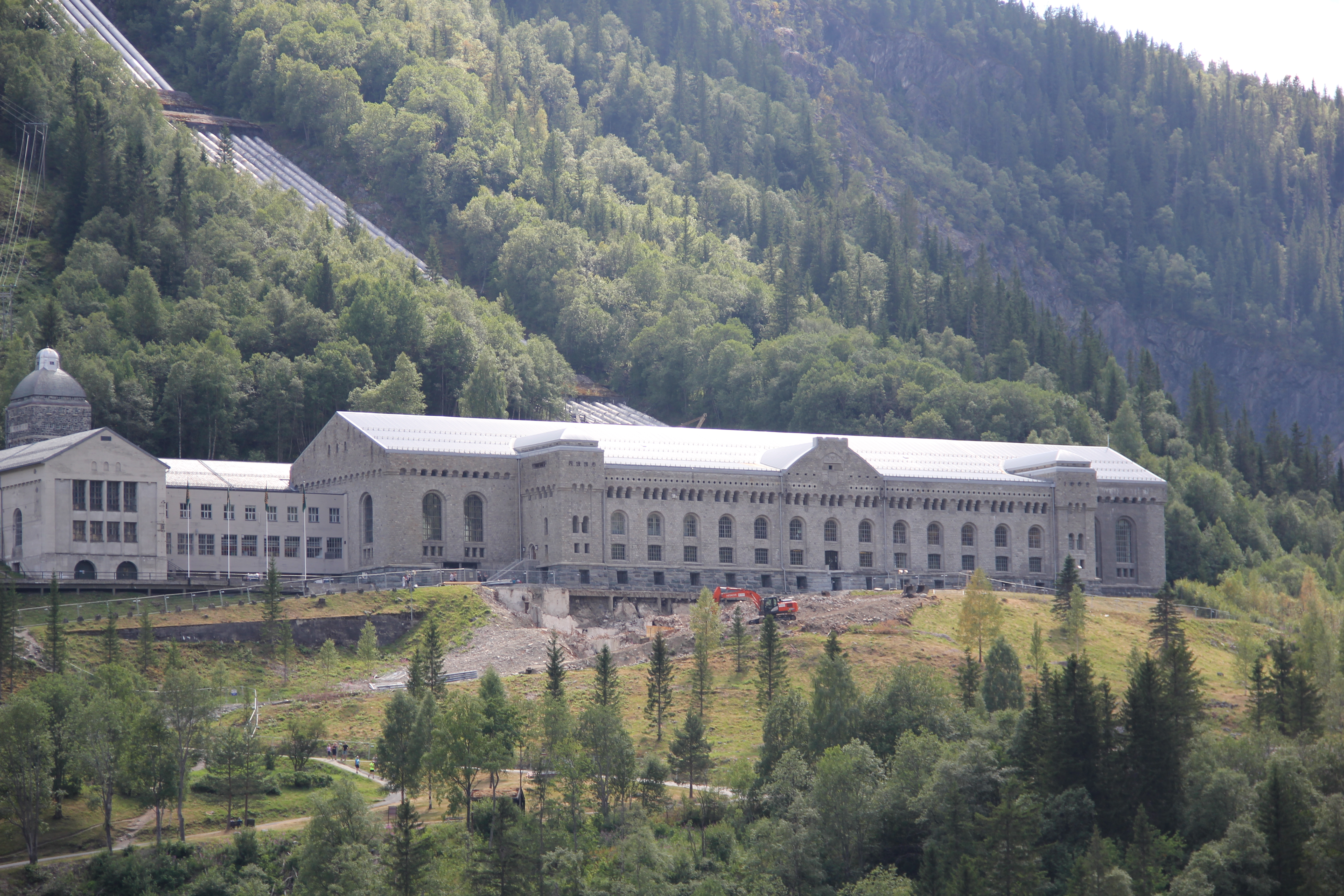
The Rjukan–Notodden Industrial Heritage Site is a World Heritage Site in Telemark county, Norway, created to protect the industrial landscape around Lake Heddalsvatnet and Vestfjorddalen valley. The landscape is centered on the plant built by the Norsk Hydro company to produce calcium nitrate fertilizer from atmospheric nitrogen using the Birkeland–Eyde process. The complex also includes hydroelectric power plants, railways, transmission lines, factories, and workers' accommodation and social institutions in the towns of Notodden and Rjukan.
This site, along with the Odda–Tyssedal Industrial Heritage Site, was placed on the tentative World Heritage list on 19 June 2009. On 5 July 2015, it was placed on the World Heritage list under Criteria II and IV with the following description of the Outstanding Universal Value:
Located in a dramatic landscape of mountains, waterfalls and river valleys, the site comprises hydroelectric power plants, transmission lines, factories, transport systems and towns. The complex was established by the Norsk-Hydro Company to manufacture artificial fertilizer from nitrogen in the air. It was built to meet the Western world’s growing demand for agricultural production in the early 20th century. The company towns of Rjukan and Notodden show workers’ accommodation and social institutions linked by rail and ferry to ports where the fertilizer was loaded. The Rjukan-Notodden site manifests an exceptional combination of industrial assets and themes associated to the natural landscape. It stands out as an example of a new global industry in the early 20th century.
內容改寫自 Wikipedia (CC BY-SA)。照片來自 Wikimedia Commons.