
Persian Qanat
Iran · Asia
關於
A qanāt (Persian: قَنَات) or kārīz (کَارِیز) is a water supply system that was developed in ancient Iran for the purpose of transporting usable water to the surface from an aquifer or a well through an underground aqueduct. Originating approximately 3,000 years ago, its function is essentially the same in systems across Asia and North Africa, but it is known by a variety of regional names beyond modern Iran, including: kārēz in Afghanistan and Pakistan; foggāra in Algeria; khettāra in the Atlas Mountains; the daoudi-type falaj in Oman and the United Arab Emirates; and ʿuyūn in Saudi Arabia. In addition to those in Iran, the largest extant and functional qanats are located in Afghanistan, Xinjiang in China (the Turpan water system), Oman, and Pakistan. Qanat-style systems were also introduced to parts of Europe under the Roman Empire and were later implemented on a larger scale in Muslim-ruled Spain. This laid the foundation for their introduction to parts of the Americas, although some archaeologists have asserted that similar systems may have already been developed and in use in the pre-Columbian era.
Proving crucial to water supply in areas with hot and dry climates, a qanat enables water to be transported over long distances by largely eliminating the risk of much of it evaporating on the journey. The system also has the advantage of being fairly resistant to natural disasters, such as floods and earthquakes; and to man-made disasters, such as wartime destruction and water supply terrorism. Furthermore, it is almost insensitive to varying levels of precipitation, delivering a flow with only gradual variations from wet to dry years.
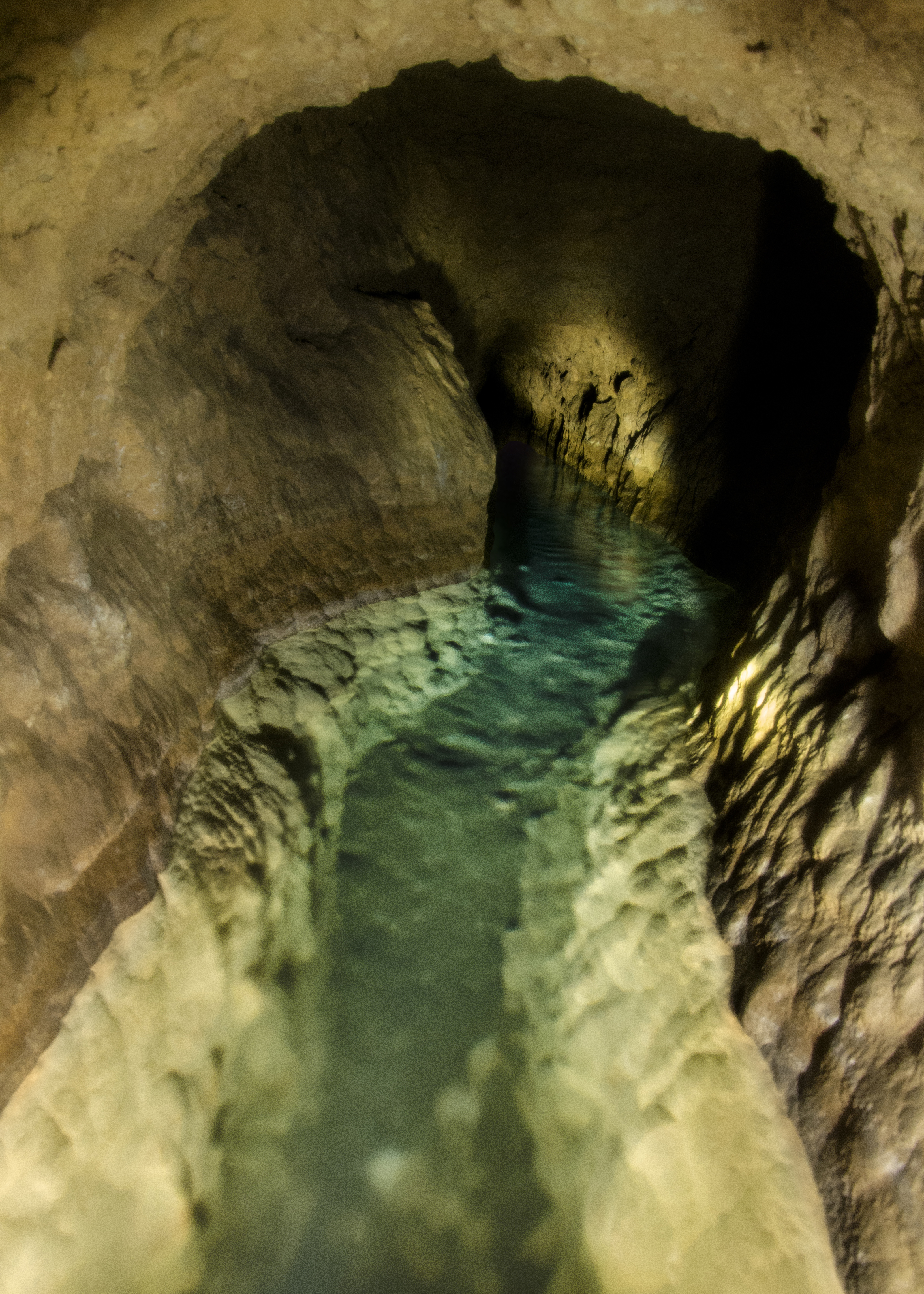
The typical design of a qanat is a gently sloping tunnel accessed by a series of well-like vertical shafts visible at ground level. This taps into groundwater and delivers it to the surface at a lower level some distance away, via gravity, therefore eliminating the need for pumping. The vertical shafts along the underground channel are for maintenance purposes, and water is typically used only once it emerges from the daylight point.
To date, the qanat system still ensures a reliable supply of water for consumption and irrigation across human settlements in hot, arid, and semi-arid climates, but its value to a population is directly related to the quality, volume, and regularity of the groundwater in the inhabited region. Since their adoption outside of the Iranian mainland in antiquity, qanats have come to be heavily relied upon by several populations for sustenance. Likewise, many of the continuously inhabited settlements in West Asia and North Africa are notably established in areas where conditions have historically been favourable for creating and sustaining a qanat system.
內容改寫自 Wikipedia (CC BY-SA)。照片來自 Wikimedia Commons.