
Minoan Palatial Centres
Greece · Europe
關於
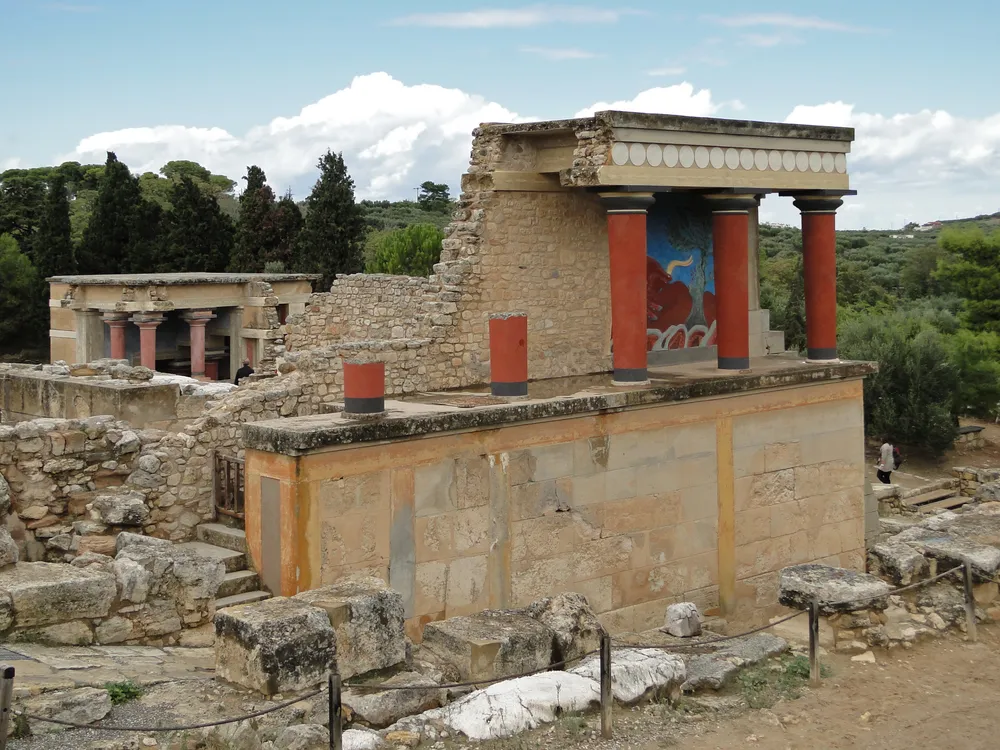
Minoan palaces were massive building complexes built on Crete during the Bronze Age. They are often considered emblematic of the Minoan civilization and are modern tourist destinations. Archaeologists and the UNESCO World Heritage generally recognize six structures as palaces, namely those at Knossos, Phaistos, Malia, Zominthos, Zakros and Kydonia. Minoan palaces consisted of multistory wings surrounding an open rectangular central court. They shared a common architectural vocabulary and organization, including distinctive room types such as the lustral basin and the pillar crypt. However, each palace was unique, and their appearances changed dramatically as they were continually remodeled throughout their lifespans.
The palaces' function is a topic of continuing debate in Minoan archaeology. Despite the modern term "palace", it is generally agreed that they did not primarily serve as royal residences. They are known to have contained shrines, open areas for communal festivals, industrial workshops, as well as storage magazines for large agricultural surpluses. Archives of Linear A and Linear B tablets suggest that they served in part as local administrative centers.
The first palaces were constructed around 1900 BC, as the culmination of longer-term social and architectural trends. These initial palaces were destroyed by earthquakes around 1700 BC but were rebuilt on a grander scale, with new palaces appearing at other sites. Around 1450 BC, a wave of violent destructions destroyed all of the palaces except for Knossos, which was itself destroyed roughly a century later.
內容改寫自 Wikipedia (CC BY-SA)。照片來自 Wikimedia Commons.