
Leptis Magna
Libya · Africa
關於
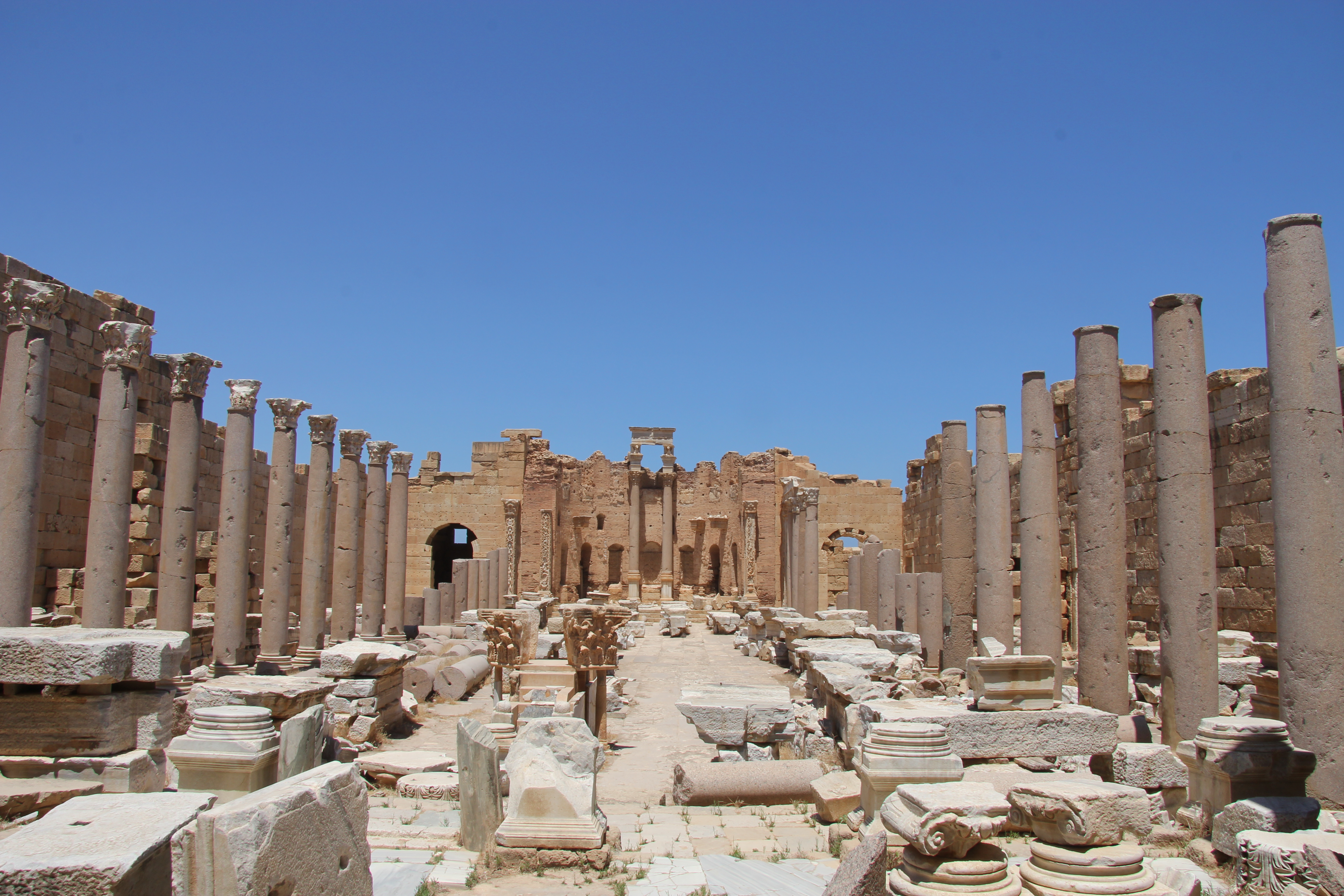
Leptis or Lepcis Magna, (Arabic: لبدة الكبرى, romanized: Libda al-Kubrā) also known by other names in antiquity, was a prominent city of the Carthaginian Empire and Roman Libya at the mouth of the Wadi Lebda in the Mediterranean.
Established as a Punic settlement prior to 500 BC, the city experienced significant expansion under Roman Emperor Septimius Severus (r. 193–211), who was born in the city. The 3rd Augustan Legion was stationed here to defend the city against Berber incursions. After the legion's dissolution under Gordian III in 238, the city was increasingly open to raids in the later part of the 3rd century. Diocletian reinstated the city as provincial capital, and it grew again in prosperity until it fell to the Vandals in 439. It was reincorporated into the Eastern Empire in 533 but continued to be plagued by Berber raids and never recovered its former importance. It fell to the Muslim invasion in c. 647 and was subsequently abandoned.
After being abandoned, the city was remarkably preserved as it lay buried beneath layers of sand dunes. In the 1920s, the city was unearthed by Italian archaeologists during Italy's occupation of Libya. Its ruins are within present-day Al-Khums, Libya, 130 km (81 mi) east of Tripoli. They are among the best-preserved Roman sites in the Mediterranean.
內容改寫自 Wikipedia (CC BY-SA)。照片來自 Wikimedia Commons.