
Château de Chambord
France · Europe
關於
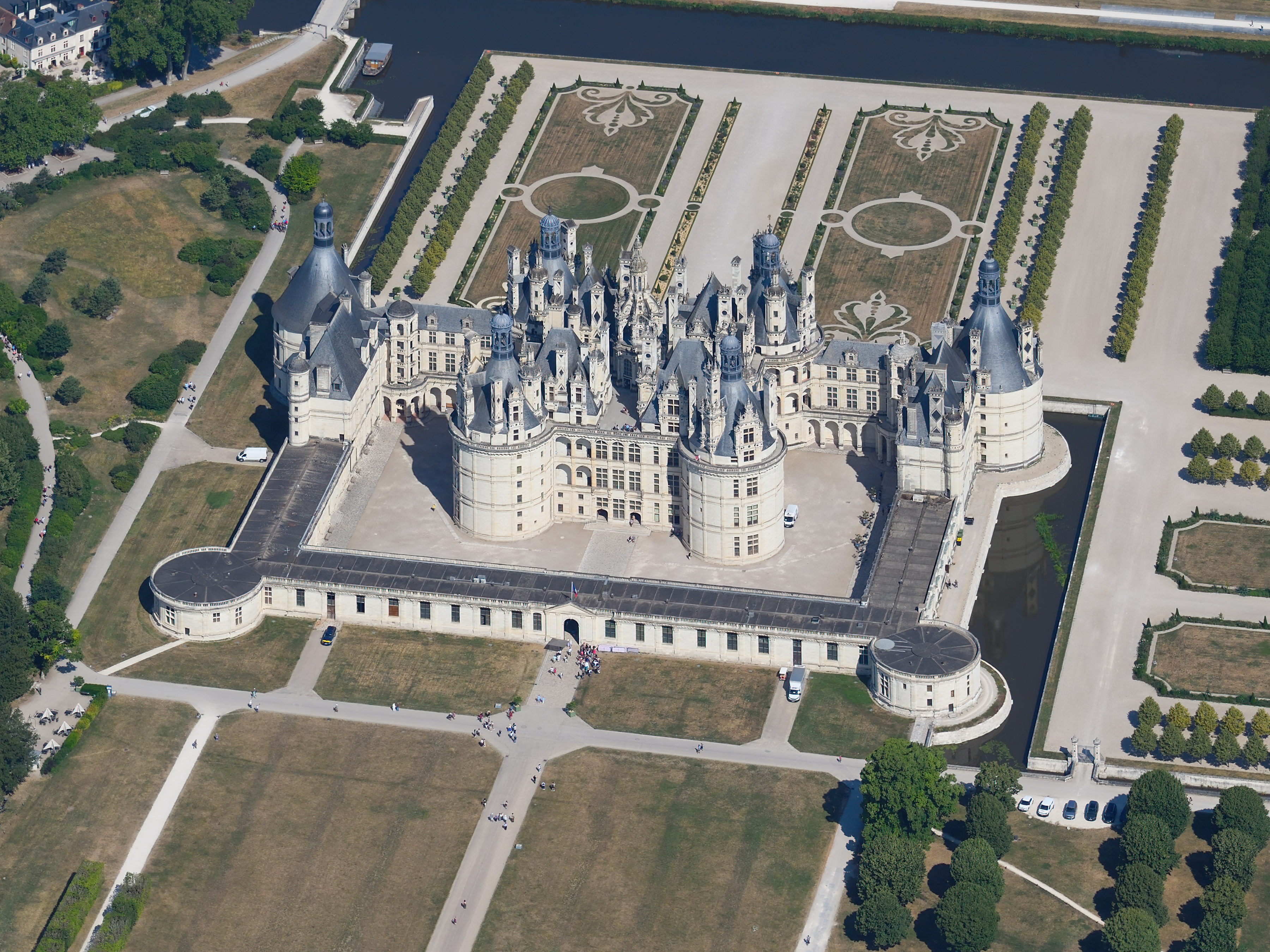
The Château de Chambord (French pronunciation: [ʃɑto d(ə) ʃɑ̃bɔʁ]) in Chambord, Centre-Val de Loire, France, is one of the most recognisable châteaux in the world because of its very distinctive French Renaissance architecture, which blends traditional French medieval forms with classical Renaissance structures. The building was commissioned by Francis I of France and built between 1519 and 1547.
Chambord is the largest château in the Loire Valley; it was built to serve as a hunting lodge for Francis I, who maintained his royal residences at the Château de Blois and Amboise. The original design of the château is attributed to the Tuscan architect Domenico da Cortona; Leonardo da Vinci may have also influenced the design.
Chambord was altered considerably during the 28 years of its construction, during which it was overseen on-site by Pierre Neveu. With the château nearing completion, Francis showed off his enormous symbol of wealth and power by hosting his old arch-rival, Charles V, Holy Roman Emperor, at Chambord.
In 1792, in the wake of the French Revolution, some of the furnishings were sold and timber removed. For a time the building was left abandoned, though in the 19th century some attempts were made at restoration. During the Second World War, art works from the collections of the Louvre and the Château de Compiègne were moved to the Château de Chambord. The château is now open to the public, receiving 700,000 visitors in 2007. Flooding in June 2016 damaged the grounds but not the château itself.
內容改寫自 Wikipedia (CC BY-SA)。照片來自 Wikimedia Commons.