
Western Yunnan
People's Republic of China · Asia
關於Western Yunnan
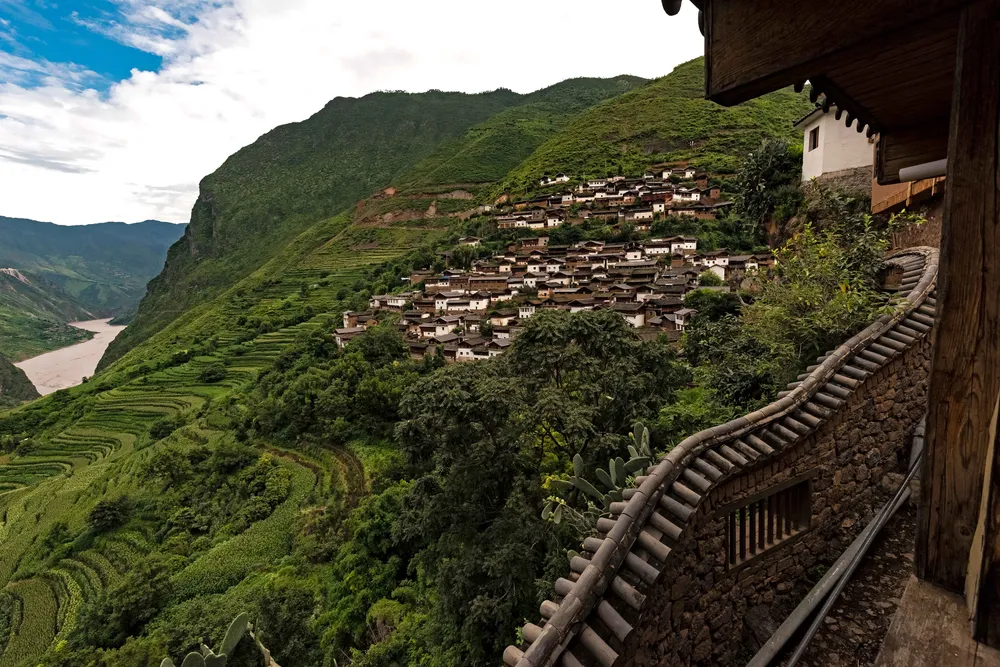
Western Yunnan is a picturesque region in the western part of Yunnan Province, China, covering several cities and autonomous prefectures, including Baoshan City, Dehong Dai and Jingpo Autonomous Prefecture, Nujiang Lisu Autonomous Prefecture, and Lincang City. With its magnificent natural landscape, rich national culture and long history, western Yunnan has attracted the attention of countless tourists.
Western Yunnan's diet is diverse and unique in flavor, from the Dai people's hand-fried rice to the Wa people's salted meat, Jingpo people's sour soup fish, each bite contains a unique ethnic custom. The climate here is springlike all year round, suitable for year-round travel, especially during the annual national festivals, allowing visitors to experience the local culture and customs more deeply.
Although Western Yunnan is not as modern as some big Chinese cities, it is this original natural and cultural atmosphere that gives it a unique appeal. If you are willing to go deep into the villages and hike the mountains, you will find a world far beyond the imagination of Western Yunnan.
Western Yunnan旅遊指南
城市概覽
The Western Yunnan region is an important part of Yunnan Province in China, covering cities and autonomous regions such as Baoshan, Dehong, Nujiang, and Lincang, with an area of approximately 128,000 square kilometers and a population of over 5 million. As a multi-ethnic area, Western Yunnan is home to many ethnic groups, including the Dai, Jingpo, Lisu, and Wa, and its rich ethnic culture and natural landscapes attract a large number of domestic and international tourists. Western Yunnan has shifted its economy towards a diversified development model focusing on tourism, tea production, and cross-border trade. It is one of China's largest producers and exporters of Pu'er tea. Meanwhile, the city of Ruili, a border trade hub, is an important node in China-Myanmar trade. Western Yunnan has also been improving its infrastructure, with the opening of airports in Tengchong and Mangshi, strengthening connectivity with other cities in China and abroad. The natural landscapes of Western Yunnan are diverse and spectacular, from the grandeur of the Nujiang Grand Canyon to the volcanic hot springs of Tengchong and the biodiversity protection areas in Gaoligong Mountain, all of which are major destinations for domestic and international travelers. The Nujiang Grand Canyon reaches a depth of nearly 5,000 meters, attracting many hiking enthusiasts. Gaoligong Mountain is listed as a UNESCO biosphere reserve and is one of the most biologically diverse regions in the world. Western Yunnan has faced the dual pressures of cultural conservation and development. The protection of ethnic cultures and historical heritage in Dehong and Lincang, in particular, has become increasingly prominent. With the advancement of modernization, local residents and the government have been strengthening efforts to preserve and transmit traditional cultures.
History The western Yunnan region has a long and diverse history. Its history dates back to the ancient Dian civilization, which existed thousan
如何抵達
By plane The air traffic in western Yunnan is relatively developed, with airports in many major cities and direct flights to many cities at home and abroad:
Dali airport (DLU): Only 13 km away from Dali Ancient City, flights cover Kunming, Chengdu, Chongqing, Guangzhou and other major domestic cities, most of the flight time is less than 2 hours.1 Dali airport (DLU IATA) (east of Dali New City, about 45 minutes drive to Dali old town), ☏ +86 872 242 8921. (updated Dec 2024) Baoshan airport (BSD): Located 10 km east of Baoshan city center, the main air route connects Kunming and Chongqing.2 Baoshan Yunrui Airport (BSD IATA) (Yunrui Street, Hanzhuang Town, Longyang District, Baoshan City, about 6.5 km from Baoshan city center), toll-free: +86 875-2232266. (updated Dec 2024) Tengchong hump airport (TCZ): about 12 km from Tengchong City, it is a popular tourist airport due to the nearby Tengchong Volcanic Hot Sea scenic spot. The main flights are Kunming, Chengdu, Chongqing and other direct flights.3 Tengchong Tuofeng Airport (腾冲驼峰机场), Tuofeng Village, Qingshui Township (清水乡驼峰村) (about 10 km south of the city center), ☏ +86 875 5198866. Frequent flights are available from the provincial capital of Kunming. Other cities with flights to Tengchong include Beijing, Changsha, Chengdu, Chongqing, Guangzhou, Guiyang, Nanjing, Shanghai, Shenzhen, Taiyuan, Xi'an, Zhengzhou and Zhuhai.Ground transportation: Taxis only.
Mangshi airport (LUM): Located in Mangshi, Dehong Prefecture, there are cross-border routes with Myitkyina and other cities in Myanmar, and it is an important node of air transport between China and Southeast Asia.4 Dehong Mangshi Airport (LUM IATA) (Fengping Town, Mangshi, Dehong Dai Jingpo Autonomous Prefecture, about 6.5 kilometers from Mangshi city center), toll-free: +86 6922934651. (updated Dec 2024) From Kunming Changshui International Airport there are direct flights to the main airport in western Yunnan, the flight time is about 1 hour. Advance
當地交通
By train The railway network in Western Yunnan is expanding, with key lines connecting Kunming to western cities such as Tengchong, Zhaotong. High-speed trains are efficient, with most routes taking 2-3 hours. Train tickets are affordable, offering options such as sleeper and second-class seats. For western cities, some routes provide quick connections, making travel convenient.
Operating hours: Typically from 06:0 to 20:00, based on the train schedule.
Facilities: Most trains are equipped with air conditioning, and beverages and snacks are available in the carriages. Some high-speed trains also offer VIP services.
By bus Buses are the most common way to travel within and between cities in Western Yunnan. Major cities like Tengchong and Baoshan offer convenient connections through their bus stations. Intercity buses, including sleeper buses, are widely available, offering reasonable fares from ¥30 to ¥150.
By boat Some rivers and lakes in Western Yunnan, such as the Nujiang and Lancang Rivers, offer sightseeing boat tours. Visitors can enjoy scenic views of the surrounding mountains and landscapes.
By taxi Taxis are widely available in larger cities such as Western Yunnan. Taxi fares start around ¥10, with charges of ¥2-3 per kilometer. It's best to have your destination written in Chinese.
By car Renting a car is ideal for exploring the rural and mountainous regions of western Yunnan, offering flexibility for visiting remote villages and natural sites. Car rentals typically cost ¥200-400 per day.
On foot Western Yunnan’s scenic areas, especially in Lijiang and Dali, are best explored on foot. Hikes like those in the Tiger Leaping Gorge are popular, offering stunning views and a chance to immerse in local culture.
By bicycle Biking is an excellent option for exploring the cities and countryside. Renting a bicycle is common in Dali, where there are many bike tours, with rental prices averaging ¥30-50 per day.
必看景點
Tengchong Volcanic Geothermal National Geological Park (腾冲火山地热国家地质公园) protects the Tengchong Volcanic Field and includes distinct scenic areas such as the Rehai Scenic Area and the Volcano Scenic Area, about 37 km apart. Visitors can enjoy hot springs, geothermal fountains, and unique geological features. It’s possible to visit both areas in a single day with an early start.
體驗活動
Shangri-La horseback riding:Experience the vast grasslands and stunning landscapes of Shangri-La on horseback. Located in the Tibetan region, this acivity offers a chance to connect with local culture and explore the natural beauty of the area. Suitable for all riding levels, the tour takes you through meadows and valleys, with opportunities to interact with Tibetan herders. Horseback riding in Shangri-La provides a truly immersive experience in one of China’s most scenic regions. Prices range from ¥200 to ¥500.
Kunming Theater:Kunming Theater is a prominent venue for performing arts in the city, hosting opera, ballet, and concerts. Located on Qingnia
城市概覽改寫自 Wikipedia,旅遊指南來自Wikivoyage (CC BY-SA)。照片來自 Wikimedia Commons.