
West Bali National Park
Indonesia · Asia
關於West Bali National Park
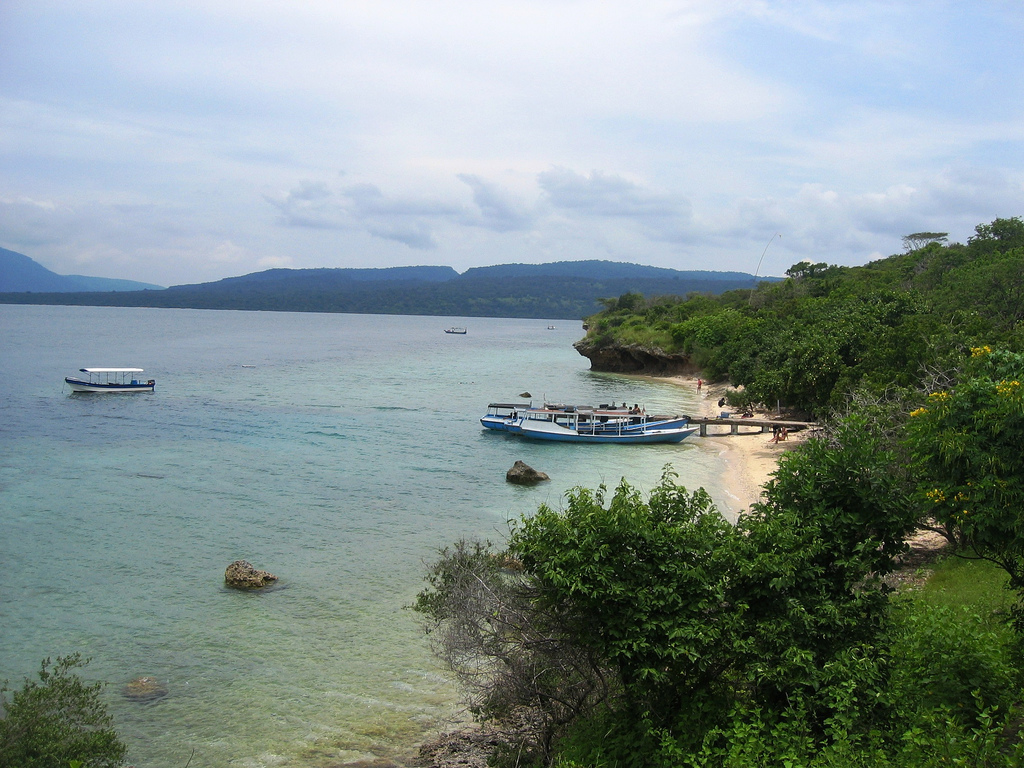
West Bali National Park (Indonesian: Taman Nasional Bali Barat) is the only national park on the island of Bali.
West Bali National Park旅遊指南
城市概覽
West Bali National Park is the most north-westerly point of Bali. It includes the whole of the Prapat Agung Peninsula, and large swathes of land around the towns of Gilimanuk, Cekik and Banyuwedang. The official area inside the park boundaries is 190 km², with a further 580 km² of protected reserve in the highlands to the east. In total this accounts for some ten percent of Bali's total land area.
History The park was first recognised as an area of importance in 1917 when the council of Bali rulers designated it as a nature park. It was established as an Indonesian National Park in 1995.
Landscape The habitat is very varied with rainforest, dry savanna, acacia scrub and lowland forests, as well as more montane forests in the higher centre. There are also some pockets of dense mangrove forest. In the north of the park there is an obvious north jutting peninsula called Prapat Agung. Around this peninsula there are long stretches of protected beach and offshore coral reef as well, as a small offshore island called Menjangan. The latter is a very popular diving destination. There are several long extinct volcanoes in the protected reserve area to the east, with Mount Patas (1,412 metres) and Mount Merbuk (1,388 metres) being the highest points. These peaks are dominant visual landscape features from within every area of the park.
Flora and fauna
160 species of bird have been recorded in the park, including the near extinct Bali Starling, Bali's only endemic vertebrate species, and a key reason why this national park was created in the first place. By 2001, as few as six individuals were thought to survive in the wild, all of them in this park. Since then captive breeding and re-introduction efforts have continued apace, but poaching pressures are a large problem. With that in mind, a second re-introduction programme was started in remote regions of Nusa Penida in 2004. Keen birdwatchers can find a checklist of likely species and their status here. Mammals foun
如何抵達
Most visitors to the park arrive along the north coast road from Lovina (about 90 minutes) or Pemuteran (about 15 minutes). Others come from the south via Gilimanuk (about 15 minutes) All visitors should check in at one of the two park offices (PHPA) for information, and to purchase permits and arrange guides. The headquarters is at the village of Cekik just south of the Gilimanuk in the west. The other is at Labuan Lalang on the north coast from where boats to Menjangan Island depart. The main ranger station is on the road between the two offices at Sumber Klampok. The park staff are welcoming, helpful and will arrange guided tours for you.
當地交通
Only a small portion of the park is open to visitors, and this rule must be respected. There are two key ways to explore the park: either hiking the trails or concentrating on marine aspects. Walking the trails must be done with an official guide from one of the national park offices (most normally the one at Cekik). Boat trips to Menjangan and around Gilimanuk Bay can be organised in advance (ask at your hotel), or by charter on the day you arrive.
購物
This region of Bali is not particularly known for its shopping.
美食
Aside from the Waka Shorea luxury resort there is nowhere to eat inside the national park, so bring food in with you. If you arrive along the north coast road, there are lots of hawker stalls at Labuhan Lalang. If coming from Gilimanuk there are many restaurants, small shops and hawker stands in the town, and around the national park headquarters at Cekik.
飲品與夜生活
There is nowhere inside the national park to purchase any drinks, including water. Bring in ample water with you.
住宿
Lodging There is one official high end resort inside the boundaries of the national park on the Prapat Agung peninsula. There is no other accommodation inside the park. Visitors on a lower budget day trip the park from Gilimanuk, Pemuteran or Lovina where there are ranges of accommodation to suit all budgets.
Pondok Wisata Lestari (about two km north of the Cekik park headquarters office on the road to Gilimanuk), ☏ +62 365 61504. popular budget accommodation 1 Waka Shorea, ☏ +62 361 484085, [email protected]. Just 16 rooms at this understated, five star resort which offers a full range of national park based activities. In-house spa, superb restaurant and everything else you would expect at a 5 star resort. Has a reception area adjacent to the public boat jetty at Labuhan Lalang, from where you jump into a boat to reach the resort. The only accommodation inside the boundaries of the park. From US$185. 2 Mimpi Resort Mejangan, Banyuwedang, ☏ +62 362 94497, [email protected]. The name is confusing as this five-star hotel is not on Menjangan, but 3 km up the coast from the boat transit point on the mainland at Labuan Lalang. 54 rooms and top quality facilities including a pool fed by natural hot springs. As nice as it is, for a similar price it is hard to imagine why anyone would choose this option ahead of the Waka Shorea. US$100 for a room up to US$350 for the largest one-bedroom villa.
Camping Not permitted inside the national park, but there is a basic campsite at the park headquarters in Cekik. Facilities are limited but do include passable toilets and bathrooms. Bring your own camping gear. A small donation to the helpful (and underpaid) park staff is in order.
Backcountry Nothing available inside the national park.
順遊推薦
If you are exploring the park via a base in the north west (Pemuteran or Lovina) then you may wish to continue your journey around Bali to the south and west via Gilimanuk. The reverse is of course also the case.
城市概覽改寫自 Wikipedia,旅遊指南來自Wikivoyage (CC BY-SA)。照片來自 Wikimedia Commons.