
Tutuala administrative post
Timor-Leste · Asia
關於Tutuala administrative post
Tutuala is a village in the Lautém district at Cabo Cutcha the easternmost peninsula of East Timor. The village is famous for cave paintings, several thousand years old, though young when compared to remains of the first inhabitations of the island. It's also starting location to explore the Jaco island and the Nino Konis National Park. Here one may feel like at "the end of the world" and for some people it once was; from here the ancestors of Aboriginals set out to settle Australia.
Tutuala administrative post旅遊指南
城市概覽
Tutuala village (suco) is the headquarters of the subdistrict with the same name (officially Tutuala Administrative Post). It covers the eastern peninsula of East Timor and the small island of Jaco. The Tutuala subdistrict is entirely in the Nino Konis National Park, as is the surrounding sea. At the western border is the biggest lake of the country, Lagoa Ira Lalaro, also known as Suro-bec, which shrinks in size during the dry period. The landscape is made up of savanna and forests, the former with grazing horses, buffalos and cattle and the latter with a rich birdlife. Mount Paitchau, Ira Lalaro and the Jaco island have been declared as Important Bird Areas by BirdLife International. The coast facing north ends steeply into the sea but unlike most of East Timor, here the landscape isn't mountainous. There are some steep slopes, called fatus, though. The western part of the subdistrict is part of the Fuiloro Plateau, which is the remains of a lagoon from a prehistoric atoll. In the middle it reaches an altitude of 700 m, towards the south 500 m, and before the coast it reaches an altitude of 960 m, this part is called the Paitcheau Massif. Like most villages in East Timor, Tutuala village is more of a gathering of huts and small houses than something strictly planned. Some dwellings are made of stone with metal roof, others of clay and straw. The other villages in the subdistrict look similar. Mehara, the second biggest village is halfway between Bauro and Tutuala, and going there one will pass through Poros. South of Lake Ira Lalaro is the village of Malahara, and there's a road to Mehara. If you're lucky it's passable all the way to Lospalos. The subdistrict has around 3500 inhabitants (as of 2015) and the most spoken native language is Fataluku. The village of Mehara is home to the last speakers of Makuva, the only Malay-Polynesian language native to the island. Furthermore the national language Tetum is taught in schools, as well as Portuguese (especially in h
如何抵達
By bus Minibuses, mikroléts in the local language, bring you in from Lospalos. The bus can be very full, in which case carrying a large backpack is difficult. Mikroléts depart from the market in Lospalos and take you to the elementary school in Tutuala (Escola Primaria Tutuala).
By car From the Lospalos-Lautém highway there's the dirt track to Tutuala, the distance is about 25 km as the crow flies.
By boat If you're sailing your own craft, you can anchor at the coast. From the beach facing Jaco Island, there's a track to Tutuala village.
當地交通
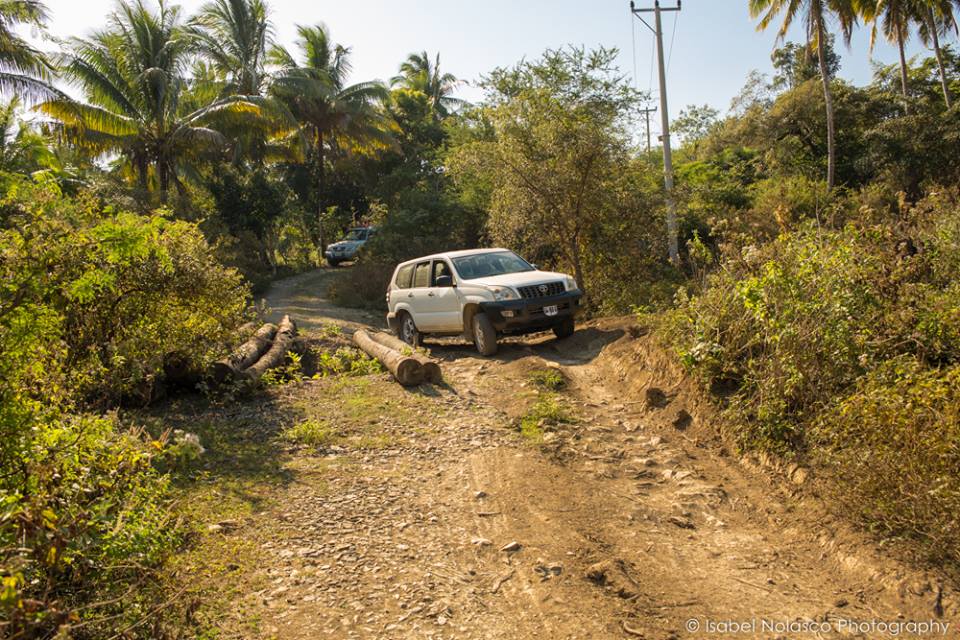
The village itself is small enough to explore on foot. Walking is also the only way to get to many of the attractions outside the village. Locals may joke that you can get to the beach on foot in 20 minutes. Now, the distance as the crow flies is 5 km, and the sand track is 9 km in length descending 70 m in altitude through the jungle. The track is often damaged by heavy rainfall. If it's not too ruined it can be driving on an all-wheel driven vehicle. Otherwise you could walk or ride a mountain bike - bring enough drinking water.
必看景點
1 Tutuala church. The tower of the small village church has a roof similar to a uma lulik, a native holy house that is also one of the national symbols. 2 Ile Kére Kére and O Hi caves. These limestone caves have paintings that are estimated to be 2000-6000 years old, it hasn't been possible to confirm their age. The paintings show hunting scenes, animist symbols - turtles in particular, boats and handprints. The depicted boats are of Austronesian type so it's unclear if the creators have painted their own boats or boats they've seen passing by. There are also pictures of horses and other domestic animals that early settlers brought with them. Visiting the caves entail long walks in tropical heat and the paths are not signposted. Nevertheless you will be rewarded with great views of the sea and Jaco Island in addition to the cave experience. 3 Lena Hara Cave. Further south from the former and along the road to the beach, discovered in 1963. In this cave there's a 10000 year old engraving depicting a human face and scientists have found evidence of the cave being inhabited about 30,000-35,000 years ago. (updated Dec 2022) 4 Jerimalai cave. In 2006 scientists discovered remains of human inhabitation that are at least 42,000 years old. This discovery supports the theory that modern humans migrated to Australia through the Lesser Sunda Islands. Old fortifications. Once the Fataluku people built several fortifications (lata irinu) around their settlements in the region. Walls and foundations of these still remain here and there. Right in Tutuala are remains of the Haro fortification, a bit to the west Lochami. At Ile Kére Kére is Mua Mimiraka, and at Lena Hara Ili Mimiraka. Other fortifications include Lorilata, Tutunchau and Upper and Lower Lopomalai.
體驗活動
1 Jaco Island and Valu Beach. Valu Beach with its white sands is a tropical dream, and the same goes for the beach at the adjacent Jaco Island. Jaco is a holy place that one formerly could not visit, nowadays fishermen can take you there for a few dollars. It's also possible to go fishing with them. The sea is excellent for snorkeling. Totems on Valu Beach reveal that this too is a holy place. Despite the fact that East Timor is a Catholic country, the native religion is still very much alive. This can also be seen on the local cemetery where many graves don't just have crosses but also buffalo skulls.
2 Nino Konis National Park. Established in 2007 and named after resistance fighter Nino Konis Santana (1957-1998) who was born in Tutuala, this park of 1,236 km2 covers six subdistricts including Tutuala and the seas outside. The park protects both nature and the cultural and historical heritage of the region. This includes coral reefs and the largest intact rainforest in the region with countless orchid species. Twenty-five bird species endemic to the Lesser Sunda Islands live here including the endangered yellow-crested cockatoo (Cacatua sulphurea) and Timor green pigeon (Treron psittaceus) making the park a great birdwatching destination. Rusa deer (Rusa timorensis) can be seen in the forest, saltwater crocodiles (Crocodylus porosus) and flatback sea turtles (Natator depressus) on the coasts. In the sea there are corals and marine life. There are also palolo worms (Palola viridis), mechi in the local language. In February and March locals collect them on the coast, marking the beginning of the harvest season, which is a reason for the biggest festivities of the year in the region (see next listing). In the park there are also sites related to native religion, from the Portuguese colonial times and the Japanese occupation during WWII. Mechi celebrations, Valu Beach. The Valu Beach is the venue for the Mechi celebrations, related to beginning of the harvest seaso
購物
There's a small general store with a small selection of goods. Packed drinking water isn't always available, if not you can pick up
城市概覽改寫自 Wikipedia,旅遊指南來自Wikivoyage (CC BY-SA)。照片來自 Wikimedia Commons.