
Trinidad and Tobago
Trinidad and Tobago · Americas
關於Trinidad and Tobago
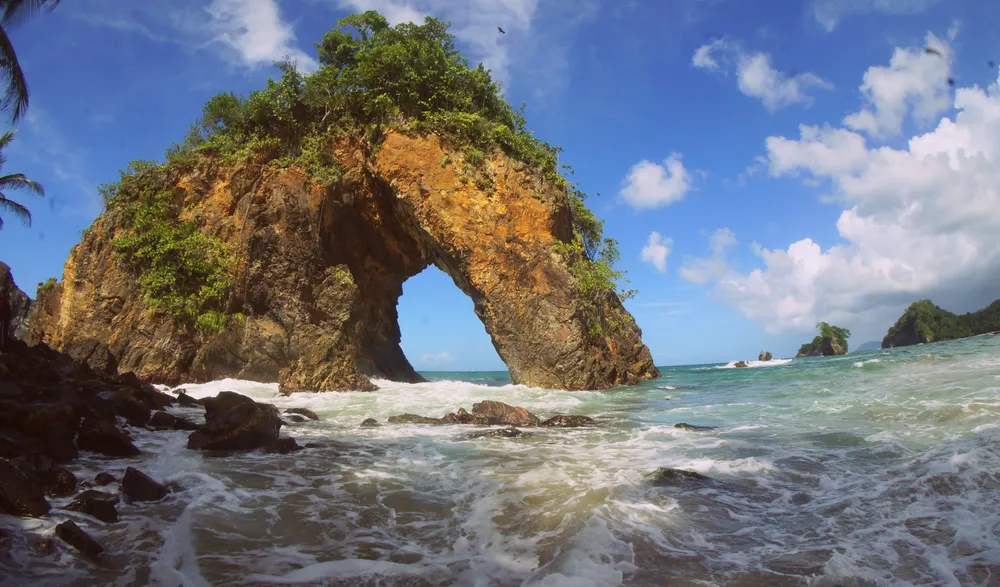
Trinidad and Tobago (TT) is a nation consisting primarily of two Caribbean islands, Trinidad and Tobago, just off the northeastern coast of Venezuela. The country is the most industrialised and one of the most prosperous in the Caribbean. Overall, tourism is not a major industry (though the island of Tobago has proportionally more), leaving the islands replete with natural unspoiled beauty not found in most other Caribbean countries.
Trinidad and Tobago旅遊指南
城市概覽
History The islands were first inhabited by Arawak and Carib people, who settled here from the South American mainland, and whose descendants make up a small minority of the population. Trinidad was sighted by Christopher Columbus, who claimed it for Spain. Under Spanish rule, many French settlers established cocoa and sugar cane plantations in Trinidad and imported mostly African slaves to work them. The British seized the island in 1798, and abolished slavery in 1838. To make up for the labour shortage the government encouraged heavy immigration from countries such as Portugal, France, Germany, China, and most importantly India. Trinidad was united with Tobago in the 1880s. Throughout the early 1900s the country welcomed thousands of mostly black immigrants from other Caribbean countries, as well as Venezuela and Colombia. Following World War II, TT was combined with various other British Caribbean countries into the West Indies Federation. However, the different groups of islands could not get along and the federation soon collapsed. TT eventually achieved complete independence on August 31, 1962. Throughout the 1960s and 1970s, the country prospered thanks to large deposits of oil and natural gas, becoming the wealthiest nation in the Caribbean. However, in the late 1980s, oil prices dropped significantly, causing a major economic meltdown. Thousands of Trinidadians left the country at this time, in search of better opportunities elsewhere. Throughout the 1990s and 2000s the country recovered dramatically and the nation's living standards continued to improve. However, due to the decline of oil and gas production and the flourishing of the illegal drug trade in the Americas, Trinidad has seen a decline in its economy and crime rate deteriorate.
People The country has a cosmopolitan society inhabited by many different peoples and cultures who live together in relative peace and harmony. Ethnic Indians form a plurality of the population, while black people of
如何抵達
Entry requirements and customs
All visitors must have: a passport valid for the length of the stay, a return or onward ticket, proof of funds to maintain themselves, an address in TT, such as a hotel or family/friend. Citizens of the United Kingdom, United States, Canada, Caricom member states (except Haiti), Singapore and most EEA and Latin American countries do not require a visa for vacation or business of 90 days or less. Other nationalities need to apply for a visa in advance at an embassy or consulate of TT abroad. An E-visa will take 10-14 calendar days to process according to the customer service, but some have received E-visa in 4-7 calendar days Customs After retrieving your luggage there are two customs lines: a red line where you declare items and a green “nothing to declare” line. However the green line has scanners and your luggage may be subject to search. If you have items to declare, go to the red line. Be aware of prohibited and restricted items. Information is here, but it is not comprehensive. The entire list is located in the customs act, chapter 78:02. Food items and plants are restricted, especially honey, fruits and vegetables, meats and dairy. Clothing with camouflage patterns is prohibited for import and is not permitted to be worn in public. Firearms and other weapons are restricted and require import permission from the commissioner of police. Imitation firearms that resemble real firearms are prohibited. Two way radios and drones require permission from the telecommunications authority for import. Drones also require clearance from civil aviation authorities. Cash or monetary instruments being brought in or taken out in excess of US$5,000 or TT$20,000 or its equivalents must be declared to customs. This does not include credit/debit cards which have limits of that amount, but does include checks, money orders, stocks and bond certificates and cash.
By plane The main airport is Piarco International Airport (POS IATA
當地交通
Within the islands
By ride hailing TTRS Trinidad and Tobago Ride share is a safe and convenient way to get around. Download the app and get verified before you go. You can pay the driver in TT dollars or with your credit card, but you have to enter before the trip begins. Uber does not operate in Trinidad.
By taxi
Route taxis are shared and are simply normal passenger cars with no special markings. However, their license plates start with the letter "H". They are found at Taxi stands which may be at a street corner or at the side of the road. Taxi stands in the cities and boroughs are usually marked, but outside of the city they are not. However, one can hail a taxi from the side of the road and ask where they are going and the fare before hiring the taxi. One pays for an individual seat and the taxicabs are shared, but a whole car can be hired if so desired, and if there are not a lot of passengers waiting. Airport taxis are an exception to this in that one almost always has to hire the whole car. There are larger route taxis, similar to mini buses called "Maxi taxis" or simply "Maxis" that go along a specified route. These are similar to mini buses and are painted white or beige and have a coloured band around them. Each maxi usually holds approximately 11 or 25 passengers. The colour of the band indicates the area in which they travel. They have their own taxi stands and terminals. In Port of Spain, the maxis depart and arrive at the City Gate terminal, and in San Fernando they depart and arrive at the bus terminal at King's Wharf. These Maxi Taxis travel to the east, south and central areas of the island. In order to travel to the west there are a few designated areas such as the Diego martin/Petit Valley/Carenage/Chagaramas maxi stand located a few kilometers away from City Gate. A maxi taxi can be hired for a whole day on a chartered trip. These can be negotiated directly with the maxi taxi drivers in advance. Prices vary. Unlicensed "gy
必看景點
Bird watching at Asa Wright Centre near Port-of-Spain. Bucco Reef is a natural coral reef on the North Coast of Tobago. The Nylon Pool is an area of shallow water on top of the reef. The water is crystal clear and looks like fishing line nylon, hence the name. Caroni Bird Sanctuary in the Caroni Swamp on Trinidad is a must for bird watchers. Several indigenous species of bird nest in the bird sanctuary, including one of the national birds, the Scarlet Ibis (Eudocimus ruber). The Hindu festival of lights, Divali, is celebrated in most areas in Trinidad and a few areas in Tobago. Every year during one night in October-November small oil lamps called deyas are lit on the inside and outside of homes and in public places. Additionally, there is a celebration and festival called the Divali Nagar, where Indian song, dance, plays and other cultural items are on display. The Divali Nagar takes place at the Divali Nagar Site in Chaguanas, Trinidad. Divali is a public holiday in Trinidad and Tob
城市概覽改寫自 Wikipedia,旅遊指南來自Wikivoyage (CC BY-SA)。照片來自 Wikimedia Commons.