
Tanzania
Tanzania · Africa
關於Tanzania
Tanzania is the largest country in East Africa. From the picture-perfect coasts of Zanzibar to the world-renowned wildlife of the Serengeti, from the snowy slopes of Mount Kilimanjaro to the coral houses of Mikindani, Tanzania is the heart and soul of East Africa. Tanzania has several national parks and game reserves, where you can see some of the finest African flora and fauna.
Tanzania旅遊指南
城市概覽
History Tanzania is probably one of the oldest known continuously inhabited areas on Earth; fossil remains of humans and pre-human hominids have been found dating back over two million years. Later, Tanzania is believed to have been populated by hunter-gatherer communities, probably Cushitic and Khoisan speaking people. About 2,000 years ago, Bantu-speaking people began to arrive from western Africa in a series of migrations. Later, Nilotic pastoralists arrived, and continued to immigrate into the area through to the 18th century. Travellers and merchants from the Persian Gulf and Western India have visited the East African coast since early in the first millennium CE. Islam was practised on the Swahili Coast as early as the eighth or ninth century CE. The Swahili Coast eventually grew to encompass several wealthy city-states, which included Zanzibar and Kilwa Kisiwani. Zanzibar in particular became the main centre of the Arab Slave Trade, the former slave market in its capital, Stone Town, has now been converted to a tourist attraction commemorating slavery, and with the Anglican cathedral having been built on the site of the former whipping post. In the late 19th century, Imperial Germany conquered the regions that are now Tanzania (minus Zanzibar), Rwanda, and Burundi, and incorporated them into German East Africa. The post-World War I accords and the League of Nations charter designated the area a British Mandate, except for a small area in the northwest, which was ceded to Belgium and later became Rwanda and Burundi). British rule came to an end in 1961 after a relatively peaceful (compared with neighbouring Kenya, for instance) transition to independence. In 1954, Julius Nyerere transformed an organization into the politically oriented Tanganyika African National Union (TANU). Nyerere became Minister of British-administered Tanganyika in 1960 and continued as Prime Minister when Tanganyika became independent in 1961. After the Zanzibar Revolution overthrew t
如何抵達
Visa No visa is required for stays of less than 3 months for citizens of Namibia, Romania, Rwanda, Hong Kong, Macau, Malaysia and all commonwealth member states (except Australia, United Kingdom, Canada, Bangladesh, New Zealand, Nigeria, India.) A Tourist Visa on arrival costs US$50 or US$100 for a three-month single entry and a multiple entry visa (valid 3 to 12 months), respectively. Bring crisp USD cash for this. You will receive a stamp in your passport and a payment receipt. Holders of a U.S. passport can only obtain the multiple-entry visa. If on a tourist visa, visa duration can be extended for a month without any extra charge at the Tanzania immigration office in Dar es Salaam. Tanzania has extra requirements for anyone who is not visiting for tourism purposes. Any sort of business visit requires a specific business visa which costs US$250 and can also be applied for through the electronic visa system.
E-Visa The visa can be applied for online through the government electronic visa application system. Please note that online visa holders can enter Tanzania only at specific ports of entry as defined in the official guidelines. As of October 2021, these include
Julius Nyerere International Airport (JNIA); Kilimanjaro International Airport (KIA); Abeid Amani Karume International Airport (AAKIA); Namanga border (Kenya) Tunduma border (Zambia) Most travelers planning to enter Tanzania by land (e.g. from Uganda or Zambia) will therefore have to apply for a visa on arrival.
Visa on arrival (VOA) Visa on arrival can be obtained upon landing in Dar es Salaam, Kilimanjaro, Mwanza, and other ports of entry such as land borders. At land borders, the visa fee is to be paid in cash. It is a good idea to have the exact amount of US$ at hand! At airports, the wait for visas on arrival can be especially long if your flight arrives at the same time as other international flights. Visas are valid for the duration from the date of issuance.
Land borders When crossin
當地交通
By bus and mini-bus
The bus is the most common way to travel around in Tanzania. Most buses have a simple design, and the roads are poor, although 1st class air-con buses are available on the Dar-Moshi-Arusha route (Dar Express - ticket office on Libya Street downtown or office no. 45 at Ubungo). Nearly all buses go in and out of Dar es Salaam. The main bus station in Dar (where all buses go), Ubungo, is 8 km west of the city center. A number of the better "intercity buses" provide you with complimentary drinks and biscuits. In Dar, minibuses called Dala-Dalas can be taken cheaply to most places within the city. The fare is written on the front next to the door - it's usually TSh 250 for adults (2011) except for longer distances. The route of the bus is also stenciled on the front and sides of the bus, e.g. 'Posta-Mwenge' and there's a colour coding system. Posta (outside the central post office on Azikiwe/Maktaba Street) is the main downtown daladala hub. Others are Kariakoo, Mwenge, Buguruni, and Ubungo. Hop on the daladala, take a seat if there is one, and pay the conductor ('konda') when he shakes his pile of coins at you in a meaningful way. The konda shouts the names of the stops - if you don't know where you are, or don't know the name of your destination stop, it'll be hard to know where to get off. If possible, it's worth asking someone at your destination, since the stops sometimes have no signs at all - people 'just know' that certain street corners are the daladala stop and the names are not obvious (e.g. 'Sudani' on the Masaki-Posta line - near the Sudanese ambassador's residence on Toure Drive). When you hear or see your stop and want to get off, shout 'Shusha!' (let me off), the konda will knock on the chassis twice, and the driver will immediately swerve to the side and stop. The daladalas don't run very late; on the east side of town the latest ones are the Msasani and Mwenge routes. There are also three-wheeled tuktuks/baby taxis/CNGs/bajajis th
必看景點
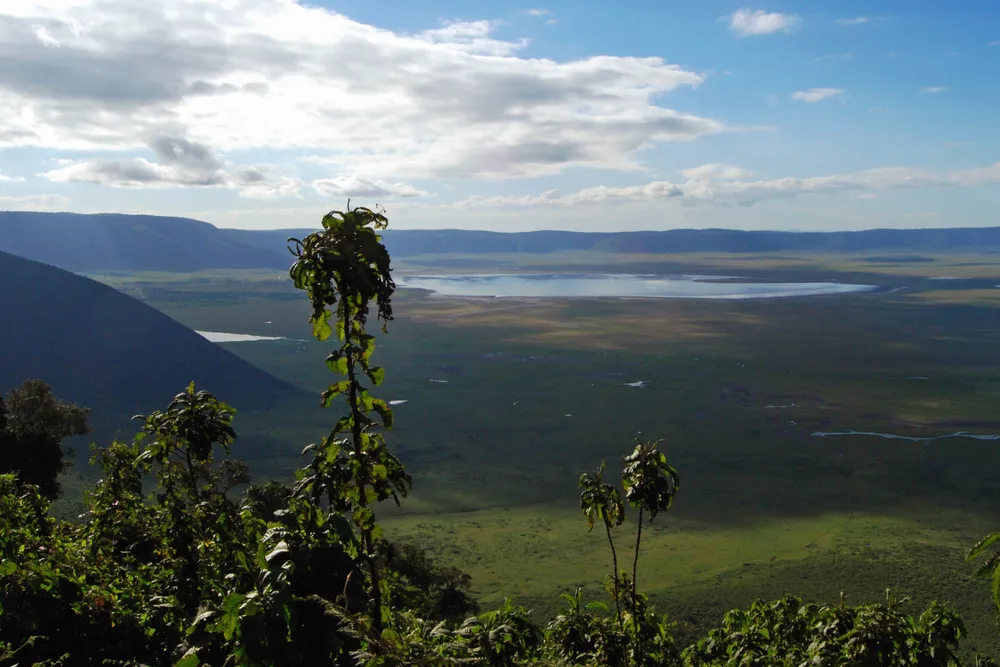
Safaris in Tanzania can be put into two categories, the Northern Circuit (Serengeti, Ngorongoro, Manyara and Tarangire) and the Southern Circuit (Selous, Mikumi and Ruaha). This is an oversimplification though and does not include other interesting, but harder to reach, parks such as Katavi and Gombe, to name just two. For tourists, the first two groupings are more accessible, as a variety of packages are offered by several tour companies.
Safari prices
The cost of a safari can range from the basics (fly-tents, self-catering and guides with vehicles) to smaller parks like Manyara and Tarangire, to luxury lodges and tented camps in the Serengeti which can cost anywhere from US$250 to US$1,500 per person per night. You can use your own vehicle, provided it's a 4x4 with adequate clearance. There is a benefit to hiring a guide and a vehicle as safari vehicles are equipped with open rooftops which provide a much better vantage point for animal viewing. Also, many park will require that
城市概覽改寫自 Wikipedia,旅遊指南來自Wikivoyage (CC BY-SA)。照片來自 Wikimedia Commons.