
Taketomi Island
Japan · Asia
關於Taketomi Island
Taketomi (竹富) is one of the Yaeyama Islands of Okinawa, Japan. This small island just north of the tropics with its picturesque beaches and architecture is a popular getaway especially for domestic visitors. Far out in the Philippine Sea and part of the Ryukyu Kingdom until the late 19th century, Taketomi offers attractions that you won’t encounter on the Japanese mainland.
Taketomi Island旅遊指南
城市概覽
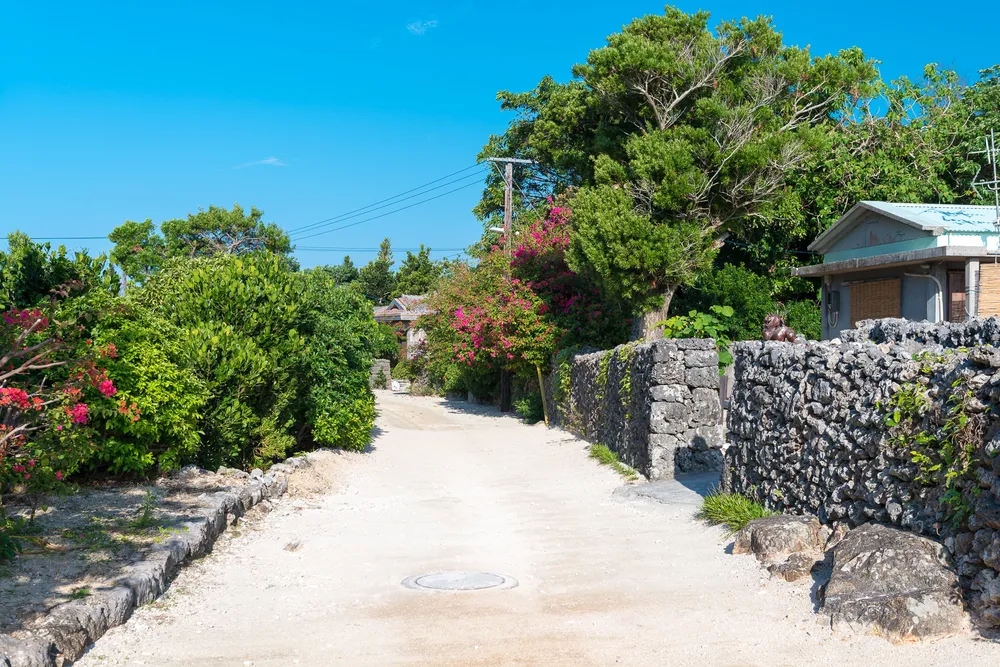
Tiny even by Yaeyaman standards, Taketomi (population around 300, area 5.4 km²) gets a disproportionate number of visitors because of its convenient location just off Ishigaki, and above all, its carefully preserved Ryūkyū village (集落 shūraku). Many houses in the village have red clay roofs with guardian shisa lions, a low surrounding wall of coral and extensive flower beds, which are particularly pretty in spring. Most roads are unpaved lanes of white sand and ambling water buffalo pull tourist-packed carts through town. While hardly off the tourist trail even before, Taketomi's popularity skyrocketed in 2012 when NHK aired the drama Tsurukame Josan'in (つるかめ助産院), and accommodation prices have soared to match. Beware that the administrative area of Taketomi Town (竹富町 Taketomi-chō) covers not just Taketomi Island, but also the neighboring far larger island of Iriomote and in fact all of the Yaeyamas except Ishigaki and Yonaguni. An address with "Taketomi" in it may thus be located elsewhere in the archipelago.
History This idyllic island has been inhabited for over a thousand years, but it wasn't the easiest place to scrape out a living. Being too dry for rice farming, villagers had to row for several hours across to Iriomote to tend their rice fields, spending nights on nearby Yubu to avoid Iriomote's malarial mosquitoes. Today, malaria has been eradicated, rice is imported, and the island cultivates tourists instead: the entire island is a part of Iriomote-Ishigaki National Park, and the village is carefully preserved as a historical architectural landmark. The few concrete structures you'll see on the island are actually some of the oldest buildings on the island, since all new construction down to electricity substations has to conform to traditional norms.
如何抵達
The only way to get to the island is by boat. An-ei Kankō (安栄観光), Yaeyama Kankō Ferry and Ishigaki Dream Tours operate a cozy triopoly with largely indistinguishable high-speed ferries (高速船 kōsokusen) running from Ishigaki every 30 min or so from 07:30 to 17:30 daily. Ferries take 15 min and cost ¥690/1330 one-way/return. Each operator also runs a car ferry (カーフェリー) twice a week, and these are slower but slightly cheaper at ¥530 one-way. These are not listed on the main schedules, so ask locally or check the websites. In addition, each company runs one ferry per day from Kohama to Taketomi and back (¥1,180/2,260), and a one-way service from Iriomote's Uehara or Ōhara ports (¥1,670). These are primarily meant for repositioning ferries, and reservations are mandatory. Packages including water buffalo rides are heavily flogged at the ticket counters, but read up below before you go for this. Returns are only valid on the same company, so you might want to pay the extra ¥50 for the flexibility of two one-ways. Try not to miss the last boat, since if you do, you're stuck for the night: there aren't even any charter services available.
1 Taketomi Port (竹富港). All the ferries go here. (updated Oct 2019)
當地交通
Getting around Taketomi is easy enough. At the north-east corner of the circular island, about 1 km away from the central village, is the ferry terminal. From here, you can rent a bicycle, hop on a shuttle bus or simply walk. Wisely enough, the village does its best to minimize motorized traffic, so rental cars and motorcycles are not available. A loop of paved road (環状線 kanjōsen) runs at a respectful distance around the village, with small Japanese-only markers at most intersections pointing the way to landmarks. Within the village, though, orienting yourself can be a bit of a challenge, since the streets of white sand and the walled-in buildings all look quite similar, and the little signage there is, is mostly in handwritten Japanese. The Nagomi-no-tō viewing tower makes a useful center point.
By bus Taketomijima Kōtsū runs shuttle bus services from the port to the village to the beaches and back at least once an hour. Fares ¥200/310 by distance, or ¥1030 for a one-day pass. Stops are by demand, so if you want get picked up, arrange this in advance or call 0980-85-2154 at least half an hour before.
By taxi Taketomi has one taxi, which can be booked at ☏ +81 80-2751-3229. Starting fare ¥550, and it's a minivan so wheelchairs can be accommodated.
By bicycle Probably the best way to get around is on bicycle. Prices are standardized at a rather steep ¥300/1500 for one hour/full day, the bike rental companies hang out at the dock and will transfer you for free. The money conscious traveller may want to rent the bicycle in Ishigaki and take it on the ferry, though the gain is not much since the ferry fee is at least an additional ¥400 each way. You can bring your own bicycle for free on the ferry if wrapped in a bicycle bag with the front wheel detached. Motorcycles are no longer available, but if you want a bit of an extra kick, you can rent electric bicycles instead.
On foot If you're on the island for more than just a day-trip, walking is a grea
必看景點
Start your tour by dropping into the visitor center right next to the dock, which can give you a free rough map or sell you a better one (¥200). Most sights in the village are of fairly minor interest and it's generally more rewarding to amble around randomly, popping into little village shops and cafes.
1 Kihōin (喜宝院), ☏ +81 98-085-2202. Daily 09:00-17:00. Japan's southernmost temple, but it's not much to look at. It houses about 3,000 historical artifacts and local handicrafts gathered from around the island. With no English explanations, visitors may find it to be of limited interest; however, it is essentially the island's history and culture museum. ¥300. 2 Nagomi-no-tō (なごみの塔) (center of the village). 24 hr. A purpose-built concrete tower that offers views over the entire island. The steps up are very steep. 3 Folkcraft Museum (民芸館 Mingeikan), 381-4 Taketomi, ☏ +81 98-085-2302. 9AM-5PM. Has local artisans weaving traditional Yaeyaman minsā cloth. Free. 4 Yugafukan (ゆがふ館) (near ferry terminal). An informative museum run by the national parks authority, but all the information is in Japanese. On the plus side, the 15-minute film and the audio sets of Yaeyaman stories and songs are interesting to everyone. Free. 5 West Pier (西桟橋 Nishi-sanbashi). This disused pier is where Taketomi's villagers used to set off by canoe to tend their rice fields on Iriomote. Today, it's Taketomi's best sunset-watching spot, but you'll have to stay overnight to catch this nightly event.
體驗活動
Taketomi is the kind of island where, by design, you can't really "do" much of anything — for example, there are no watersport facilities beyond paddling around snorkeling.
Beaches 1 Kondoi Beach (コンドイ浜). A spectacular expanse of white sand and turquoise water, and the only beach where swimming is allowed. Free toilets and showers; expensive beach gear rentals. 2 Kaiji Beach (カイジ浜). Taketomi is one of only two islands in Japan (the other is Iriomote) that accumulate this 'sand'
城市概覽改寫自 Wikipedia,旅遊指南來自Wikivoyage (CC BY-SA)。照片來自 Wikimedia Commons.