
SS Clan Monroe
South Africa · Africa
關於SS Clan Monroe
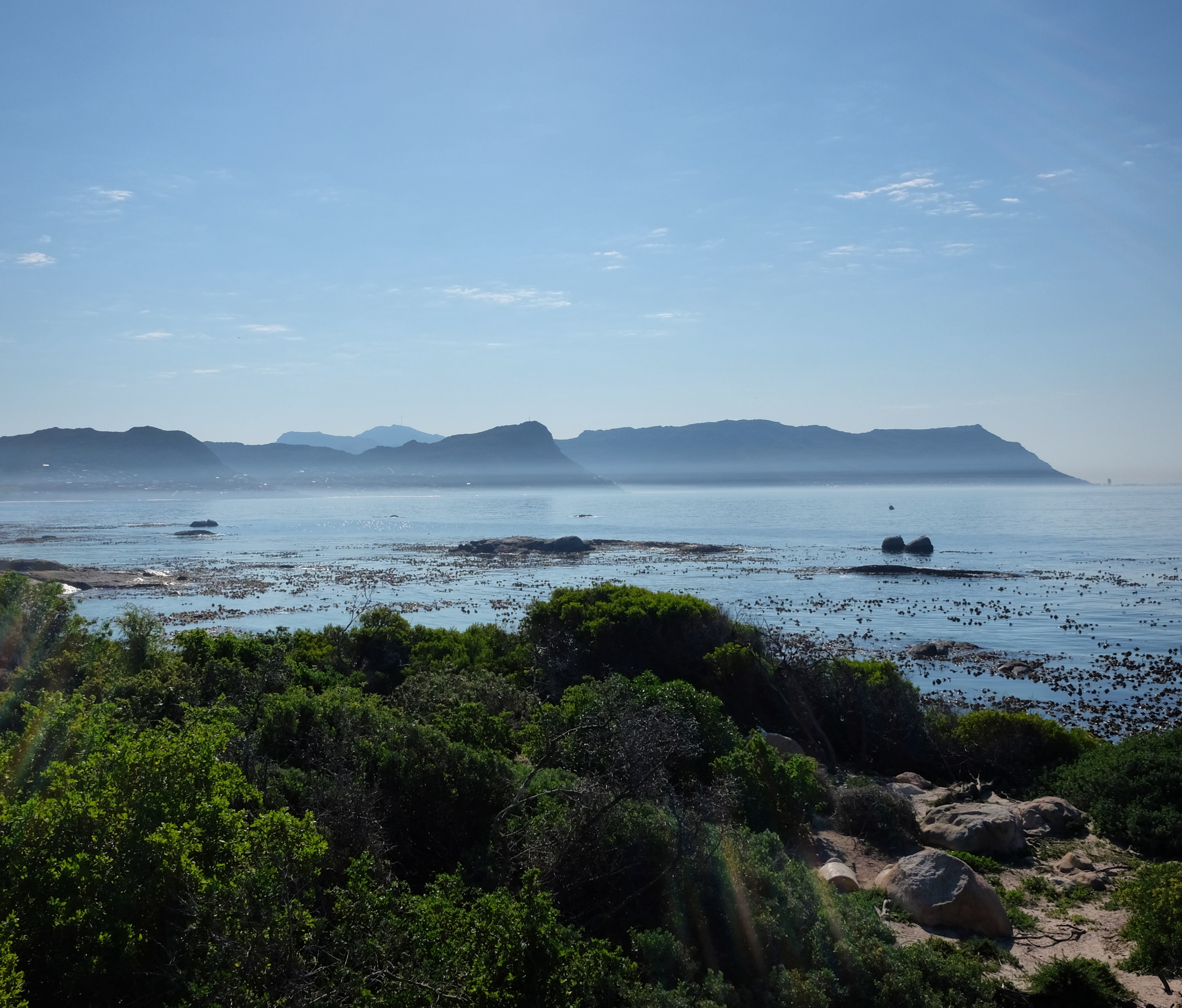
The dive site SS Clan Monroe is an inshore rocky reef with a historical wreck in the South Peninsula area on the Atlantic Seaboard of the Cape Peninsula, near Cape Town in the Western Cape province of South Africa.
SS Clan Monroe旅遊指南
城市概覽
The Clan Monroe was a British turret steamer and sister ship to the SS Clan Stuart, which was wrecked on the other side of the Cape Peninsula at Simon's Town, only 11km away as the crow flies. This is all the more remarkable as there were only about 6 ships of this type built.
Position 1 SS Clan Monroe: S34°08.817' E18°18.949' — 370 m 144° magnetic to Slangkop lighthouse. This is further offshore than the position indicated on the SA Navy charts. This site is in the Table Mountain National Park Marine Protected Area since 2004. A permit is required.
Name The name "SS Clan Monroe" is the name of the ship wrecked at this site
Depth Maximum depth is about 8 m. and the top of the anchor is about 4 m. Average depth is likely to be about 6.5 m.
Visibility Visibility is likely to be adequate when conditions are suitable to dive the wreck. The water is shallow and the site is well lit. Expect visibility of 5 to 10 m if conditions are good.
Topography The site is shallow, and the bottom is flat sandstone reef. The dip is almost horizontal, and the bedding is quite thin, so the steps are usually about 0.3 to 0.5m high, and depressions of similar depth. There are occasional outcrops about a metre high, but the anchor and chain mound stand up higher than anything else nearby. Geology: Ordovician sandstone, probably of the Peninsula formation. Strike not distinguishable, as the dip is almost horizontal.
Conditions The site is exposed to westerly winds and waves, and is very shallow, so should be dived in very flat seas, and is often good in offshore south easterlies. The site is well protected from south east wind and waves, but if a strong south east wind comes up the return boat trip could be uncomfortable The site is usually at its best in summer but there are also occasional opportunities in spring and autumn.
如何抵達
Boat or shore access. Very seldom dived, but not a challenging site in flat seas. Boats may be launched from the slipway at Hout Bay harbour, or at Kommetjie, which is very close by, but not a very good slipway. The site is also accessible from the shore if the sea is calm. The entry is subject to surf on the rocky shoreline if there is a swell running, and this may make the entry and exit both difficult and dangerous. The site is not easy to find without a GPS. The site is about 11.9 km from Hout Bay harbour, or 1.8 km from Kommetjie slipway.
必看景點
Marine life
The flat reef is heavily encrusted with coralline algae, and has a light kelp forest of sea bamboo. There are moderate numbers of rock lobster, and the odd abalone, but very few sea urchins. Most of the sessile invertebrates are in the cracks and under the small overhangs, as this is a reef which is exposed to a terrible pounding from the surf in winter.
Features There is a small amount of wreckage. This includes an anchor, a hawse pipe, an anchor windlass and a large pile of heavy stud-link chain, bonded together into a lump by rust and coralline algae. There is also a short cylindrical object which may be part of a mast or derrick, a few flywheels, some plate with stiffeners, a number of rectangular iron frames resembling boxes, a few bits of pipe. a two posted mooring bollard and a brass porthole frame, imbedded in the small boulders in a gully. This wreckage is concentrated in an area some 50 m long and 20 m wide. There may be other wreckage nearby that has not been mapped yet.
Photography
Suggested Routes No specific routes are recommended: The site is small enough to be comprehensively visited on a single dive unless you are specially interested in identifying the wreckage. The most interesting area is near the anchor, where the windlass and several other fairly large items are clustered.
城市概覽改寫自 Wikipedia,旅遊指南來自Wikivoyage (CC BY-SA)。照片來自 Wikimedia Commons.