
Southwest Colorado
United States · Americas
關於Southwest Colorado
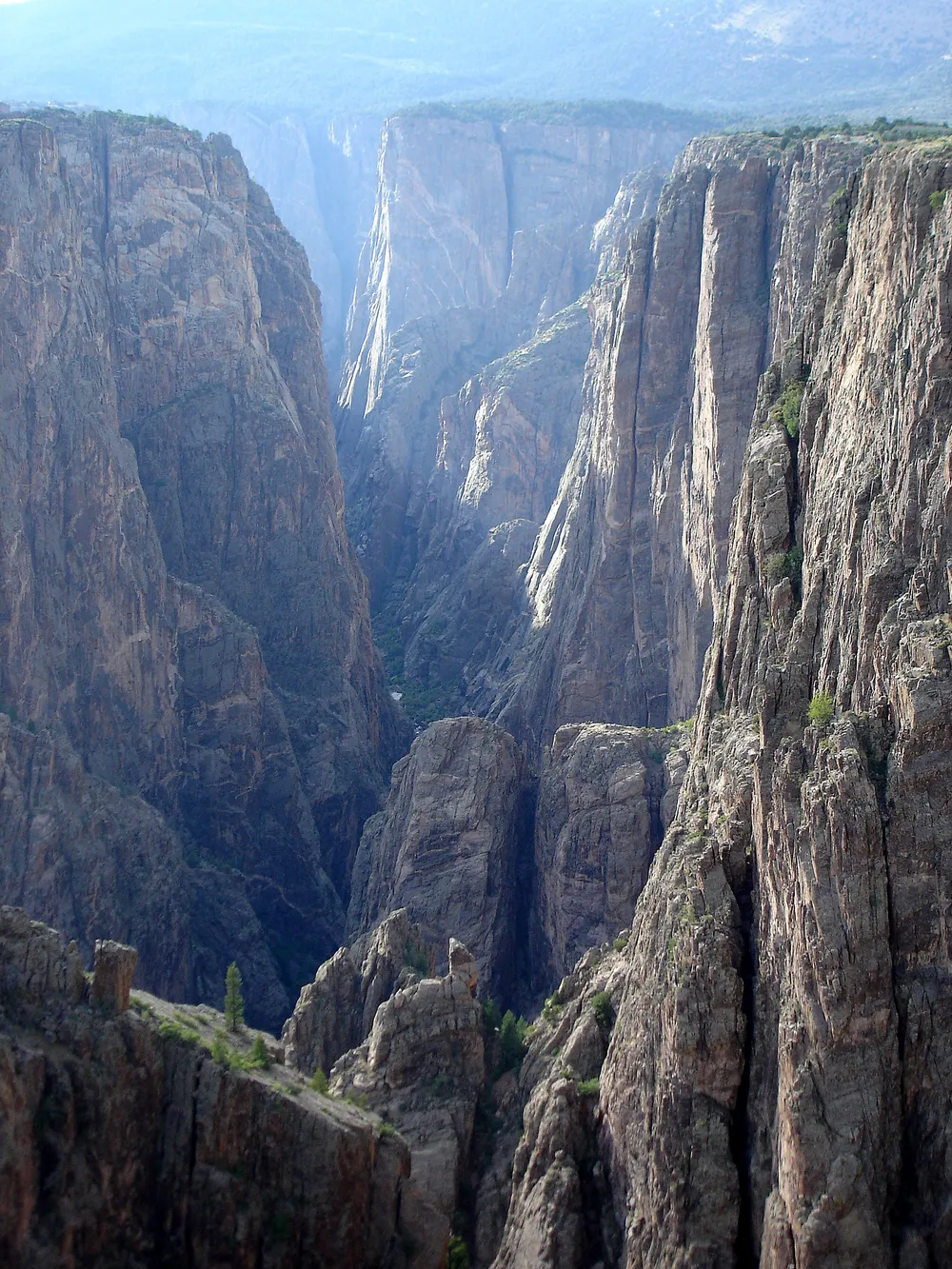
Southwestern Colorado, commonly called Mesa Verde Country, is a region of the state of Colorado in the United States of America that is known for beautiful landscapes, rich history, cultural heritage, and an abundance of outdoor activities. It is also home to the West Elks American Viticultural Area (AVA), part of Colorado's Wine Country and home to the highest wine vineyards in North America.
Southwest Colorado旅遊指南
城市概覽
Region boundaries in Colorado tend to be somewhat controversial (even in day-to-day life in the state) and are done in an ad-hoc way here. If you're expecting to read about some destination in this article and can't find it, check in the neighboring Northwestern Colorado and South Central Colorado sections to see if it's covered there. Broadly, this region is bounded on the:
North, by Northwestern Colorado, which contours along the southern borders of Mesa and Pitkin Counties, an arbitrary line 50 (80 km) to 100 (160 km) miles south of the east-west running Interstate 70. East, by the Continental Divide as it winds its way along the ridge line of the San Juan Mountains, which separates this region from South Central Colorado. South, by the New Mexico state line. West, by the Utah state line. This is a tremendously diverse area from both a geological and recreational perspective. Some of the greatest American ski resorts are here, and the San Juans pose some of the most serious mountaineering challenges in Colorado (Dallas Peak, in the San Juans, is generally considered the most difficult of Colorado's high summits to reach, and should be attempted only by the technically proficient climber). On the other hand, the lower terrain near Four Corners barely seems "mountainous" at all (although you can see mountains in the distance pretty well everywhere in the region), and the main attractions reside in canyon-and-mesa country are the numerous Ancestral Puebloan sites there. Southwestern Colorado is dominated by two geological features: the mountains that reach as high as 10,000 and 14,000 ft (3048 and 4267 m) along the Western Slope of the Continental Divide, and a zone comprised of the Uncompahgre and Colorado Plateaus. The Rockies in the mountainous zone includes such ranges as the San Juans, Elks and West Elks, as well as smaller ranges like the Uncompahgre, San Miguel, La Plata, and La Sals. This region is dotted with mining towns converted into tourist resorts
如何抵達
To visit Southwestern Colorado, travelers are going to have fly and/or drive.
By plane The only major airport in the state is the Denver International Airport, which is a major air hub and served by all major domestic airlines, as well as a few international ones. A closer option is Walker Field in Grand Junction, just to the north of this region, which is a minor airport served by several airlines with nonstop service to Dallas/Fort Worth, Denver, Houston, Las Vegas, Los Angeles, Phoenix, and Salt Lake City, with some service being seasonal. For private pilots, it is also possible to fly your small plane into the airport and leave it while you tour the area. Taxi and rental car service is also available at the airport. Within the region there are three small airport with limited commercial service. All three offer rental car service.
Cortez Municipal Airport (CEZ IATA) in Cortez has daily flights to Denver International Airport offered through Great Lakes Airlines. Gunnison-Crested Butte Regional Airport (GUC IATA) in Gunnison provides service to Denver, Dallas/Fort Worth, Houston, Chicago, and Los Angeles through Alaska Airlines, American Airlines, and United. Montrose Regional Airport (MTJ IATA) in Montrose is a small airport which has seasonal service on Allegiant Air, American Airlines, Delta, and United. Used most heavily during ski season.
By car Cortez - US 160 runs east west from Durango and terminates in the center of town, joining the north-south running US 491. On 491, Cortez is situated between Monticello, Utah to the northwest and Shiprock, New Mexico to the south. It's 46 mi (74 km), or about an hour's drive from Durango, while it's 60 mi (97 km) or hour's drive from Monticello. From Shiprock, it's a 42 mi (68 km), or 45 minute drive. Delta, Montrose - US 50 runs north-south from Grand Junction to the north, then curves and runs and east-west to Gunnison and Pueblo. US 92 runs east-west from Hotchkiss, Paonia and Aspen. Grand Junction is about
當地交通
There's really no alternative to driving. Motorists should be aware that the eastern side of this region contains some seriously high passes, particularly Wolf Creek Pass on US 160 as it crosses the Continental Divide, and Coal Bank Pass, Molas Pass, and Red Mountain Pass on US 550 (the "Million Dollar Highway") between Durango and Silverton. These are commonly closed for periods of time during the winter. There are even "avalanche tunnels" along some of the routes, to prevent your car from being swept off the road into deep ravines by falling blocks of snow. The western part of the region is lower and less prone to road closures, but towns with gas stations and services are few and far between. During the winter, heavy ice and snow are a major concern, which can make driving difficult and slow going. Always check the weather and road conditions before heading out. Even on a clear winter's day, make sure your vehicle's wiper fluid reservoir is full. The Colorado Department of Transportation (CDOT) spreads both sand and magnesium chloride on the roads, which makes for an impenetrable, gluey mess on your windshield. In the summer months, it's not uncommon to see the shoulders of the highways littered with broken-down vehicles that could not handle the steep grades and high altitude air of the Rocky Mountains. If you are venturing from a lower altitude, make sure your car can handle mountain driving. Thinner air means you will be burning more gasoline. Also, with so many steep grades, expect to gear down to avoid unnecessary friction to your brake pads.
美食
World class dining is available in Telluride and Colorado's Wine Country. There are a variety of restaurants available in Cortez and Gunnison, outside of the National Parks. Durango is another spot for decent dining. But if you really want to eat authentically in the region, it's not that difficult to eat like an Ancestral Puebloan. A trip to one of Southwestern Colorado's many farmers markets can provide a lot of the same ingredients the Ancestral Puebloans cultivated: garden corn, squash, pumpkins and beans. They also raised turkeys and hunted game. A visit to a small town butcher that processes wild game could add venison, elk, sage hens, ducks and geese to your menu. The Ancestral Puebloans gathered sunflower seeds and pinon nuts from the mesa tops; you can gather these ingredients a little easier at the local grocery store. Coarse-ground cornmeal could be added to the list, as native women used to spend long, grueling hours grinding grain on stone metates to have enough to eat. A majority of these ingredients are available in restaurants, since they are still heavily used today in Southwestern cuisine. Harder to come by are staples of the Ancestral Puebloan diet like prickly pears and yucca fruit. Pickled clean of their spines, the buds of the prickly pear can be cooked and served, as can its fruit. Also called Spanish bayonette, the yucca could be eaten raw, cooked, or mixed with other ingred
城市概覽改寫自 Wikipedia,旅遊指南來自Wikivoyage (CC BY-SA)。照片來自 Wikimedia Commons.