
Songpa District
South Korea · Asia
關於Songpa District
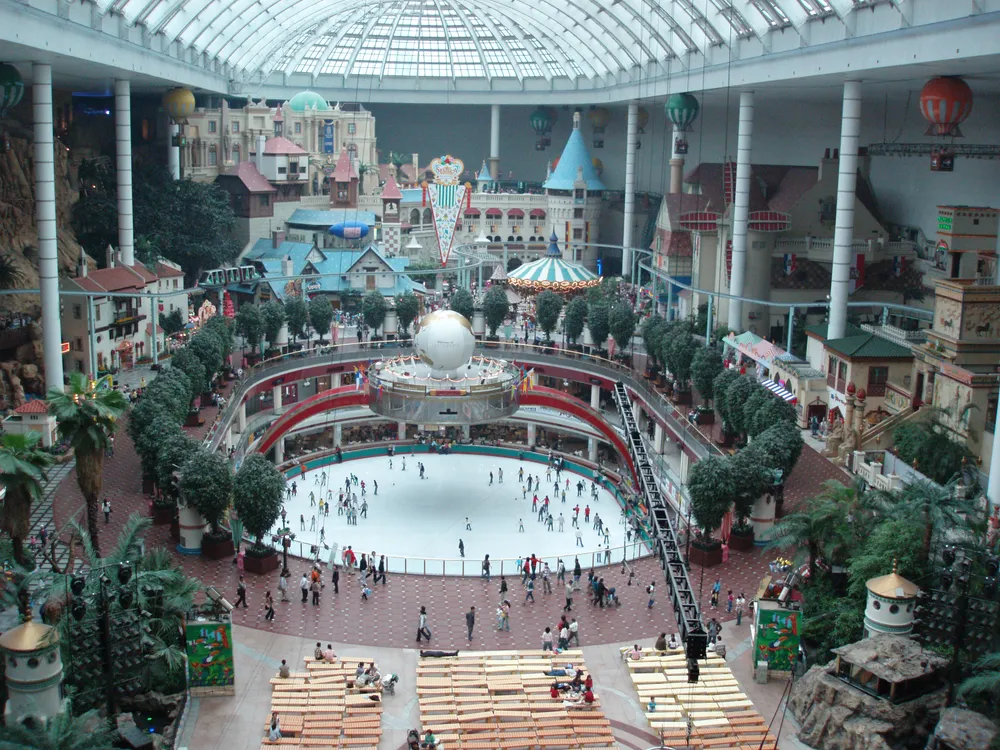
Songpa (송파) and Gangdong (강동) are in the eastern part of Seoul, along the Han River. Quieter and more residential then its hectic neighbor, Gangnam, Songpa nonetheless offers a fair number of attractions. The world's largest indoor theme park, Lotte World, is here, as is the Olympic Park and many of the facilities that were used the 1988 Seoul Olympics. And for fans of baseball and/or Korean op culture, the Jamsil Sports Complex frequently hosts baseball games and K-pop concerts.
Songpa District旅遊指南
城市概覽
Songpa, which literally means a riverside village with good mountains and clear water with green pine trees on a hill, was a town in the early Baekje Dynasty. It was originally part of Jungdae-myeon, Gwangju-gun, Gyeonggi-do, but in 1963, when Seoul's administrative area was expanded, it was incorporated into Seongdong-gu, and the Songpa branch office was established. In 1975, it was separated from Seongdong-gu to Gangnam-gu, and in 1979, it was part of Gangdong-gu, which was separated from Gangnam-gu. In 1988, with the implementation of local government, it was separated from Gangdong-gu and Songpa-gu was established.
Orientation Seoul/Southeast consists of two districts (구 gu): Songpa and Gangdong. This area is characterized by a mix of large residential neighborhoods, major sports and leisure facilities, riverside parks, and well-planned apartment complexes. Compared to central Seoul, the southeast is less crowded but offers wide open spaces, modern infrastructure, and convenient access to nature.
Songpa is one of Seoul’s most dynamic districts, home to Lotte World Tower, Olympic Park, and major shopping and entertainment complexes. It played a central role during the 1988 Seoul Olympics and remains a hub for culture, sports, and leisure. Gangdong, located further east, is known for its quieter residential areas, Godeok and Cheonho neighborhoods, and proximity to the Han River and ecological parks. Together, these districts offer a balance between urban convenience and a more relaxed local atmosphere.
Climate Seoul/Southeast experiences a typical temperate climate with four distinct seasons, similar to the rest of the city. Winters are cold and dry, with January temperatures generally ranging from -5°C to 2°C. Summers are hot and humid, especially in July and August, when daytime temperatures often reach 30°C or higher. The rainy season peaks in July, which receives the highest annual precipitation, while spring and autumn are relatively mild and pleas
如何抵達
By subway Subway line 8 runs through Songpa and continues to Namhansanseong. You can take Line 2 and get off at Jamsil and go directly to Lotte World Tower or Lotte Department Store. You can get off at Garak Market Station and Ogeum Station on Line 3. You can get off at Olympic Park Station and Bangi Station on Line 5. Take Line 9 to General Sports Complex Station and Seokchon Station.
By car Road transportation is one of the most convenient in Seoul, with Olympic Boulevard running through the northern part of the district and the Dongbu Expressway and Bundang Subway running through the western part of the district, as well as Jamsil Bridge and Olympic Bridge crossing the Han River. First of all, it is connected to the neighboring Gangnam subdistrict by numerous bridges over the Tancheon, including Olympic Boulevard. Olympic Boulevard provides convenient access to the city center and Yeouido subdistrict, as well as easy access to nearby satellite cities such as Seongnam and Hanam. The general roads in the district are also among the widest in Seoul, including Olympic Road, Yangjae-daero, Songpa-daero, Wiryeseong-daero, and Gangdong-daero, and the supporting branch roads are well laid out in a grid pattern. To the southeast, the area is blocked by the Namhansan mountain range, but it is convenient to access the Metropolitan Expressway 1 through Songpa IC and Seohanam IC. However, the highway is often congested during rush hour.
必看景點
1 Olympic Park (올림픽 공원), 424, Olympic-ro, ☏ +82 2-410-1114. 05:00~22:00. Built for the 1986 Asian Games and the 1988 Seoul Olympics. A lake, a large field covered with the grass, and a square with sculptures are very popular among visitors. It is frequently visited by brides and grooms to take their wedding pictures. There are a couple of courses that are ideal for jogging or walking. In addition, the outdoor stage and the six stadiums are often used for concerts and other special events. Also a well known modern art museum named SOMA Museum is in the park. It features modern artworks by both Korean and international artists. Museum ₩3,000. (updated Oct 2025) Hanseong Baekje Cultural Festival is a festival which reenacts Hanseong Baekje’s traditions and culture. Baekje is one of Korea ancient nation (BC 18 – AD 660). The capital of Baekje had been in Seoul for about 470 years (BC 1 – AD 476). Historical sites and antiquities of Baekje were discovered in Seoul. To remember the history of Baekje, Hanseong Baekje Cultural Festival is held every year (September) in Olympic Park, Songpa-Gu. You can experience Holography, Riders' equation, Ancient Tomb of Baekje, Baekje Experience Village, and Historical cultural distance matrix. 2 Iljasan Park (일자산 자연공원), 660, Dongnam-ro (Gangdong), ☏ +82 2-480-1396. 24 Hours. Park with sports facilities, many herb gardens and an astronomical observatory. (updated Jun 2015) 3 Seokchon Lake (석촌호수), ☏ +82 2 412 0190. Actually two lakes divided by a road, surrounded by park with several playgrounds. This park is something of an oasis in the middle of the skyscraper landscape. There is also a bar inside Seokchon Lake, so you can enjoy beer with the lake in the background. (updated Jun 2015) 4 Lotte World Tower (Seoul Sky, 롯데월드타워). 09:30-23:00 (last ticketing at 22:00). Enjoy the view from the fifth tallest building in the world. Be sure to check the weather before entry. The Lotte World Tower is a 555.7-metre (1,823 ft), 123-story skyscraper
體驗活動
1 Jamsil Sports Complex (잠실종합운동장), 25, Olympic-ro (Metro Line 2 and 9, Sports Complex Station), ☏ +82 2-2240-8800. This large sports complex centered around Jamsil Olympic Stadium, built in 1976 and host to most of the competitions in the 1988 Seoul Olympics. Though its heady Olympic heydays are long past, this sports complex is still very much active and frequently hosts various cultural and sporting events, most frequently concerts and baseball games. At Jamsil Baseball Stadium, Doosan Bears and LG Twins are home to this arena. Baseball here is very popular. It is, in fact, probably the most popular team sport in the entire country. You can feel the craze during the match. Booking tickets is tricky for non-Korean speakers. It's probably best to book tickets through an agency or third party instead of directly online. You can buy tickets offline at the stadium, but weekend games(Friday, Saturday, Sunday) are usually sold out. (updated Oct 2025) 2 Lotte World (롯데월드) (Metro Line 2, Jamsil Station). 10:00-21:00. This complex has a Lotte Department Store, a theatre which hosts the show Ballerina Who Loves a B-Boy, a Lotte luxury hotel, a large indoor ice skating rick, and a traditional Korean folk museum. However, what it is most famous for is one of the world's largest indoor theme park. Lots of rides. Atlantis rides, especially outdoors, are enough to make you have fun.Though it may seem attractive on a rainy day, others will have the same idea. Especially on the weekends and on holidays, if it's raining, watch out for m
城市概覽改寫自 Wikipedia,旅遊指南來自Wikivoyage (CC BY-SA)。照片來自 Wikimedia Commons.