
Seogwipo
South Korea · Asia
關於Seogwipo
Seogwipo (서귀포시, 西歸浦市) is used to describe the Seogwipo city, as well as the administrative district encompassing the entire southern half of Jeju island. The main city consists of an urban center and port on the coast, directly south of Jeju's most prominent landmark, Hallasan mountain. Urban sprawl has seen the city extend in a strip along the coast in both directions.
Seogwipo旅遊指南
城市概覽
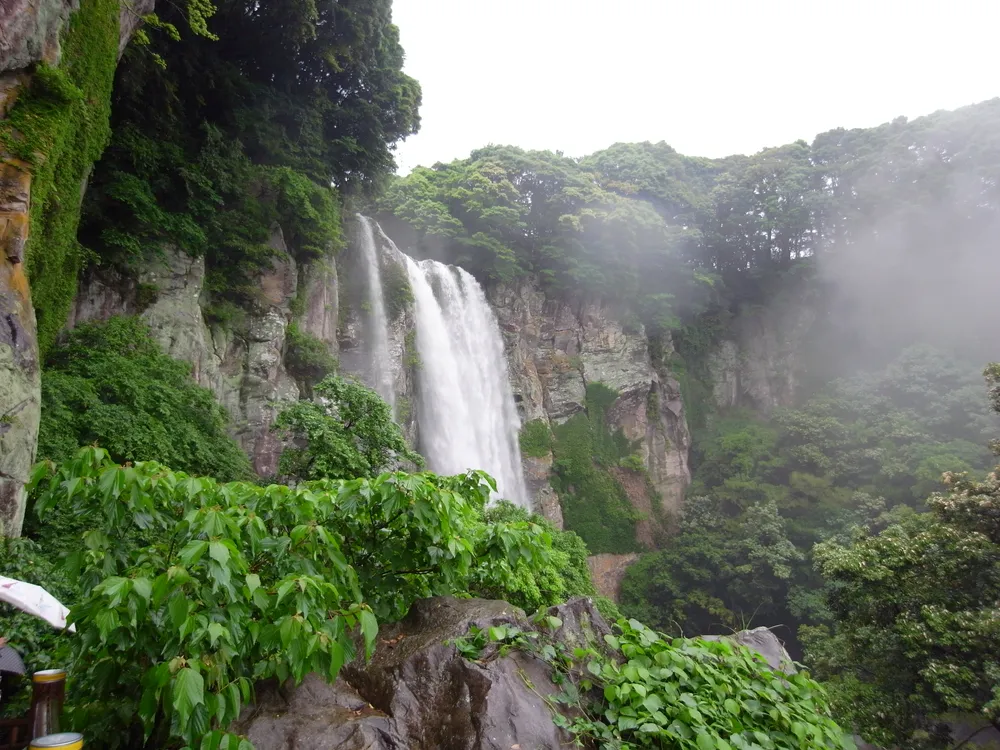
Covering the entire southern half of Jeju island, Seogwipo, the island's second-biggest city, claims the Jeju International Convention Centre and the Jungmun Tourist Resort Complex with Jeju's fanciest accommodation. Furthermore, as one of the many co-hosts of the 2002 FIFA World Cup, it holds the island's only stadium. Being spread out along a coastline made out of columnar basalt cliffs and beaches interchangeably makes it a somewhat unusual visit. A coastal wander may see you strolling across a busy summer beach one moment and sheepishly striding through incredibly swank hotel grounds the next. Yet equally likely, one could end up traversing rocks alongside sheer cliffs, dark caves and beautiful waterfalls. It is the second-largest city on Jeju Island, with a population of 193,000 in 2024. Much like Jeju city, Seogwipo city is a modern, congested, and somewhat ugly built-up area like any other in South Korea. Staying in this area is convenient for using the bus network. Otherwise, seeking accommodation in more rural parts of the district is recommended. Other destinations Smaller villages dot the coastline and eastern and western interior. Roughly clockwise from Jeju City: 1 Seongsan(성산) – village in the east of the island, close for Udo Island and Seongsan Ilchulbong, a volcanic crater. The village has a number of interesting seafood restaurants and can make for a pleasant overnight stay, but there are no nightlife options (apart from a disproportionate number of marts for the size of the village). 2 Gangjeong (강정) – small coastal village just west out of central Seogwipo. Unnoteworthy if not for the fact that it is the proposed site and thus ground zero for the battle over keeping naval bases off Jeju.
如何抵達
By bus Buses run from Jeju city on the other side of the island. Seogwipo is a main hub for buses for the southern side of Jeju island and therefore the majority of buses running on this side of the island pass through Seogwipo. From Jeju beach/downtown area, get bus 100 to the bus terminal. From there, buses leave every 10 minutes to Seogwipo. Fare: ₩3,000. Journey time: 1 hour.
The Airport Limousine bus (route #600) runs from Jeju International Airport to Seogwipo every 15 to 20 minutes. Journey time is about an hour and 20 minutes. Cost is ₩6000 per person (as of 2023) payable with cash or T-money card. The bus makes stops at about 30 locations, including all the five-star hotels in the Jungmun Resort Area. The final destination is at the Sun Motel in Downtown Seogwipo.
當地交通
Seogwipo is spread out in a thin line along the coast from Seogwipo downtown to the east and Jungmun to the west along the main arterial road, Ilju-ro (Highway #1132).
By bus Like it's northern counterpart, Jeju City, Seogwipo has its own inner-city (shinnae) bus system. Almost all of the buses take the same route along the highway between downtown and Jungmun, but tend to branch out at either end, servicing even a few of the smaller villages such as Daeepyeong-ri in the south-west of the island. In the downtown district there are a pair of bus "terminals" located around a main traffic roundabout from which most depart downtown, else just make your way to the highway. Inner-city buses cost ₩1000. Long distance inter-city buses mostly follow the same route along the highway as inner-city ones and can also be used to get around. The cost is a little higher but they are faster, only stopping at major locations before zipping out of town to Jeju City. These long-distance buses look more like tour buses than the city buses and go pretty much anyhere on Jeju. Seogwipo has two inter-city terminals. The main inter-city terminal is in the south-east of downtown, near the Jeongbang Waterfall. The second is to the right of the E-mart in front of the World Cup Stadium (tucked in the back of a rather nondescript building). In practicality however, you can get just get on from one of the larger bus stops on either side of the highway around the stadium or Jungmun, and or at the traffic roundabout in downtown.
By taxi Taxis are also an option – most places are happy to call one for you. However, if you're planning to travel the full 25 km from Jungmun to downtown, the fare will be expensive.
By motorcycyle There are one or two places that rent scooters in Seogwipo.
On foot The main city area of Seogwipo, World Cup Stadium and Jungmun all lie in a 25- to 30-km-long thin strip along the coast. Whilst it is downright easy to wander each of the three key areas individually
必看景點
In Seogwipo town 1 Andeok Valley (안덕 계곡). The most beautiful valley in Jeju. The strange rock cliffs surrounded like a folding screen and the clear water flowing leisurely from the flat bedrock create a stylish atmosphere. Andeok Valley was named because seven days after the sky cried, the ground vibrated, and clouds and fog formed, the great gods rose and the stream meandered between the rock walls, making it a place of peace. The sap from the temperate forests such as the Gusil nut chestnut tree, oak tree, juniper tree, camellia tree, persimmon tree, and dampal tree adds freshness. 2 Jeju Sculpture Park (제주 조각공원). This park near Mt. Sanbang is a relaxing walking area where you can discover over 160 sculptures in a peaceful atmosphere. The sculpture park also has an observation tower. 3 Gaetkak Jusangjeolli Cliff (갯깍 주상절리). Although the access road is cramped and there is an unpaved rocky road by the sea, it is a place where you can feel the sea and hundreds of years of sea scent while stepping on the bumpy rocks. It boasts the best place as a photo zone, fully feeling the appearance of different stones, sea breeze, and sea scent. 4 Seongeup Folklore Village (제주 성읍마을). The "folklore" is a bit misleading, this is actually an authentic traditional Jeju village in which (some) people actually live. While there is a bit of signage in English, to really appreciate and understand this place requires a tour guide or book. Free. 5 Jeju Folk Village Museum (제주 민속촌). Not to be confused with the above, this is a created museum that presents a vivid and lively exhibition of the island's cultural assets. Built on an area of over 150,000 m², the village has reconstructed and moved living structures from varies styles. Get the audioguide: a steal at only ₩2,000. Pace yourself, seeing everything can take up to 4 hours. ₩6,000. 6 Soingook Miniature Theme Park (소인국 테마파크). Here you can get up close to small scaled replicas of some of the most famous structures from more than 3
體驗活動
Marine activities Scuba diving. (updated Sep 2024) 4 Submarine tours (서귀포잠수함), 40 Namseongjung-ro, ☏ +82 64-732-6060. 09:30-16:30. Located in the harbour, you have the opportunity to experience going down to a depth of 40 m below the water surface on a submarine trip. With a course around 2.8 km long, a tour is a great way to see below the surface of Jeju's splendid seas. Here you can see the world of soft corals and colorful fish all amid a fantastic underwater landsca
城市概覽改寫自 Wikipedia,旅遊指南來自Wikivoyage (CC BY-SA)。照片來自 Wikimedia Commons.