
Saijo
Japan · Asia
關於Saijo
Saijō (西条), also known as Iyo-Saijō (伊予西条, capped with old province name), is in Ehime prefecture, Shikoku island, Japan.
Saijo旅遊指南
城市概覽
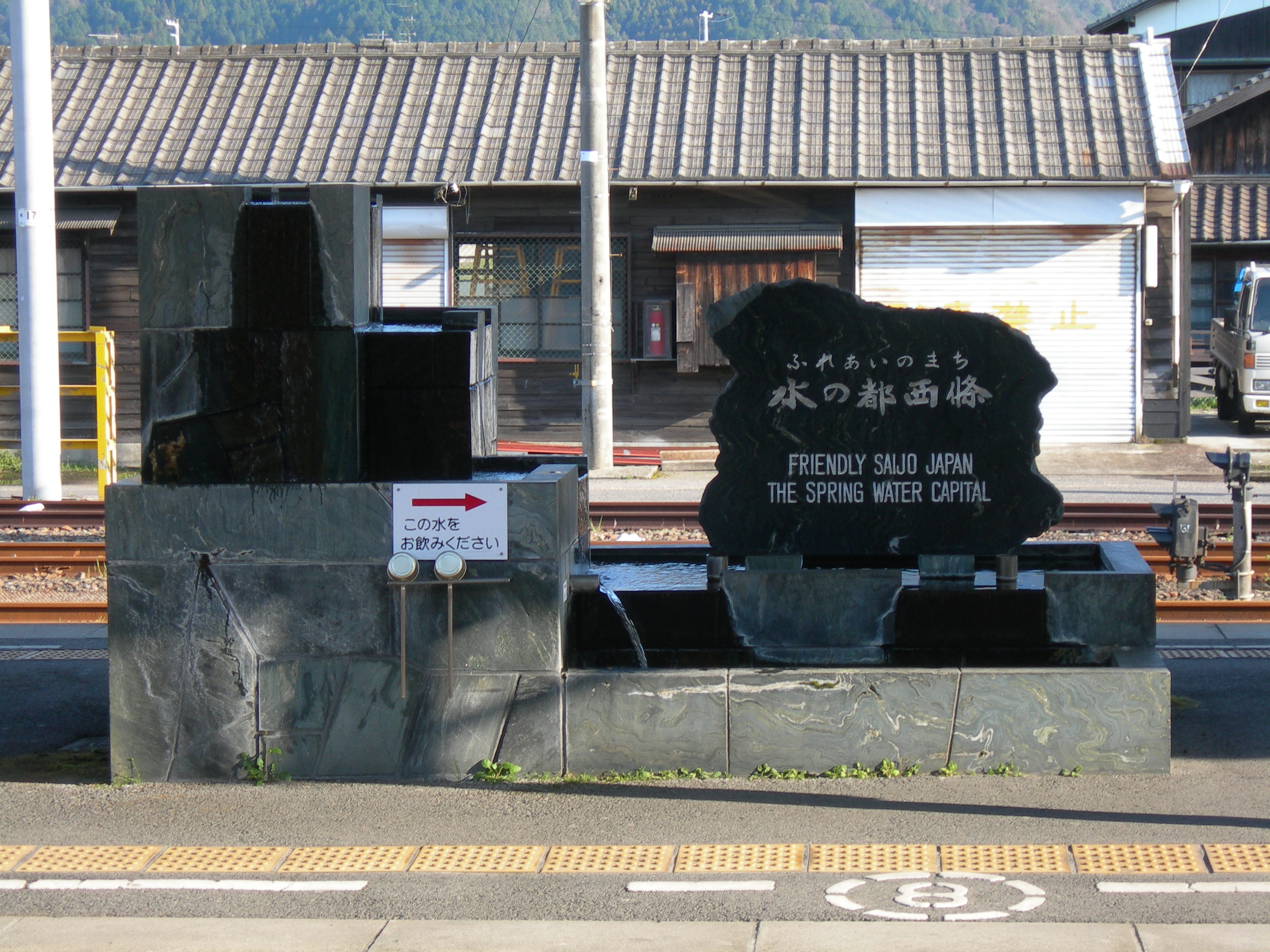
Saijō is a medium-sized city Ehime Prefecture, known throughout Shikoku for its fresh spring water (uchinuki), its massive autumn festivals, and as the gateway to Mt. Ishizuchi, the tallest peak in western Japan. Temples 60-64 on the Shikoku Pilgrimage lie within the extended Saijō municipal area. This area was formed by the merger of the old Saijō City, Toyo City, Komatsu Town, and Tanbara Town in November 2004. Saijō may be off the beaten path for many. However it is a good place to get a taste of the laid-back and hospitable culture of Ehime. Many of the typically conservative and polite locals burst into a wild celebratory mood during the yearly autumn festivals in the Saijo, Komatsu, Toyo, Himi, and Iwane areas. With good preparation, you can find specialty shops, restaurants, and izakayas featuring local products and foodstuffs. For nature lovers, hiking season can be a great time to visit, with the exception of the sizzling heat of August. There are also many beautiful flowers to view at different times of the year; for example, plum blossoms (ume no hana) and camelias (tsubaki) in winter, and cherry blossoms (sakura) and wisteria (fuji no hana) in spring. Saijō, Ehime should not be confused with the much smaller Saijō Town in Shōbara City, Hiroshima. Be very clear with JR staff that you are going to Iyo-Saijo (伊予西条) station when buying train tickets from other parts of Japan in order to avoid buying tickets to the wrong place.
Tourist information site The local tourist association has a Japanese-only guide site.
如何抵達
Iyo-Saijō station is on the JR Yosan Line from Uwajima to Takamatsu. For flyers, it is recommended to fly from Narita or Haneda to Matsuyama Airport. Then you can travel via the JR Yosan Line or Setouchi Bus Matsuyama to Niihama Express Bus Line to Iyo-Saijō station. Jetstar runs three short discounted flights daily to and from Narita. These flights are efficient but services are rather sparse on the short flight. There is also limited service between Matsuyama Airport and Seoul, South Korea. From Okayama on Honshu, the Shiokaze limited express train makes hourly runs to Iyo-Saijō (1 hr 45 min - 2 hours, ¥4740, no charge with Japan Rail Pass). Express trains only stop at Iyo-Saijo and Nyūgawa stations, while "Wan-Man" (one man) local trains stop at all 7 stations in the city limits on an almost hourly basis. There is a convenient bus service called the "Ishizuchi Liner" that runs to and from the Herbis Bus Terminal in Osaka, the Sannomiya Station area in Kobe, and Imabari Station with stops at Saijō Station and Nyugawa Station. It is run by Setouchi Bus. Japanese knowledge is recommended in order to purchase tickets for this bus line at red machines in Lawson or Family Mart convenience stores. Tickets can also be purchased at the Herbis Bus Terminal in Osaka or at Imabari Station on the day of travel with no guarantee of availability. At less than ¥5000 one way, this service is much less expensive than travel by train, but takes four to five hours. Setouchi Bus also runs a limited overnight bus service to Tokyo, the "Paireetsu Go" for around ¥1100 one way. If you can make it to Imabari from Saijo, there are also "Shimanami Liner" buses running throughout the day from Imabari to Hiroshima for less than ¥4000 one way. Booking for all of these lines at least a day in advance is recommended; these buses can fill up during the holiday season. By car, Saijō is accessible by the Matsuyama Expressway (Komatsu IC and Saijō IC exits) and the Imabari Expressway (Komatsu IC ex
當地交通
Due to the merger in 2004, Saijō encompasses a wide area of about 509 km². Local help or basic Japanese may be useful in getting around anywhere outside the stations on the main JR Yosan line. Public transportation within Saijō can be somewhat limited as trains and buses come and go infrequently. But it is extensive. Taxis are available at all seven stations on the JR Yosan Line that lie within the Saijō city limits between about 07:00 and just after midnight. They run later on important nights of the festival. Expect to pay about ¥1200 for 3 km, with the price quickly rising per kilometer after that. There are two useful regional bus lines run by Setouchi Bus that pass through Saijō hourly from the morning to about 20:00. The express lines run from nearby Niihama to Imabari or Matsuyama and stop at many places throughout Saijo depending on the line. On top of these main regional lines, there are many local lines that branch off into quieter areas, especially in Tanbara and Saijo proper. Japanese knowledge is recommended if you want to use the bus system. For sightseeing, a dedicated bus runs between Iyo-Saijō station and the Asahi Brewery. There is also a bus that leaves from Saijō station with limited runs in the morning to a lift used to visit Mount Ishizuchi, which is on the southern border of Saijō. Rental bicycles are available at the Saijō Tourism Center next to Iyo-Saijō station for ¥200/hour. Most of Saijō is relatively flat and easily bikeable.
必看景點
Shikoku Railway Culture Museum (四国鉄道文化館, shikoku tetsudō bunkakan) (on your right when exiting Iyo-Saijō station). This lovely museum houses a first-generation 0 Series Shinkansen bullet train car and a JNR Class DF50 diesel locomotive (No. DF50 1), and a building displaying three more historical train cars. One building is dedicated to Shinji Sogō, known as the "father" of the bullet train, who is from the Saijō area. Kōmyō-ji (光明寺) (15 minutes walk from Iyo-Saijō station, on your right). A beautiful modern Buddhist temple designed by legendary architect Tadao Ando. Temples 60 through 64 on the Shikoku 88 Temple Pilgrimage fall within Saijo city limits. Temple 60, Yokomineji (横峰寺) is considered the most difficult temple to reach because of its lack of access by ropeway and the tough climb to get there. The closest rail access is from Iyo-Komatsu (伊予小松) station, where you will also find nearby temples 61 and 62, Ko-onji (香園寺) and Hojuji (宝寿寺, respectively. Temple 63, Kichijoji (吉祥寺) is an easy walk from Iyo-Himi (伊予氷見) station. Walk up the road without crossing the train tracks and make a right at the first small street, at the next corner it will be on your right. Temple 64, Maegameji (前神寺) is at the foot of Mt. Ishizuchi, and like Yokomineji it is particularly hard to access by walking. The closest train stop is, again, Iyo-Himi station. If you are interested in visiting these temples, it might be easiest to arrange to go with a bus tour with Setouchi Travel Company (in Japanese). The Kamo river runs through Saijo highway between Iyo-Saijo (伊予西条) and Ishizuchi-yama (石鎚山) stations, and at the river there is a particularly pretty spot for cherry blossom viewing where the river comes down from the mountains and meets Route 11. From the station, take a 10 minute walk down Ekinishidori until you reach a fountain and uchinuki (water spring for which Saijo is famous), make a left there and continue until you reach the road on the other side
城市概覽改寫自 Wikipedia,旅遊指南來自Wikivoyage (CC BY-SA)。照片來自 Wikimedia Commons.