
Qingzang railway
People's Republic of China · Asia
關於Qingzang railway
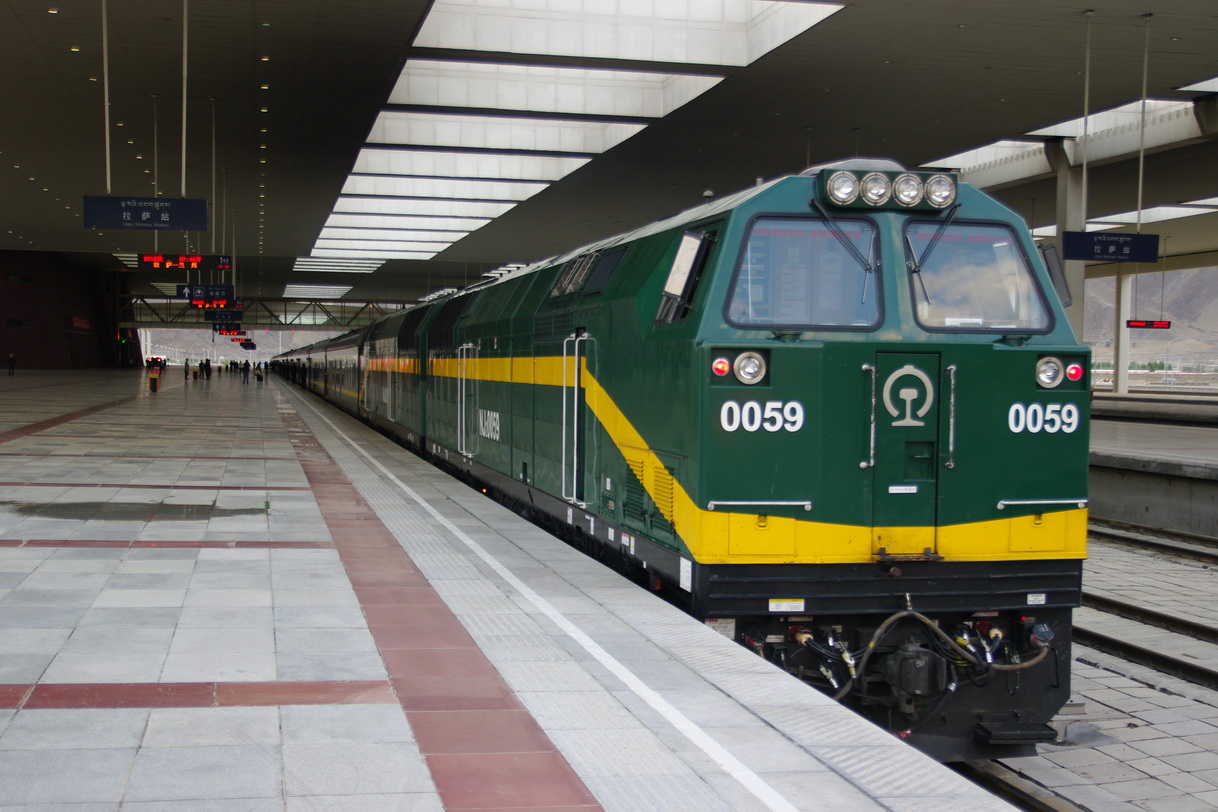
The Qinghai-Tibet railway is the main artery into Tibet and connects Xining to Golmud and onwards to Lhasa. It's the quickest way for going overland to Tibet from the rest of China.
Qingzang railway旅遊指南
城市概覽
Known as the Qinghai-Tibet train, Qinghai-Tibet railway, Tibet railway or Qingzang railway, this route is 1,956 km long and stretches from Xining in the province of Qinghai via Golmud to Lhasa in Tibet. The highest railway in the world, rising up to more than 5,000 meters (16,000 ft) above sea level, the railway is a masterpiece of engineering. During its construction it was both welcomed and opposed; and according to critics it was built for political and military rather than economical reasons. On one hand, the railway helps to spur economic development in Tibet by enabling freight to get into and out of Tibet faster, cheaper and safer than the old highways. On the other hand, the railway obviously facilitates the movement of Han Chinese to Tibet, something opposed by many Tibetans. It also enables better control by the central government over Tibet, similar to how railways in the nineteenth century tied the nations and empires of Europe and North America together.
History A railway between Tibet and the Han Chinese heartland is not a new concept. A railway line between Lhasa and Lanzhou was first proposed by China's first president Sun Yat-sen in 1919, but due to the fact that the Republic of China did not have actual control of Tibet, which had unilaterally declared independence in 1912, it was not politically feasible for the railway to be constructed. After the People's Republic of China was declared in 1949, and when Tibet was returned to Chinese control in 1951, plans were made up for a railway to Tibet. The first 814 km (506 mi) section from Xining past Golmud to Nanshankou was finished in 1984, but the construction of the rest of the railway across the high plateau posed several engineering challenges that were insurmountable with the technology of that time, so construction was halted until 2001.
Almost 90% of the second section of the railway goes through terrain more than 4,000 m (13,000 ft) above the sea level. With lower air pressure and therefo
如何抵達
Most foreigners need a visa to visit China. To travel to Tibet by train (or other mode of transportation), you need a Tibet travel permit on top of that. Also, due to the high altitude of the train route and Lhasa itself, you should stay at some intermediate destination for a few days to let your body acclimatize — for instance at Xining, which is about 2,300m above the sea level. There are trains from several places in China to Lhasa, and as the Qinghai-Tibet railway is the only one into Tibet, you will travel along it from Xining to Lhasa, no matter if you start in Beijing, Xining, Lanzhou, Shanghai, Guangzhou, Chongqing, Chengdu or somewhere along the way. See details in these city articles for getting in. You could also reach Golmud via routes described in Silk Road and Along the Yellow river. Some trains go daily, others every second day — on average there are five passenger trains a day in each direction on this railway. If you plan to travel in the other direction, see Lhasa#Get in for getting to Lhasa and starting the train journey from there. Most likely you will fly into Lhasa.
順遊推薦
With more railway investment by the Chinese government, a railway line from Lhasa to Shigatse was opened in 2014, and another railway line to Nyingchi opened in 2021. Trains to Shigatse takes about 2 hours, while trains to Nyingchi takes about 2.5 to 5 hours, depending on their service types.
城市概覽改寫自 Wikipedia,旅遊指南來自Wikivoyage (CC BY-SA)。照片來自 Wikimedia Commons.