
Northeast India
India · Asia
關於Northeast India
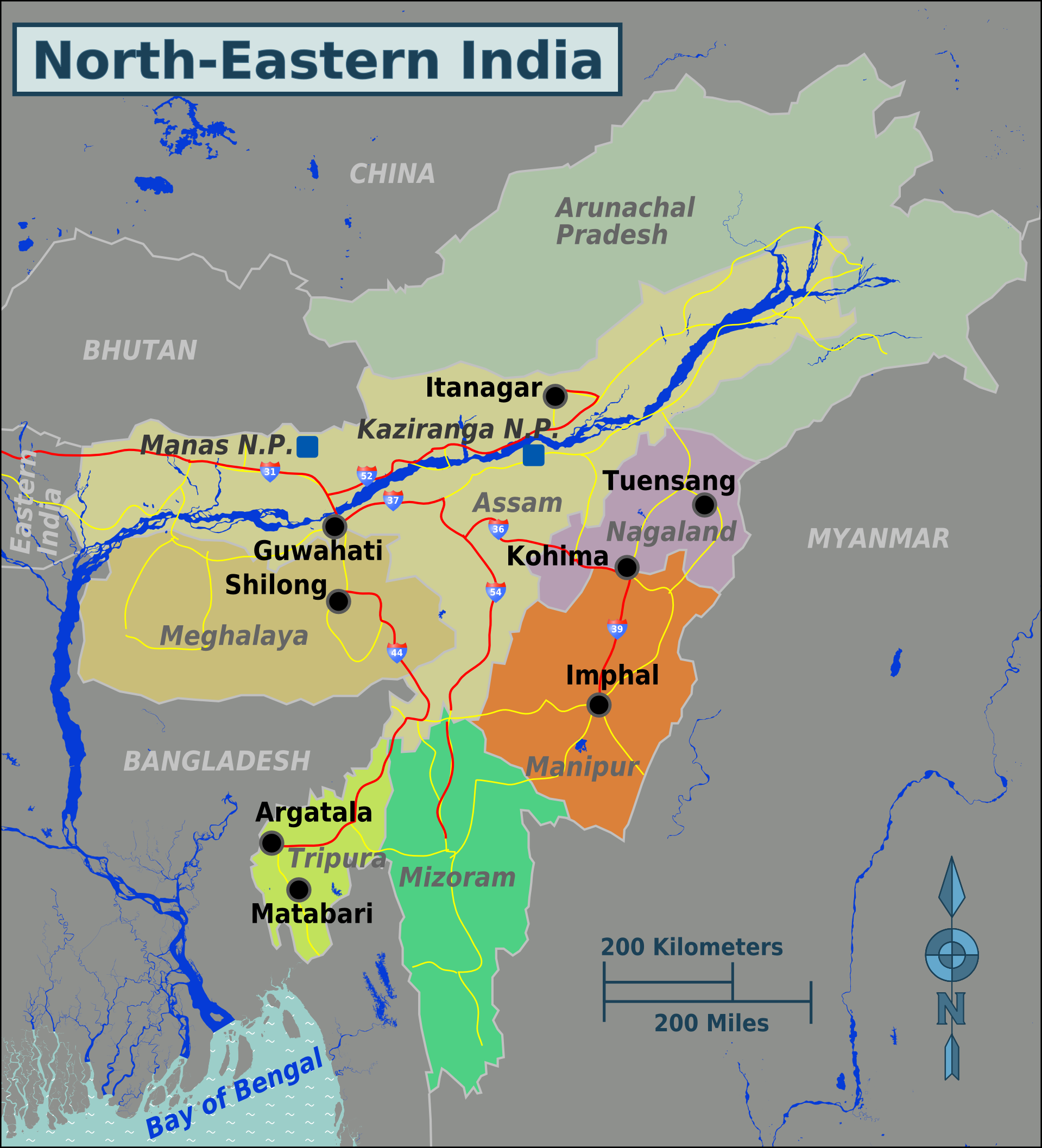
North-Eastern India, also called the Northeast, consists of seven small states that are surrounded by Bhutan, China, and Myanmar, and almost cut off from the rest of India by Bangladesh.
One of the most linguistically diverse regions in the world, the Northeast ironically has similar cultures across its seven states, which are often collectively referred to as the Seven Sisters.
Northeast India旅遊指南
城市概覽
History North‑Eastern India has a long and complex history shaped by waves of migration from East Asia, the Himalayan region, and the Indian plains. Many of the region’s earliest inhabitants belonged to Tibeto‑Burman, Tai, and Austroasiatic language families, and their descendants still form the cultural backbone of states such as Nagaland, Mizoram, Meghalaya, and Arunachal Pradesh. These groups developed sophisticated systems of governance, clan structures, and oral traditions that thrived in the region’s isolated hills and valleys. Unlike much of the Indian subcontinent, the Northeast was never fully absorbed into ancient empires, allowing its tribal societies to maintain distinct identities for centuries. The Ahom Kingdom in Assam stands out as one of the region’s most influential historical powers. Founded in the 13th century by Tai‑Ahom migrants, the kingdom expanded across the Brahmaputra Valley and famously resisted repeated Mughal invasions. The Ahoms introduced advanced agricultural techniques, built embankments and tanks, and developed a unique administrative system. Their six‑century rule left a deep imprint on Assamese culture, language, and identity. Meanwhile, the hill regions remained home to independent tribal polities, each with its own customs, festivals, and governance systems. The region’s location between Bhutan, China, and Myanmar made it a crossroads of trade and cultural exchange. Buddhism spread into Arunachal Pradesh and parts of Manipur, while Hindu influences entered the Brahmaputra Valley through trade and pilgrimage. The arrival of the British in the 19th century brought tea plantations, missionary activity, and new administrative boundaries. Missionaries played a major role in the spread of Christianity in Nagaland, Mizoram, and Meghalaya, transforming local cultures while blending with indigenous traditions. After independence, the Northeast underwent major political reorganization. Assam was gradually divided into several states to
如何抵達
The Northeast is not exactly the easiest place to enter, especially for Indian citizens. You must have a permit to visit most states, and Tripura and Assam are the only two that don't require travel permits. Indian citizens need an Inner Line Permit (ILP) to enter the states of Arunachal Pradesh, Manipur, Mizoram and Nagaland. Foreigners need a Protected Area Permit (PAP) to enter the state of Arunachal Pradesh. In accordance with the Indian law, all foreign visitors are required to register with the Foreigners Registration Office (FRO) within 24 hours of arrival in Manipur, Mizoram or Nagaland. Although the requirements vary by state, in general it is very difficult for citizens and former citizens of Pakistan and China to visit the Northeast.
By plane
Guwahati, Imphal, Dimapur and Agartala have direct flights from the mainland, especially Delhi and Kolkata. There are two other major airports serving Upper Assam and neighbouring areas: Dibrugarh and Silchar. Arunachal Pradesh is served by four airports. There are helicopter services to Naharlagun (14 km from Itanagar, Arunachal Pradesh) and Aizawl (Mizoram).
By train There are good train connections from most of the major Indian cities to the Northeast, and Assam, Mizoram and Tripura are the only states with railway lines (barring Manipur and Nagaland with single stations). The important stations in the region are Guwahati, Bongaigaon, Lumding, Tinsukia, Dibrugarh, Agartala and Sairang. The fastest train from Delhi is the Guwahati Rajdhani Express (28 hrs) followed by North-East Express (32 hrs), and Dibrugarh-bound Brahmaputra Mail (42 hrs), while the fastest train from Kolkata (Howrah) is the Guwahati-bound Saraighat Express. The railway tracks in Assam are not electrified and are single tracks, so delays are the norm.
By bus There are regular long-journey buses from Kolkata and Siliguri to many northeastern states.
By car All the states have good road networks between cities. However, driving is not
當地交通
By bus By far the best way to get around the region with public transit, as there are bus networks between cities.
By train Assam has the most extensive rail network in the Northeast, and there are trains serving various towns in Tripura and Mizoram as well. Manipur and Nagaland have only one station each (Jiribam and Dimapur respectively).
By plane Flying is useful to reach certain areas with high elevation not served by trains.
必看景點
The Northeast region of India is home to lush, beautiful landscapes, endemic flora and fauna of the Indo-Malayan group, and famed tea gardens. Meghalaya in particular is famous for its mesmerising environment and is called the "Scotland of India", whereas the Himalayan mountains and valleys of Arunachal Pradesh are under-appreciated. The region boasts places of worship from different religions, like the Hindu temples in Assam, Manipur and Tripura, the Buddhist monasteries in Arunachal Pradesh, and the churches in Meghalaya, Nagaland and Mizoram. The Northeast also has some heritage monuments, particularly in Upper Assam, Manipur and Tripura, including the Ujjayanta Palace in Agartala, the Kangla Fort in Imphal, the Unakoti near Dharmanagar and the Moidams of Sibsagar, the latter two being UNESCO World Heritage Sites.
體驗活動
Assam is one of India’s top destinations for wildlife and river experiences. Travellers can take jeep or elephant safaris in Kaziranga National Park, known for its one‑horned rhinoceroses, or explore Manas National Park along the Bhutan border. River cruises on the Brahmaputra offer scenic views and access to river islands such as Majuli, known for its monasteries and traditional arts. Tea garden visits and cultural festivals such as Bihu provide additional insight into Assamese life.
Greener Pastures, ☏ +91 9435 747471. An eco-tourism company that promotes travel, conservation and sustainability in North-Eastern India. They provide tours that deal with tribal cultural exchange, wildlife viewing, extreme adventure sports, river cruises, history learning and tea stays.
National parks
Kaziranga National Park. Famous for its one-horned rhino found nowhere else in the world. Elephant rides in the park make for a thrilling experience. Has accommodation cottages and restaurants.
美食
North-East India is famous for its delicious and ethnic delicacies. The cuisine includes world famous vegetarian and non vegetarian dishes. The North-East has earned accolades for the various dishes prepared from local herbs and spices. Apart from local dishes, it is also equipped with restaurants and hotels serving conventional Indian foods (both North Indian and South Indian). So eating is no problem for tourists.
飲品與夜生活
In North-Eastern India, there are many refreshing alcoholic beverages that you can drink. Look for aphung (a rice-beer) in Arunachal Pradesh and Assam, and zutho (a type of wine) in Mizoram. You can find many of these in local markets. Tea is the most widely consumed beverage across the region, especially in Assam,
城市概覽改寫自 Wikipedia,旅遊指南來自Wikivoyage (CC BY-SA)。照片來自 Wikimedia Commons.