
Nanxun
People's Republic of China · Asia
關於Nanxun
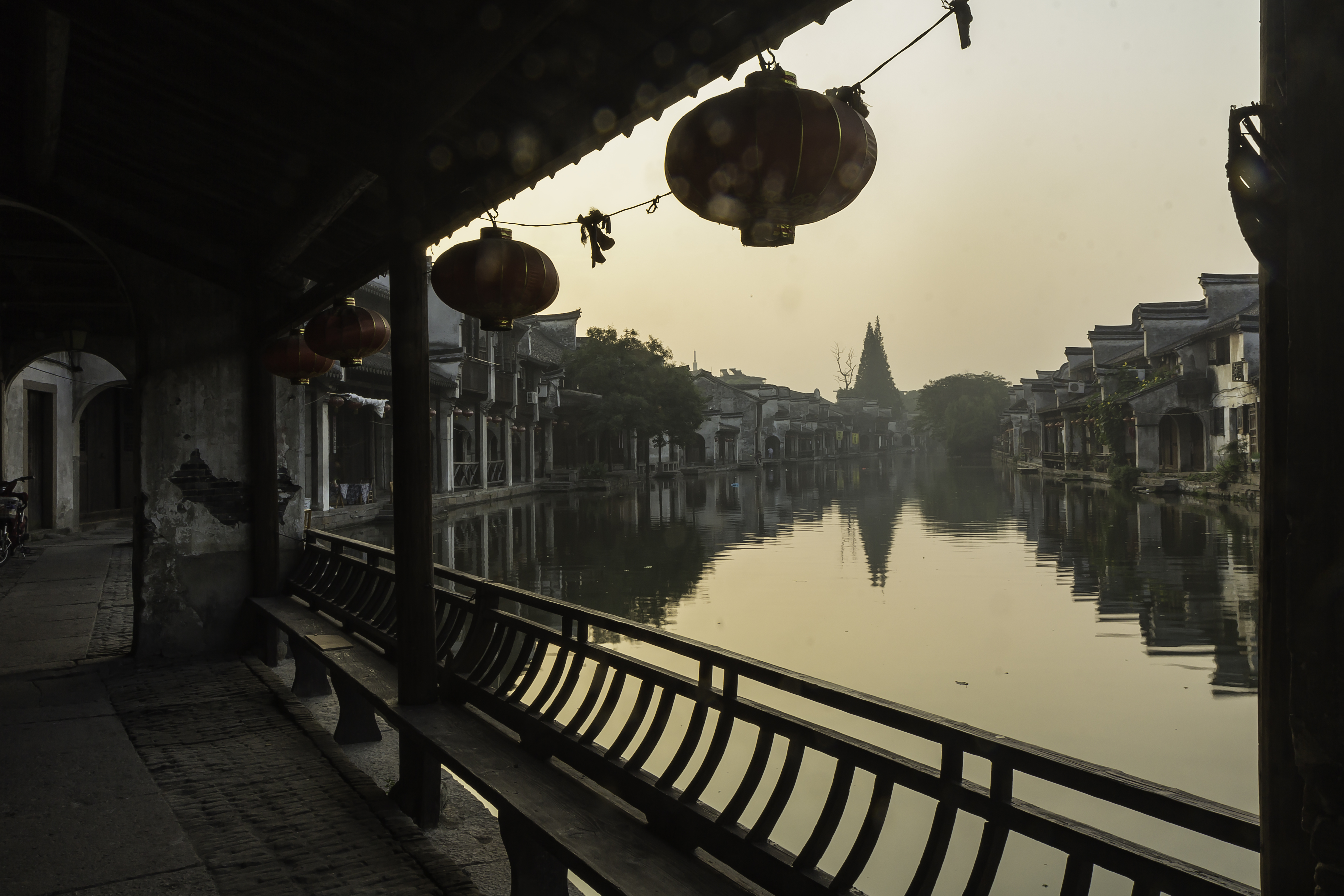
Nanxun (南浔, Pinyin: Nánxún, south of the Xun river) is a small town in the Chinese province of Zhejiang. It's known for its ancient water town but not as crowded as the water towns like Tongli or Zhujiajiao that are mostly visited by travellers from Shanghai or Suzhou.
Nanxun Ancient Town, a more tranquil and vibrant water town in Jiangnan than Wuzhen, is renowned as "one cannot know Jiangnan until one visits Nanxun". There is no over-commercialization here, preserving the most authentic "small bridge and flowing stream" scenery.
The town's prosperity dates back to the Ming and Qing dynasties when it grew into a major silk production and trading center. Merchants amassed great wealth by selling the renowned “Jili Silk” via the extensive canal network, making Nanxun one of the wealthiest towns in the region. This legacy is reflected in its exquisite blend of Eastern and Western architecture, funded by successful silk merchants.
Key to its development was its strategic location within the intricate water network of the Yangtze River Delta. Situated at a confluence near Suzhou, Jiaxing, and Huzhou, and connected to the Beijing-Hangzhou Grand Canal, water transport was the lifeblood of its commerce and daily life. The fertile land also supported mulberry cultivation and sericulture (silkworm raising), forming the foundation of its silk industry.
In the modern era, Nanxun's signific
Nanxun旅遊指南
城市概覽
Nanxun's history can be traced back to the Southern Song Dynasty. Named "Nanxun" because of its proximity to the Xunxi River and its concentration of merchants, it flourished during the Ming and Qing Dynasties. During this period, Nanxun became the most important silk production and trading center in the country thanks to its high quality "Jili Lake Silk," giving rise to a wealthy merchant group represented by the "Four Elephants, Eight Oxen, and Seventy Two Golden Dogs." These silk magnates used their wealth to build their homes, creating numerous exquisite residences, gardens, and public facilities within the ancient town of Nanxun, and incorporating Western architectural elements to form a unique cultural landscape. Compared to other water towns like Zhouzhuang and Wuzhen, Nanxun is characterized by its tranquility and elegance, a relatively low commercial atmosphere, and extremely rich cultural connotations in its gardens and mansions.
Climate
Nanxun has a classic Jiangnan water town climate with four distinct seasons. Summers are hot and humid with frequent rain, while winters are cold and damp. The most comfortable seasons are spring and autumn, especially April May and September-October, when temperatures are pleasant and the scenery is at its best. In summer (June-August), be prepared for heatstroke and the plum rain season; in winter (December-February), endure the damp and cold indoors without heating.
如何抵達
By plane The nearest airport with many connections is Hangzhou. The next international hub is Shanghai.
By train The town has no train station. The next station with fast trains is in Huzhou approximately 50 kilometres away. You can go there by bus or taxi.
By bus Most tourists will arrive in Nanxun by bus. The 1 bus station is situated north of the river near the town center. The short ride with the auto-ricksaw (嘟嘟車) costs ¥10. There are busses from all surrounding bigger cities like Suzhou (¥25), Huzhou or Hangzhou (¥10).
By car Nanxun is easily accessible by car, situated at the intersection of several expressways: the G50 Huyu Expressway, S12 Shenjiahu Expressway, G25 Changshen Expressway (Hangzhou-Nanjing section), and S9 Su Tai Expressway. Navigate to the "Nanxun Ancient Town South Gate Parking Lot" for direct access. The drive from Shanghai, Suzhou, or Hangzhou takes 1.5-2 hours.
當地交通
You can walk in town. The ancient water town is not too big. Auto-ricksaws are available as well (¥10 for a trip in town).
必看景點
Temples 1 Guanghuigong Temple (Guanghui Palace, 广惠宫) (beside the Guanghui bridge). A Taoist temple that was built during the Northern Song Dynasty, around 1066 CE. It is one of the earliest Taoist palace temples in Nanxun. It was called the "Guanghui Shrine" and primarily worshipped the City God. After multiple renovations during the Ming and Qing dynasties, it gradually integrated into both Buddhist and Daoist cultures and became one of the most important faith centers in the ancient town. (updated May 2017)
Buildings 2 Jiaye Library (嘉业堂藏书楼). The largest private library of modern China, constructed by the wealthy silk merchant Liu Chenggan. It is renowned for its vast collection of ancient books and its architectural significance. (updated May 2017) 3 Former Residence of Zhang Shiming (张石铭旧居). A magnificent complex celebrated for seamlessly blending traditional Chinese courtyard architecture with ornate Western (particularly French) design elements, such as stained glass and fireplaces. It is often cited as a masterpiece of East-West architectural fusion in the region. (updated May 2017) 4 Former Residence of Liu Ansheng (刘氏梯号). Commonly known as the “Red House” due to its exterior walls. It features a traditional Jiangnan-style facade while housing a European style interior complete with Roman columns and a grand ballroom, showcasing the unique aesthetic of its era. (updated May 2017) 5 Former Residence of Zhang Jingjiang (南浔张静江故居). Also known as “Zunde Hall,” this residence was built in the late Qing Dynasty. It is significant as the former home of Zhang Jingjiang (1877–1950), a notable historical figure from Nanxun who played a role in early 20th-century China. The architecture reflects the era's style. (updated May 2017) 6 Qiushuli Villa (求恕里). A villa built in 1930 by Liu Chenggan, the owner of the famed Jiaye Library. Blending Eastern and Western architectural styles, it was named “Qiushuli” (“Seeking Forgiveness”) to reflect Liu's scholarly and reclusi
體驗活動
1 Nanxun Ancient Town Scenic Area (南浔古镇景区) (in the heart of the town (you can take bus routes 101 or 103 to Taian Road Station, walk about 500 m to enter the town; or take the free shuttle bus)), ☏ +86 572 301 6999 (for inquiries). The ancient town area is open 24 hours, with paid attractions open from 08:00 to 17:00 in summer and from 08:00 to 16:30 in winter. Nanxun Ancient Town is one of the six great ancient towns in Jiangnan, renowned as the "Land of Culture" and the "Hometown of Poetry and Books". The scenic area fully preserves the residences, gardens, streets, and water systems from the Ming and Qing dynasties, with major attractions including Xiaolianzhuang, Jiaye Tang Library, Zhang Shiming's old residence, and Liu Family Ladder. You can take a boat tour of the city river and experience the water town scenery. (updated Dec 2025) 2 Nanxun Night Tour and Boat Ride (南浔夜游与乘船) (at various wharves in the ancient town (main wharves are located near Guanghui Bridge and Xiaolianzhuang)). Night tour lighting hours: approximately 18:00-21:00; boat operation hours: 08:30-17:00 (night tours vary depending on the season).. Nanxun at night, illuminated by lights, possesses a unique charm, with the outlines of riverside buildings clearly visible and their reflections picturesque. You can take a hand rowed boat or an electric boat to cruise under the ancient bridges, experiencing a tranquility and poetic beauty different from the daytime. Daytime boat tickets are approximately ¥80 per boat (shared boats are possible), while nighttime boat prices are slightly higher. (updated Dec 2025)
購物
Nanxun has several distinctive cultural and creative shops.
Cat's sky city: A well known concept bookstore and cafe located in a riverside wooden cottage on Nanxi Street. It is popular for its postcards and the “Letter to the Future” service, where you can write a postcard to be mailed at a designated later date. The shop also sells Nanxun themed stationery and souvenirs.
Floatree: Located on Dong Street near the East Gate, this store is a haven for stamp and postcard collectors. It offers a variety of postcards featuring elements of the ancient town, many with exclusive stamps. The second floor serves coffee and tea with a view of the passing boats. Yuli: A small cultural shop tucked away at No. 82, Hedong Street in the Baijian Lou area. It is noted for its collection of creative stamps depicting local scenes like “Tongjin Bridge at Sunrise” and its hand written postcards.
美食
Featured dishes • Nanxun braised
城市概覽改寫自 Wikipedia,旅遊指南來自Wikivoyage (CC BY-SA)。照片來自 Wikimedia Commons.