
Mount Siguniang
People's Republic of China · Asia
關於Mount Siguniang
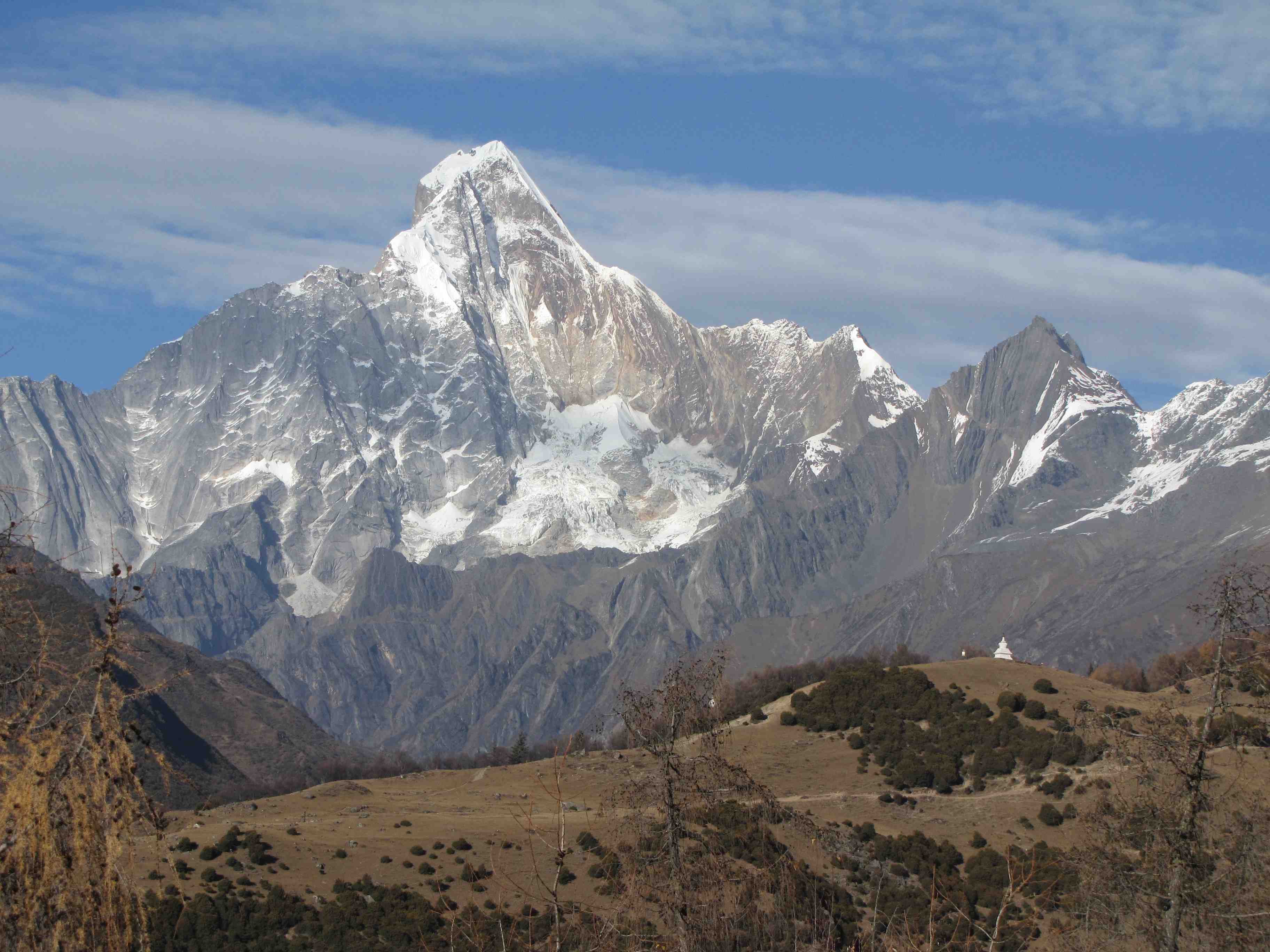
Siguniangshan National Park (四姑娘山国家公园 - Four Maidens Mountain National Park) is in Aba Tibetan Autonomous Prefecture in Sichuan province.
Mount Siguniang旅遊指南
城市概覽
Mount Siguniang National Park lies 220 km west of Chengdu, in the Qionglai Mountains of western Sichuan in China. The park is comprised of Mount Siguniang itself and the three most accessible valleys surrounding it. The nearest town is Rilong (日隆镇). The three valleys are called Changping Valley (长坪沟), Haizi Valley (海子沟) and Shuangqiao Valley (双桥沟). The first two lie adjacent to Siguniangshan, whilst the Shuangqiao Valley is 7 km west of Rilong. The Changping and Haizi Valleys are accessible only by non-motorized transport while the third valley has a paved road and is where most of the tourists visit. The Shuangqiao Valley also has 28 km of boardwalk extending to the valley's end, whilst the first 6 km of the Changping Valley (until lower dry Haizi) is equipped with a boardwalk.
History Mount Siguniang National Park was approved for establishment in 1994 by the State Council of the People's Republic of China. An application for World Heritage status as part of the Sichuan Giant Panda Sanctuary: Wolong, Mt. Siguniang and Jiajin Mountains was submitted to the International Union for the Conservation of Nature (IUCN), leading to its inscription as a World Heritage site in 2006. The National Park is a category II national park under the IUCN's Management Categories of Protected Areas.
Landscape
Flora and fauna Because of its geographical location and diversified landforms, Siguniang Mountain is home to a diversity of animals, many of which are rated in China as first-class protected species. Its mammals include the Sichuan golden monkey, white-lipped deer, clouded leopard, snow leopard and occasional giant panda. It is also home to a number of iconic birds, such as the Chinese monal pheasant, Chinese hazel grouse, bearded vulture, Sichuan pheasant partridge, Tibetan snow-cock, and blood pheasant. Over 1000 plant species have been recorded in the national park.
Climate Winter in Mount Siguniang is cold and relatively dry, with night-time temperatures
如何抵達
There are three routes to Mount Siguniang National park from Chengdu, varying in distance and scenery. The most direct route is to come from Chengdu through Dujiangyan and Wolong, and over Mount Balang pass, which, at over 4500 m above sea level, affords some spectacular views. As of 2024, the pass is closed and replaced by a 7,9 km long tunnel at 3900 m above sea level. A taxi or van can be arranged from Chengdu. These should cost around ¥150. The trip from Chengdu (Chadianzi Bus Terminal) to Rilong takes (2024) about 4 hours. A better road exists between the city of Ya'an and Rilong, via the towns of Baoxing, Yaoji and Dawei. This road is in much better condition than the road through Dujiangyan and Wolong. Ya'an is approximately 2 hours south west of Chengdu via bus, and buses go directly from Chengdu to Ya'an or Baoxing. Travellers can get a taxi or van from Baoxing to Rilong for ¥500-600, or a cheaper option is to take a bus from Baoxing to Yaoji, and take a taxi to Rilong from there. The road crosses Mount Jiajin pass, which is around 4100 m asl, and also has some excellent views. Expect this route to take a full day. The least direct way to get to Rilong is to catch a bus to the city of Xiaojin from Chengdu, and then pay ¥20 for a seat in a van for the final 55km to Rilong. This route passes through Ya'an and the cities of Luding and Danba, and has excellent views. There is only one stop along the way, however, and the total travel time on the bus is around 14 hours.
當地交通
There is no central ticketing office for the national park, so visiting different parts requires venturing around Rilong and surrounds to procure tickets. There is no official taxi service in Rilong, but vans frequently trawl the streets looking for customers, and can easily be flagged down. Your lodging should also be able to help calling taxi for you. Rilong is a small town, with most facilities within ten minutes' walk. The main tourist centre is in Changping Village, less than 1 km to the east of Rilong. From here you can purchase tickets to the Changping Valley. After purchasing your ticket, you wait at the tourist centre for the next bus to transport you the 5 km or so to the valley entrance. Once in the valley, visitors can enter on foot or by horseback. There are 7 km of boardwalk that can be completed within 4 hours on foot (and another 4 hours to walk back to the entrance). You can choose to go further than that by horseback. The entrance to Haizi Valley is within walking distance of Rilong (approximately 500 m), and can also be accessed by foot or horseback. The ticket office is in a building opposite the entrance. Shuangquiao Valley entrance is 7 km from Rilong, and requires private car or taxi to get there. Drivers will usually do this for ¥15 per person each way. The drivers can offer the return trip to Rilong from the valley gate at a negotiated time or upon calling the driver to ask for pick-up. There are taxis waiting to pick up passengers near the valley gate as well. Once at the gate, visitors must either walk in to the valley or take a sightseeing bus. Given that the valley is approximately 40 km long, with the most spectacular scenery at the far end, it is practical to take a bus to the end, then walk back toward the gate and catch one of the buses back to the gate at the end of the day. There is 32 km of boardwalk leading to the valley's end, making the walk relatively easy.
必看景點
Some of the world's most spectacular scenery.
體驗活動
A true mecca for photography, video, hiking, and nature.
購物
Sea Buckthorn (shājíshǔ; 沙棘属), a shrub that grows along the riverbanks, produces berries that are used in a number of products. Visitors can try the locally-made sea buckthorn juice, sold in small cans or as a powder. The berries are also used to make various types and strengths of alcohol (shājíjiǔ; 沙棘酒), which can be purchased at most shops in the main street of Rilong. There is also a locally-made red wine that can be purchased for around ¥120 from liquor shops. Dried yak can be purchased in vacuum-sealed packets from many shops, in addition to a large number of other Tibetan-style souvenirs. During spring, Caterpillar Fungus (chóngcǎo; 虫草) can be purchased from street vendors in Rilong and around the region. Caterpillar Fungus is a traditional Chinese medicine, and sells for ¥20-50 per caterpillar, however in Rilong it is collected from within the World Heritage site, depriving some native animals of a natural food source. Refrain from buying this unusual product if you can.
美食
Rilong has excellent restaurants serving Sichuan-style food. There are also good restaurants in the Shuangqiao Valley 7 km to the west, including a number of tasty, but less unique, restaurants outside the gate to the Shuangqiao Valley.
Sisters Restaurant (姐妹饭店; Jiěmèi Fàndiàn), Rilong. Serves excellent traditional Sichuan food, and allows non-chinese speakers to point at the ingredients on display out the front. The Bamboo Chicken Restaurant (竹香鸡饭店; Zh
城市概覽改寫自 Wikipedia,旅遊指南來自Wikivoyage (CC BY-SA)。照片來自 Wikimedia Commons.