
Maniwa
Japan · Asia
關於Maniwa
Maniwa (真庭市) is a city in Okayama Prefecture, Japan.
Maniwa旅遊指南
城市概覽
Tourist information The local tourist association has a Japanese-only guide site with integrated Google Translate.
如何抵達
By plane Okayama Momotaro Airport (岡山桃太郎空港) is the nearest airport. By car, it takes about 1 hour to reach the Kuse area or 85 minutes to reach the Hiruzen Highlands. Alternatively, Yonago Airport is a 1 hour drive from the Hiruzen Highlands and 80 minute drive from the Kuse area. Even Izumo Airport and Tottori Airport are within striking distance if they are more convenient from your location. If you are using public transportation, none of the airports offer direct buses to Maniwa, so wherever you arrive from, you'll have to take a taxi or take a bus to a train station where you can transfer to a train or bus to reach the city.
By train The JR Kishin Line runs through Maniwa with Chugoku-Katsuyama Station as the main station. The line can be reached via a transfer in Niimi from the west or Tsuyama to the east. Trains along this line are infrequent. If traveling from Okayama, your planned departure/arrival time will determine which connection will get you to Maniwa faster. For many people, the bus (below) is a better alternative.
By bus Chutetsu Bus operates 4 buses per day between Chugoku-Katsuyama Station and Okayama Station's Higashiguchi Exit and Tenmaya Bus Center. Bihoku Bus operates buses from Takahashi Bus Terminal in Takahashi through the southern part of the city to Mizuta Shimomachi (水田下町). Hinomaru Bus operates two buses per day from Okayama bound for Kurayoshi that stop at Yubara Onsen and the Hiruzen Highlands (Hiruzen Inubasari Bus Stop 蒜山犬挟) en route. They also operate one bus per day between Hiroshima and Tottori which stops at Yubara Onsen (Yubara Onsen-guchi Bus Stop). From Osaka, Nihon Kotsu operates one bus per day that stops at Yubara Onsen and the Hiruzen Highlands on the way to Kurayoshi.
當地交通
On foot The Katsuyama Historic District is accessible on foot from Chugoku-Katsuyama Station and a handful of sights are within walking distance of Kuse Station. Most other sights are too far to reasonably walk there directly from any station.
By bus 6-7 buses per day from Kuse Station and Chugoku-Katsuyama Station to Kanba Falls, Yubara Onsen, and Hiruzen Highlands. Bihoku Bus operates buses from Kuse Station out to the Yamada area, the closest public transport location to Bitchu Kanachi Cave (with an additional 1 hour walk).
By car Route 313 runs from south to north through the city, passing by nearly all of the city's most popular tourist spots: Kuse, the Katsuyama area, Maga Onsen, Yubara Onsen, and the Hiruzen Highlands. Route 201 branches off from Route 313 leading to Kanba Falls.
By taxi Places with limited or no bus access can be reached by taxi. The following taxi operators are listed in the area where they are based:
Hiruzen Highlands: Hiruzen Hiru-un Kotsu Taxi (蒜山 ヒルウン交通) 0867-66-5570 Yubara and Maga Onsen: Maga Kankou (真賀観光) 0867-44-5190 Chugoku-Katsuyama: Fukumoto Taxi (フクモトタクシー) 0867-44-3175 Mimasaka-Ochiai: Ochiai Taxi (落合タクシー) 0867-52-0325, Ochiai Angel Service (落合エンゼルサービス) 0867-52-7611
必看景點
1 Kanba Falls (神庭の滝), 640 Kanba (40 min walk from Kanba-guchi (神庭口) bus stop). 08:30-17:15. Designated as one of Japan's Top 100 Waterfalls, at 100 m tall and 20 m wide, it's the largest waterfall in Western Japan. Below the falls is the Tamatare Falls (玉垂の滝), which is a small 2-meter drop of numerous neverending drips that fall like thin threads from moss on the rocks. Wild monkeys live around the falls, so lucky visitors may see them. If you do see monkeys, do not approach them. Visitors are asked to avoid bringing bags and eating food around the falls in order to avoid potentially dangerous encounters with the wild monkeys. ¥300. (updated Feb 2024) 2 GREENable HIRUZEN (グリーナブルヒルゼン). A monument to sustainability, the Kaze no Ha (Wind Leaves), is a large structure designed by architect Kengo Kuma featuring wood panels attached to steel that look like leaves blowing upward in the wind. (updated Mar 2024) 3 Japanese Giant Salamander Center (はんざきセンター). A museum about the endangered and protected giant salamanders that inhabit the rivers that run through Yubara. (updated Mar 2024) 4 Daigo-zakura (醍醐桜). Named after Emperor Go-Daigo who is said to have stopped to admire the tree on his road to exile, the tree is over 1000 years old. It is one of the most famous single cherry trees in the country. (updated Mar 2024) 5 Bitchu Kanachi Cave (備中鐘乳穴). 10:00-17:00, closed Tu. A limestone cave featuring an attractive red bridge leading to the Cave Mount Fuji, a massive 3 meter tall, 5 meter wide stalagmite and a 22-layer stalactite that is said to be the largest of its kind in Japan. The cave was chronicled in 901, making it the oldest documented cave in Japan. ¥800. (updated Dec 2024) 6 Former Senkyo Jinjo Elementary School (旧遷喬尋常小学校). School 09:00-18:00, Shop 10:00-17:00, Closed We and New Years. An elementary school that operated for 84 years from its opening in 1907 to its closing in 1990. It was constructed of wood and was designated a National Important Cultural Property as
體驗活動
1 Yubara Onsen Sunayu (湯原温泉砂湯). The Sunayu is a mixed gender, open-air onsen below Yubara Dam. There are small changing areas for men and women. People used to be permitted to enter fully nude, however since 2020, they ask visitors to cover their lower half. Free. (updated Mar 2024) 2 Tsuji Honten Sake Brewery Tours (蔵元辻本店). A sake brewery that began in 1804. Their sake is called "Gozen-shu" (御前酒). "Gozen", a respectful way to refer to rulers, is used because the sake was produced for the Miura family who ruled over Mimasaka Province in the feudal era ("shu" is another reading of the character that means sake). The brewery offers three different tour options: The 40 minute "Good Plan" focuses on sampling "Soyashi water" (Soyashi-mizu) and seeing the actual rice used to make it. It does not include facility tours. The 1 hour 40 minute "Surprising Plan" focuses on how sake changes in various conditions. It includes a tour of the brewery and sake samplings that showcase how changes in temperature, storing vessels, and age (vintage) affect the taste of the sake. The details of the final "Amazing Plan" have not been determined, but the tours will start in July 2025. Good Plan: ¥1500, Surprising Plan: ¥5000, Amazing Plan (prices yet to be finalized). (updated Dec 2024)
購物
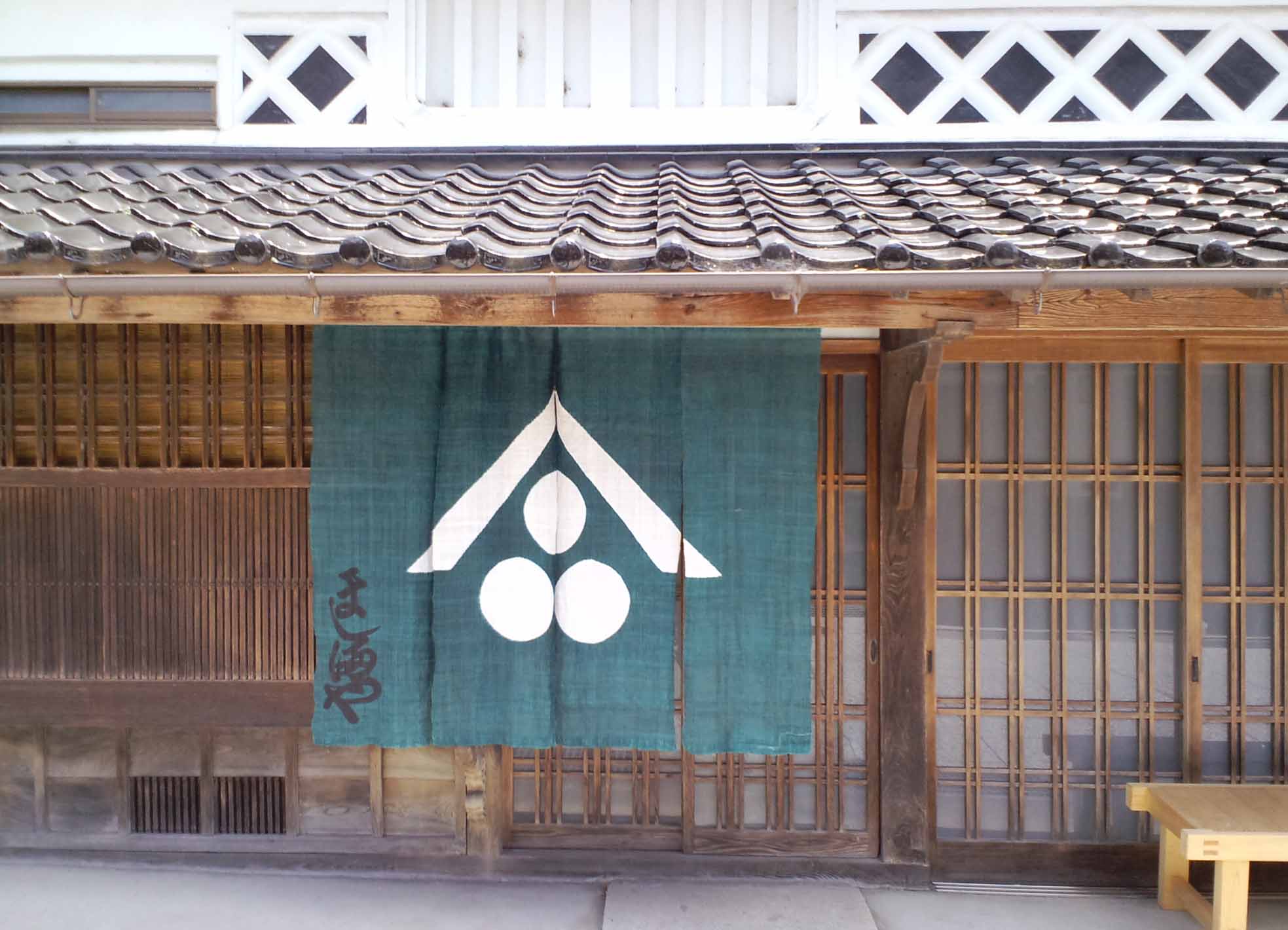
1 Maeda Kashiten (前田菓子店). A local sweets shop famous for its sake manju, a unique manju made with actual sake from the nearby Tsuji Honten. They are sold individually, so most visitors buy and eat them as a they stroll around the historic district. (updated Dec 2024) 2 Hinoki Weaving and Dyeing Atelier (ひのき草木染織工房), 193 Katsuyama. 10:00-17:00, Closed We-Th. Also called Studio Hinoki, it is the shop of Yoko Kano, the local creator of the town's famous noren. As the shop name suggests, she is skilled in both dyeing and weaving. If you enjoy the noren you see in the town, you can purchase your own here. (updated D
城市概覽改寫自 Wikipedia,旅遊指南來自Wikivoyage (CC BY-SA)。照片來自 Wikimedia Commons.