
La Candelaria
Colombia · Americas
關於La Candelaria
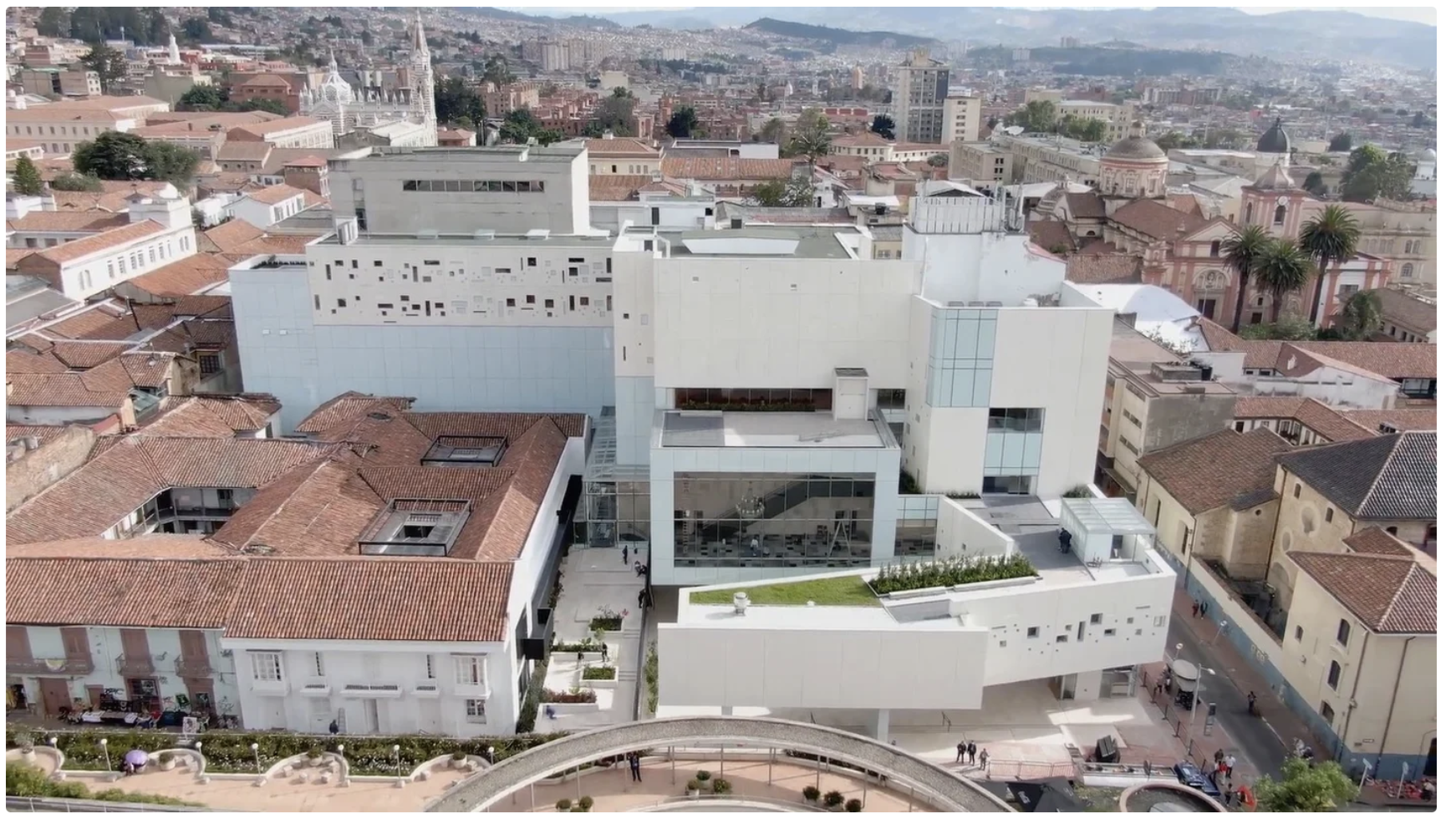
La Candelaria is the historic center of Bogotá, and the city's principal destination for tourists. Home to the top museums, the government palaces, and beautiful old colonial buildings along narrow cobblestone streets, it's a must see.
La Candelaria旅遊指南
城市概覽
The colonial district is the first neighborhood of Bogotá. Colombia's capital city was founded here in 1538 by Spanish conquistador Gonzalo Jiménez de Quesada y Rivera in a spot known today as El Chorro de Quevedo. The next year, authorities re-founded the city a few blocks away at what is now known as the Plaza de Bolívar. Bogotá then grew up around the neighborhood. Because the city expanded west and north, La Candelaria retained much of its colonial atmosphere. The neighborhood is full of cobblestone streets and centuries-old houses. It is now a tourist attraction and university district, as well as the site of Colombia's government. Here you'll find most of the public buildings, both from the City and the Country's government. Historical squares, 400-year-old churches, picturesque narrow streets are all here, mixing along modern developments of financial business high towers. Many landmark events in the history of Colombian and South American independence took place in the La Candelaria, district including the near killing and escape of Simon Bolivar, the execution of revolutionary heroine Policarpa Salavarrieta, known as 'La Pola,' and the Grito de Libertad, known as the beginning of the region's revolution. And the district is indeed teeming with history, and there are a lot of interesting museums and old churches in what is the oldest Bogotá neighborhood. Some streets are reserved to pedestrians. The most important places are La Catedral, Plaza de Bolivar, Palacio de Nariño, Iglesia del Carmen, Biblioteca Luis A Arango (blaa), the Colonial Art Museum and the old architecture of the houses and buildings, almost all of the museums charge no admission. La Candelaria also contains numerous Catholic Churches, many of them centuries-old. The Colombian-American and Colombian-French cultural centers are found in La Candelaria, and a Colombian-Spanish cultural center is under construction.
如何抵達
There are two J Zone stations on the Transmilenio in La Candelaria: Museo del Oro and Las Aguas, with the Museo del Oro stop being the most convenient to almost everything. But since few buses go to the tiny J Zone, it often makes sense to get off at the A Zone station Avenida Jiménez and walk a few extra blocks. Av Jiménez does not have the safest location, though, after dark. Carrera 7 (Séptima), which runs through Plaza de Bolívar, is the main avenue, but is most often pedestrian-only, making it a bad place to look for busetas and colectivos. One-way southbound Carrera 4 (Cuarta) is where you'll find colectivos coming from the north, always signed with "Luis Ángel Arango" (the library), while you can find northbound colectivos on Carrera 5 (Quinta).
當地交通
Inside La Candelaria, there really is no need to get around by any way other than on foot. Rare is the walk that takes more than 10 minutes, unless you're climbing a hill while adjusting to altitude, but that's another story!
必看景點
1 Casa de Moneda, Calle 11 No. 4-21 (Next to Museo Botero), ☏ +57 1 343-1223. M-F 10AM-8PM, Tu closed, Sa 10AM-7PM, Su 10AM-4PM. Has a collection of Colombian coins and the history of moneymaking. Free entrance. Cultural Heritage Museum. 2 Banco de la Republica Art Collection (Museo Botero), Calle 11 No. 4-41, ☏ +57 1 343-1331. M,W-Sa 9AM-7PM and Su 10AM-5PM. An art collection consisting of nearly 3,000 paintings, sculptures and assembly of Colombian and Latin American masters from the 16th century to our days, the Botero Museum contains both works by Fernando Botero, Colombia's most famous artist, and the contents of his private collection. Visitors may appreciate a selection of Colombian painters works, for instance Gregorio Vázquez de Arce y Ceballos, the most important Colony painter, Alejandro Obregón, Enrique Grau, Latin American as Rufino Tamayo, David Alfaro Siqueiros and many other globally renowned, such as works by Picasso, Renoir, Dali, Monet, and others. Free entrance. 3 Gold Museum (El Museo del Oro), Calle 16 No. 5-41 (on one side of the Parque Santander), ☏ +57 1 284-7450, fax: +57 1 343-2222. Tu-Sa 9AM-6PM, Su 10AM-4PM. Impressive collection of gold and pre-Colombian artifacts from Colombia and surrounding nations. Don't miss this museum. The Gold Museum is unique and you won't find a better place to see the pre-Spanish artwork on gold. COP$5,000 (free on Sundays). (updated Dec 2023) 4 Museum of Colonial Art (Museo de Arte Colonial), Carrera 6 No. 9-77, ☏ +57 342 4100, [email protected]. Tu-Sa 10AM-5:30PM, Su 10AM-3:30PM. Under Eduardo Santos administration on August 6, 1942 the Colonial Museum containing Viceroy-ship art, silver plates, the Virgin of the Light and the most characteristic Gregorio Vásquez de Arce y Ceballos collection, among other valuable Colombian culture treasures opened its doors. Declared National Monument National in 1975, Las Aulas Cloister is one of the oldest buildings in Bogotá. 5 Museum Francisco José
體驗活動
Bogota Bike Tours, Carrera 3 No. 12-72 (From the Museo de Oro Transmilenio station walk two blocks south and then uphill to Carrera 3), ☏ +57 1 281-9924, [email protected]. 8AM to 6PM. Twice-daily four-hour bike tours of central Bogotà, leaving at 10:30AM and 1:30PM. Learn about the Colombian capital's history and culture, taste exotic fruits, view graffiti and learn how coffee's roasted. Visit off-the-beaten-path spots you wouldn't likely see on your own. On Sundays (or any day) you can rent bikes for La Ciclovia, when many major avenues are shut to cars. Bogota Bike Tours rents bikes for COP$7,000 per hour or COP$20,000 for four hours. COP$35,000.
美食
Street Food Potato chips, grilled meat and other street food stalls can often be found on weekends along Calle Real pedestrian street near Museo del Oro Transmilenio bus stop.
Budget Restaurante Hibiscus, Calle 12D #2-21 (next to Hostal Cafe Casu), ☏ +57 1 3374327. Cooperative of social economy with friendly and helpful staff. Good and varied breakfasts and lunches. The association holds a supermarket besides as well. Around COP$7,000 for breakfast or meal of the day. El Fogón de las Sopitas, Calle 12 No. 8-38 (it's inside some kind of mall), ☏ +57 319 493 7589. M-Sa. This restaurant is always busy serving one of their delicious soups. Every day of the week they have a slightly different menu. Come here for traditional ajiaco (COP$10,000) or Sancocho with chicken (COP$11,000). All soups come with rice, avocado, refreshment and yes, a banana that you can add to your soup. Try it! from COP$15,000. (updated Apr 2022) 1 Restaurante Vegetariano Boulevard Sesamo, Av Jimenez No 4-64, ☏ +57 1 3413983, [email protected]. Vegetarian restaurant. Vegan options available. COP $15,000+. (updated Nov 2023)
Mid-range PitaWok, Carrera 4 #12C-54, ☏ +57 1 2437356. Small and friendly restaurant with excellent Middle-East and Thai food: shawarmas, kebabs, pitas, Wok dishes and Arabian pastries. Food delivery as well. From COP$5,000. La Monapizza, Carrera 4 #12-25, ☏ +57 1 282 16 65. Excellent pizzeria with
城市概覽改寫自 Wikipedia,旅遊指南來自Wikivoyage (CC BY-SA)。照片來自 Wikimedia Commons.