
Ko Samui
Thailand · Asia
關於Ko Samui
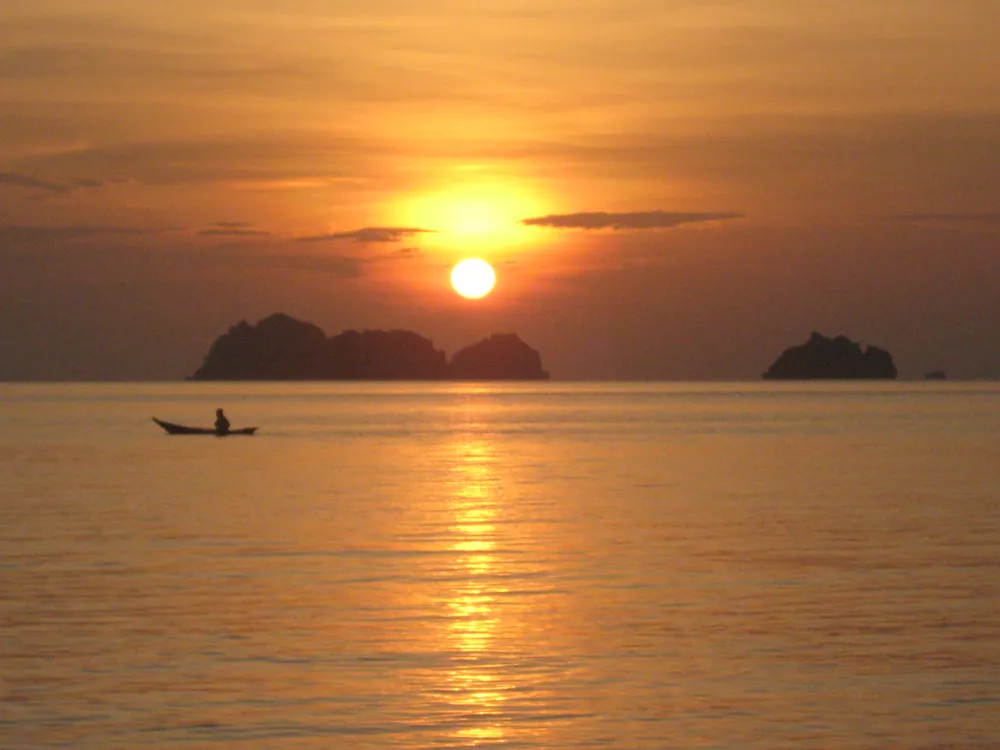
Ko Samui (เกาะสมุย), often called just Samui (สมุย) is an island of great natural beauty and variety in the Gulf of Thailand. The palm-fringed shoreline and coconut and fruit cultivation of the coastal lowlands rise to a central granite massif, the slopes of which are cloaked in virgin rainforest.
Ko Samui旅遊指南
城市概覽
At 247 km², Samui is the second largest island in Thailand and the largest island in an archipelago of over 80 (mostly uninhabited) islands which form the Ang Thong National Marine Park, a kayaking and snorkelling paradise. At 25 km (16 mi) long and 21 km (13 mi) wide, Samui is big enough for serious exploration by the adventurous and fit, but can be circumnavigated in just a couple of hours by motorbike or car. Samui is home to some 50,000 full-time inhabitants, 90% of whom are Buddhist. The island was probably first inhabited about 15 centuries ago, settled by fishermen from the Malay Peninsula and south China. The origin of the name Samui is unknown. Until the late 20th century, Samui was an isolated self-sufficient community, having little connection with the mainland. The island was even without roads until the early 1970s, and the 15 km (9.3 mi) journey from one side of the island to the other involved a whole-day trek through mountainous jungle. In the early 1970s the first backpackers travelling on the back of a coconut boat arrived on Ko Samui. For years after that the island just had a few bungalows and a trickle of travelers. Things started to change in the early 1990s when tourists started arriving in full boats and since then the place has grown substantially. Samui is now the second most popular island destination in Thailand (after Phuket). Ko Samui may not be the country’s most beautiful island but it is still an oasis of natural beauty with its white sandy beaches, dazzling coral, luscious lagoons, picturesque waterfalls, swaying coconut trees, and crystal clear water. The water at Bophut Beach, though, is often murky, especially around December. Development on Ko Samui has taken its toll and, before COVID, the island saw an average of 2.3 million visitors per year and the beaches of Chaweng and Lamai were overcrowded in the high season. However, the pandemic and the resulting border closures hit the local economy hard, with many hotels, restaurants
如何抵達
By plane
Direct flights
1 Samui International Airport (USM IATA). The only airport on the island, this lovely private airport was built by Bangkok Airways, which is the sole domestic operator. They have near-hourly departures to/from Bangkok (BKK IATA), codesharing with Thai Airways for easy connections. Tickets are comparatively expensive, with advance bookings costing 3,000-5,000 baht one-way, while a walk-in booking may be a bit more. There are also daily flights to/from Phuket for 2,000-3,000 baht, Pattaya and two daily flights from Chiang Mai (but only one direct flight in the opposite direction). International connections are limited to Chengdu, Chongqing, Hong Kong and Singapore. Low-cost carrier Scoot also flies to Singapore. (updated Feb 2023) Visa-on-arrival and visa-free entry are available at Samui Airport for some nationalities. See Thailand for more information. If flying out of the airport, one nice feature is a courtesy corner which provides food and drinks for all passengers in a cosy sitting area. Awaiting boarding becomes rather more comfortable with food, drinks, and Wi-Fi provided free. Ground transportation from the airport is readily available, but prices tend to be inflated. There's a minibus service at a fixed price per person, with booking at counter in arrival hall. The 20-minute minibus ride to Chaweng costs around 200 baht/person, but may take longer if it shuttles to multiple hotels. A faster taxi directly to your destination may cost 500 baht. Be sure to negotiate the rate to your destination before you get into the taxi as many drivers refuse to use their meters. Many larger hotels and resorts have free airport transfers included in their service, but you need to book in advance. NaviGo and Grab (see By ridehailing) are also available, with fixed prices. If you're a couple or a family, you may be approached in the airport by some young women holding signs of some of the higher-end hotels. They will ask you where you're staying,
當地交通
As on many islands in Thailand, small motorbikes are available for rental. Compared to other nearby islands, Samui's road system is very developed and there are plenty of taxis cruising about, although it's a challenge to get them to use their meters.
By taxi By day, Ko Samui's public transport is provided by songthaew, pick-up trucks with two rows of seats. They drive fixed routes at fixed prices per person until 18:00, ranging from 20-80 baht depending on distance. After 18:00, songthaews serve as normal taxis and prices must be negotiated first. Even if you pay for a trip, however, the songthaew may stop and pick-up more passengers on the way. Metered taxi service is operated by private taxi companies. The drivers, however, are very reluctant to use their meters, and, especially on popular beaches or entry points to the island, tend to ask foreigners much more than normal fare. Some, say, on Nathon pier, will even show you official-looking papers with "fixed" prices like 600-800 baht for a 25–30 km trip to Chaweng or Lamai Beach. This is not true, and once they know you're aware of that, it's usually possible to bargain (for this distance, you should bargain to at least 400 baht, or even better 300 baht (outdated bargain prices, in 2013 more likely prices around 500 to 600 baht from Nathon to Chaweng or Lamai), which is still higher than the Bangkok metered taxi price). On the popular beaches it may be impossible at all to get a reasonable fare sometimes. If so, just walk around to an area which is quieter and further away from luxurious hotels.
By ridehailing Grab is available.
By bus
Pickup trucks/public passenger pick-up vehicles (songthaews) also serve as group taxis. To get from the Nathon Pier to Bophut/Chaweng take a brown one which runs at regular intervals and will cost 50 baht to or from Bophut (Just ask the driver if the taxi is going that way and get on board. Pay when you get off. If you want to go to a particular place, then you hire a ta
必看景點
The major reason people come to Samui is, quite simply, to enjoy the beaches. Even though the two main beaches of Chaweng and Lamai have generally suffered due to mass development, they are still relatively impressive. Development has been thwarted slightly because of the island’s building height restriction, but this has caused sprawl. While the island offers plenty of opportunities to relax on the beach with a cold drink in hand, there's not much else to see beyond soaking in the laid-back atmosphere and people-watching as visitors stroll by. A certain pair of rocks on Lamai amuses some visitors, Bang Rak has a large but nondescript Buddha statue, and there are some waterfalls (notably Na Muang) of minor interest.
Beaches and places 1 Ban Lipa Yai. This village grows high quality fruits, including rambutan, durian, mangosteen and the famed langsat. (updated Mar 2025) Bang Rak Beach. Also known as “Big Buddha Beach”, in northeast Samui, Big Buddha offers visitors good swimming and
城市概覽改寫自 Wikipedia,旅遊指南來自Wikivoyage (CC BY-SA)。照片來自 Wikimedia Commons.