
Kitakyūshū
Japan · Asia
關於Kitakyūshū
Kitakyūshū (北九州) is a large city in Fukuoka prefecture on the island of Kyushu, Japan. Kokura, the heart of Kitakyushu, is an ancient feudal castle town guarding the Straits of Shimonoseki.
Kitakyūshū旅遊指南
城市概覽
Together with Shimonoseki it is part of the Kanmon Straits area. In terms of area it is the largest city in Kyushu, though Fukuoka has the bigger population. The population of Kitakyushu is about one million (or 1.3 million including Shimonoseki). Kitakyushu was created in 1963 from the five smaller cities of Kokura (小倉), Moji (門司), Tobata (戸畑), Wakamatsu (若松) and Yahata (八幡), and it retains this sense of being a country area with much diversity and beautiful nature, despite its reputation as a steel town. Kokura was supposed to be the target of the second nuclear bomb in World War II. However, it was cloudy on the day of the attack and the plane diverted to Nagasaki instead.
Tourist information site The local tourist association has a multilingual guide site.
如何抵達
By plane 1 Kitakyushu Airport (KKJ IATA 新北九州空港 Shin Kitakyūshū Kūkō), Kokuraminami. Built on reclaimed land offshore in Suo nada, the most westerly part of the Seto Inland Sea, opened its doors in 2006. The airport is served by several domestic airlines, including JAL/ANA and the new discount carrier StarFlyer. Most flights connect to Tokyo's Haneda and Nagoya's Komaki airports (both within their city limits), but there are also several flights each week to and from Taiwan's Kaohsiung (called Takao in Japanese). More than 30 buses per day run between the airport and the Kokura station, many of them nonstop, but most stopping at each train station along the way. Buy the tickets before boarding for ¥620. The first bus leaves Kokura station Bus Center at 04:00, and the last bus leaves the airport at 24:55, after the last flight from Tokyo. Buses also run to/from Shimonoseki station eight times per day (70 minutes, ¥1000). If coming from the southeastern side of Kyushu, instead of going all the way to Kokura you can disembark at Kusami station (朽網駅), which has shuttle buses every 30 minutes or so to the airport, 20 minutes away, but only local trains stop at Kusami, no express trains.
By train
2 Kokura Station (小倉駅). the main railway station and is on the San'yo Shinkansen Line. All San'yo Shinkansen trains stop at Kokura. Nozomi, Mizuho, Sakura and Hikari Rail Star trains make frequent runs to/from Hiroshima, Okayama and Osaka, with some Nozomi trains also running from Kyoto, Nagoya and Tokyo. Sakura trains also run to/from Kumamoto and Kagoshima. Remember that the Japan Rail Pass covers all the forementioned sections above, except Nozomi and Mizuho trains.
Both the San'yo Shinkansen Line and the Kagoshima Main Line (鹿児島本線 Kagoshima honsen) connect Kitakyushu to Hakata station in Fukuoka. On the Shinkansen, Kokura can be reached from Hakata in 15-20 minutes at a cost of ¥2050 for an unreserved seat. Frequent Kodama runs are made between the two stations durin
當地交通
By train For a tourist, JR trains are the easiest and likely the most convenient means of transport (except to and from the airport), as they give access to most of the city's non-natural attractions. Acquiring the JR Northern Kyushu pass is an overkill if you just want to go around Kitakyushu, but an attractive option if you also intent to go to nearby cities like Fukuoka and Beppu. Take note that the JR Northern Kyushu/JR Kyushu passes do not allow you to use the Shinkansen to go from Kokura to Hakata (but the normal JR Pass does).
By bus Nishitetsu Bus operates local services as well as highway buses to nearby cities. Nishitetsu Buses accept most Japanese transport smartcards (Suica, PASMO, Sugoca, etc.) which will save you a lot of hassle and also save you some money when you transfer to the train or another bus to get to your destination. Bus stops are very informative, containing complete information about lines and time tables, although you will need to figure out the Kanji and delays of up to 5 minutes are normal.
By monorail The Kitakyushu Monorail runs every ten minutes from JR Kyushu's Kokura station to Kikugaoka in Kokura Minami ward. The monorail is fun to ride and provides interesting views of the city, but its usefulness is impaired by the fact it offers no discount for transfer to trains or buses. Only a few station announcements are in English (including the stop for the Kitakyushu Media Dome and for the University of Kitakyushu).
On foot Walking around the Kokura station is a breeze as there are many covered pedestrian pathways and arcades. Mojiko and Yahata are also more conveniently explored on foot.
必看景點
The city has the reputation of being just an industrial area, but this is only true of part of the coastline. The city covers a very large area (much larger than Fukuoka, 486 km² as compared with 340), and there are many pleasant spots for sightseeing and recreation.
Kokura
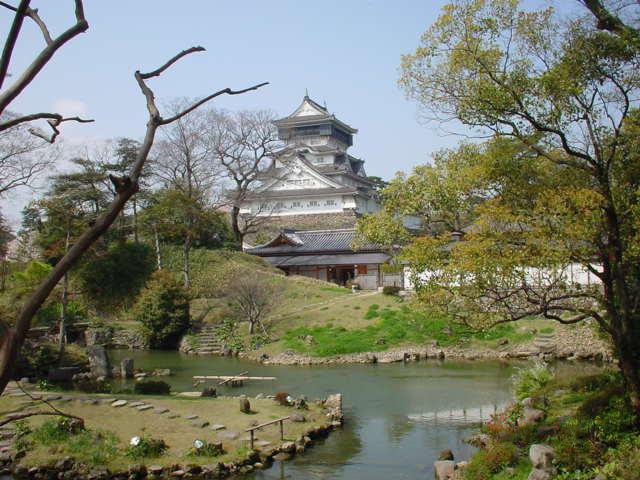
1 Kokura Castle (小倉城 Kokura-jō) (a 10-minute walk from JR Kyushu's Kokura Station). April to October: 09:00-20:00; November to March: 09:00-19:00. Built by Hosokawa Tadaoki in 1602, it was the property of the Ogasawara clan which came from Harima (near Himeji) from 1632 to 1860. The castle was burnt down in 1865 in the war between the Kokura and Choshu clans. The keep was reconstructed in 1959, and the castle was fully restored in 1990. The Matsumoto Seicho museum and castle garden were opened in 1998. The keep contains a modern folkloric museum. Inside the castle you can see a video show about what Kokura was like during the Edo period, a display of Kokura Castle and its surroundings during the Edo period which is made of many lifelike tiny paper dolls, and you can also ride inside a palanquin like the castle lord would have when traveling. The box rocks back and forth to recreate the motion. It's amusing and free, so enjoy being the daimyo for a minute. You can also see two beautiful paintings of tigers with gold leaf on display. There is a café at the top floor (no ATM, bring your cash!). There is a wheelchair lift sort of device. See also Japanese castles. Keep ¥500, Keep and Japanese garden or Matsumoto Seicho museum ¥700, all three ¥900. (updated May 2026) Mori Ogai house in Kokura. Literary giant Ogai wrote his Kokura Nikki (Kokura Diary) here. Ogai was based at the castle at the turn of the 19th-20th century when it was a military base. He was born in Tsuwano in Shimane prefecture.
2 Hiraodai (平尾台). A rare karst plateau in Kokura Minami ward, 30-40 minutes by car from Kokura station. The grassy mountains are covered with large gray round rocks which the locals will tell you look l
體驗活動
Visit the Blast furnace near Space World train station. Japan's steel industry began here in 1901 and the original furnace is preserved as steelmaking was so important to Japan and the development of Kitakyushu in the 20th century. Also nearby are the city's natural history museum and environment museum.
Cruise the Dokaiwan sea inlet between Tobata and Wakamatsu wards at night. Advanced bookings required, 19:00-21:00, Fridays in August, leaving from Tobata ferry stage, about seven minutes walk from Tobata station. Four trips only each year. ¥3,000 per person. I
城市概覽改寫自 Wikipedia,旅遊指南來自Wikivoyage (CC BY-SA)。照片來自 Wikimedia Commons.