
Khumbu
Nepal · Asia
關於Khumbu
See Everest Base Camp Trek for the Nepalese trek to the foot of Mount Everest, and Qomolangma for the Tibetan side of Mount Everest.
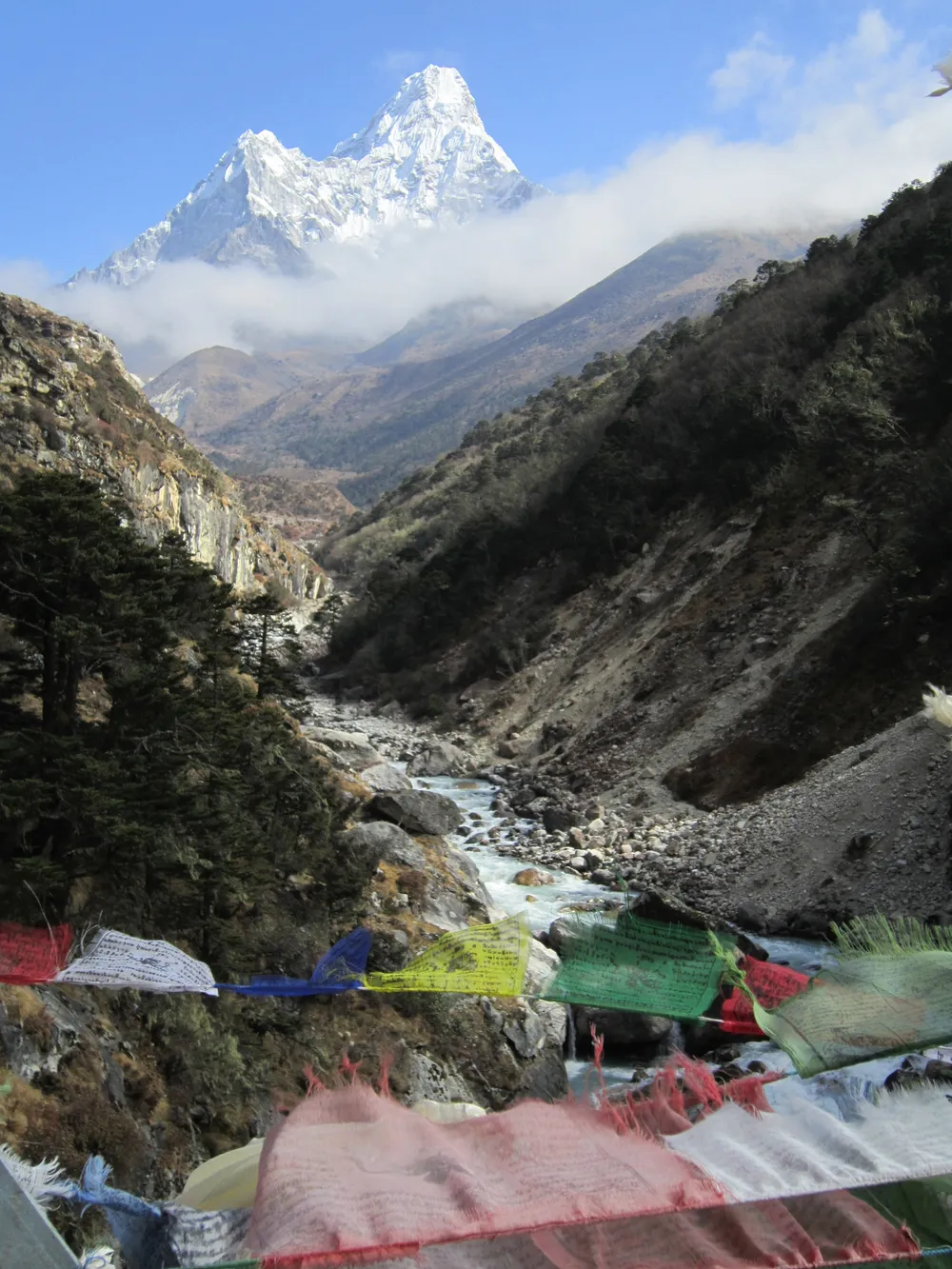
Khumbu (also known as the Everest Region) is a sub-region in Solu Khumbu on the Nepalese side of Mount Everest. The Everest region includes the Sagarmatha National Park (above Monju) and the Sagarmatha National Park Buffer Zone (between Lukla and Monju). The former is listed as a UNESCO World Heritage site.
Khumbu旅遊指南
城市概覽
Famous for its spectacular mountain peaks and the loyalty and friendliness of its inhabitants (the Sherpas), the Everest region (Khumbu) is one of the most popular destinations for tourists in Nepal. While many of the routes through the mountains are arduous, there are ample places to rest and enjoy a meal along the way. Don't worry about getting lost: just ask a local the way to the next village on your route, and they will direct you. Most Sherpas under the age of fifty can at least understand basic English, and many speak it fluently. While trekking is possible in this area the whole year round, the best times to visit are from the beginning of March to mid May and from the beginning of September to end of November. The winters are very cold and snow may make it difficult to travel higher than Tengboche, and also lodges may be closed above this altitude. Summers, on the other hand, are wet, and the spectacular peaks often lost in the clouds. April and early May is a good time to see the hedgerows and trees bursting into bloom, with Rhododendrons, in particular, adding a spectacular splash of colour to the landscape. However, dust from the plains of India during the spring routinely provide less than ideal conditions for clear mountain views. The views are much better after the summer monsoons have cleared the atmosphere of dust, but the days are shorter and cooler. TIMS (Trekking Information Management System) permits are required to venture forth for any trek, also for the Khumbu region, they are easy to obtain in Kathmandu at Nepal Tourism Board against US$20, a recent passport size photo and filling in the required form before you embark to your trek. If you are with an organised trekking party your tour operator will do this for you. Also a National Park Entry Fee is required and can be obtained either in Kathmandu or while entering the Park. Lodges and restaurants in Khumbu only accept Nepalese rupees. Budget can vary hugely between Rs 1,500-2,000 per person
如何抵達
By plane
There are numerous flights flying the Kathmandu–Lukla route, though with a much reduced service during the off-season months. Flights from Kathmandu take around 25 minutes. Be aware that during the summer rainy season there may be substantial delays, and even a wait of one week is not uncommon.
On foot There is a bus running between Kathmandu and Jiri. Some buses are going a bit further to Shivalaya. From here to Namche Bazaar it is about a six-day walk. A less popular alternative is to walk from Tumlingtar. Another route tried entering from Jainagar, India, by train or bus. From Jainagar it's about 1–1½ days by bus or jeep to Phaplu via Madar, Sirha, Mirchaya Ramnagar, Katari, Okhaldunga and Salleri. Phaplu to Ringmo and 5 days trek to Namche. Just after the village of Monju, there is check point for entering the Sagarmatha National Park. Passports need to be shown and there is a 1,000 Rs entry fee. At Monju two fees. For SAARC country TIMS fees rs 650 and for Sagarmatha National Park Rs 1695 with VAT for four weeks.
當地交通
On foot. There are no roads in the Khumbu region. And sometimes by horse.
Renjo La is a pass between Gokyo and Lungden with an elevation of 5,360 m and excellent views of Everest, Nuptse, Lhotse, Makalu, etc.
必看景點
As a Zen poet once wrote: "Going deeper and deeper - still the green mountains". This could certainly have been written in Khumbu, but while the mountains are the obvious attraction, the area does offer many other sights.
Fauna
The national bird, danfe (a kind of pheasant), white-winged gros beak, Horn lark, Robin Accentor, Tibetan Snow Cock, red-billed chugh, yellow-billed chugh and mountain goats are common in the Khumbu area, and because the Sherpas do not kill animals or birds, people can often get very close before they take off. Musk deer and snow leopards are also natives of the Khumbu mountains, albeit rarer.
體驗活動
Trek, eat, enjoy Sherpa hospitality and relish your time in such a beautiful and pristine environment.
購物
Outside Namche, there are few souvenir shops and the handicrafts sold are similar to those on offer in Kathmandu. However, as the majority of goods are carried over from Tibet, which is much nearer to Khumbu than Kathmandu, you might find a few bargains and some unique items. Also, check out the clothing made from yak wool. This is often made locally, and so the prices may be lower than in Kathmandu. As in most parts of south-east Asia, remember to haggle for the best deal.
美食
Most lodges offer similar menus - porridge, hash browns, omelettes, dal bhat, spaghetti, fried rice, apple pie, etc. - although those in Namche tend to have a wider selection, which includes such things as pizza and juice. Bakeries, which began as a Namche phenomena, now also operate in Khumjung and Tengboche, offer such luxuries as freshly baked pizza, German breads, pastries and even cappuccino - or as one lodge in Monju advertised: Sherpaccino! Local dishes include: Riki-Kur — the Sherpa dish of potato pancakes, which are delicious eaten straight off the griddle and covered with dzo (female yak) butter and a sauce made of mature cheese and spices called sorma. Due to the effort involved in making them, they are generally not listed on lodge menus. However, most places will oblige if you order well in advance. Tzen — a heavy patte made from millet and flavored with spices.
飲品與夜生活
Locally bottled water is available everywhere in Khumbu, though the price rises with the altitude. A bottle in Namche costs about 100rs. Beer and juice are flown from Kathmandu to Lukla and carried from there by porters; consequently the price is very high. Tea, instant coffee and a drink made from lemon concentrate are the cheapest beverages in the region, and are available in every lodge or tea shop for Rs 50 to 150 a cup. As there is no way to recycle plastic bottles in Khumbu (there are bins available on all walks for plastic and paper), you might consider bringing your own container and either purchasing boiled water or purifying spring water with iodine tablets.
住宿
Accommodation is in an abundance in Khumbu, and ranges from the luxurious Everest View Hotel near Khumjung to the very comfortable lodges in Namche down to those offering very basic facilities. Generally, the higher the altitude, the simpler the accommodation.
城市概覽改寫自 Wikipedia,旅遊指南來自Wikivoyage (CC BY-SA)。照片來自 Wikimedia Commons.