
Kharga Oasis
Egypt · Africa
關於Kharga Oasis
Kharga (Arabic الخارجة) is an oasis in the Western Desert of Egypt.
Kharga Oasis旅遊指南
城市概覽
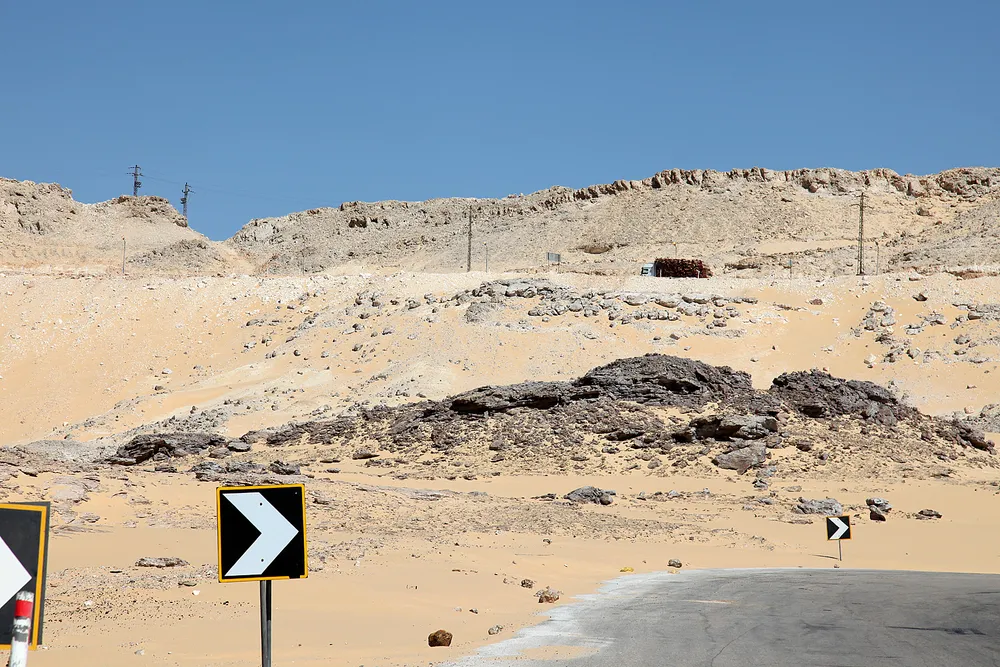
Kharga is the largest of the five western oases, 160 km long and from 20 km to 80 km wide. The main town is also called Kharga, separated by a desert strip from Baris to the south. The reason to visit is the antiquities just north of Kharga town, and the string of Roman forts set up to control Darb El Arbayin, the "Forty Days Road" bringing gold and ivory from Africa into Egypt. Like the other western oases, the climate is hot desert, 40+°C summer and 10°C in winter. There is zero rainfall and all the oasis supply is "fossil water" extracted from the aquifer, a non-renewable resource.
如何抵達
Kharga has an airport but no flights, and trains no longer run here. The old narrow-gauge railway from the Nile valley was replaced in 1989 by a standard-gauge track all the way to Safaga on the Red Sea coast, intended to export phosphates from Kharga's deposits. But by the time it was completed the price of phosphates had dropped, the deposits were never mined, and the new line was abandoned. The track still lies alongside the highway between Kharga and Baris, and in parts along the Baris-Luxor road.
By bus Buses run at least daily from Asyut, which is on the main Cairo-Luxor road and railway. They set off at 8AM and take 3-4 hr to Kharga. Some continue to Dakhla Oasis, another 3-4 hr. Along the road 2-3 hr out from Asyut, admire the melon field of Wadi Battish - the desert sand is dotted with limestone footballs or geodes. After another 40 km the road tops Kharga Pass to descend into the oasis.
By road There is a direct highway from Luxor to Baris, at the south end of the oasis. There is no public transport along this route but it is a good highway for taxis and private vehicles. A highway leads south from the oasis for mile upon aching desert mile, following the ancient caravan trail towards Darfur, before despairing of further progress and looping back north to Dakhla oasis. There is no crossing point into Sudan.
當地交通
On foot The principal sights of Kharga town are within a long walk on a cool day, but you do not want to be weary before you start, and then there is the getting back.
By taxi Arrange a taxi to take you around the antiquities, the driver will know which dusty unsignposted turn-off to head down. Several sights need a vehicle, and some are only for off-road vehicles with a guide.
By bus Buses and minibuses ply between Kharga and Baris, taking an hour.
必看景點
1 Temple of Hibis. 2 km north of Kharga town, is a large well-preserved temple from the Saite-Persian period of 664-404 BCE. It originally stood on a lake island in the town of Hibis, but lake and ancient town are now farmland, and Hibis means "plough". The temple is dedicated to two versions of the god Amun. You enter down a long hallway lined with sphinxes, through several pylons into the main temple. The hypostyle hall has walls shaped like huge papyrus rolls, richly decorated. One of these, showing Seth defeating Apep, is a foretaste of Saint George and the Dragon. The naos or inner shrine has a pantheon of Egyptian deity and royal figures, with almost 700 figures. Adult admission LE80, combi-ticket with El Bagawat LE120, as of Nov 2019. Seen on a hill east of the Temple of Hibis is the larger of the two temples of Nadura. They are both scrappy, so that is probably close enough. North of the temple heading towards the Necropolis are remnants of a Roman Christian settlement at Ain el-Kharab and the monastery of Ain Gallal.
2 Necropolis of El Bagawat, Kharga (1 km north of temple). One of the oldest Christian cemeteries in Egypt, which had been used in pre-Christian times. There are 263 Coptic funeral chapels, of which the Chapels of Exodus and of Peace have frescoes of the 4th-7th C AD. There are many mud-brick chapel domes, etched with biblical stories. Adult LE80, combi-ticket with Hibis LE120. (updated Apr 2020) Another km north of the Necropolis are monastic ruins of Ain Muṣṭafa Qashiff and Deir el Bagawat. A further 2 km north is a collection of ruins around Ain Sa'af, Tahunat Hawa (with a tall tower), Burg el Hammam and Gebel el Teir (which has cave carvings). 3 Umm al Dabadib (in the desert 50 km north of Kharga). A 4th C AD Roman fortress. It is by a waterhole, an obvious spot for an army base and checkpoint on the caravan route. It's still being excavated and one curiosity is that although designed by and for the late Roman Empire, the units of buildin
體驗活動
Dig deeper into the subject. This page only covers sights of interest to the casual visitor, but far more is known, on top of the many unknowns that are sure to lie unexcavated. For more, click on the left sidebar to reach the German version, which runs to 36 pages and a level of detail to make all but a desert-hardened archaeologist break out in hives. For entirely different approaches to Egyptian scholarship, read The Egyptologists by Kingsley Amis and Robert Conquest (Random House 1965), or any "Oriental" murder mystery by Agatha Christie (who married a renowned archaeologist and traveled widely in these parts), or just hum the tunes from Aida.
購物
There is a line of small stores for basics in the centre of Kharga and to a lesser extent along main drag in Baris. You do not come here for shopping, which is why the traders of antiquity just rested their camels before plodding onward to the fleshpots and markets of the Nile.
1 Old market (السوق القديم, as-Sūq al-qadīm) (near the Darb es-Sindādīya west of Mīdān asch-Schaʿala). Partially covered market. El-Bassatin Souq (south of Mīdān el-Bassātīn). 2 Kharga town week market. A bit outside the city, maybe a kilometer and a half from downtown along the road to Bārīs, there are halls where a market takes place each Thursday.
美食
Kharga has a cluster of simple places in town centre all with similar fare. They will be delighted to see a Westerner, especially anyone with Arabic beyond "salaam" and with ready cash. Baris has a handful of similar places. There is nothing along the badlands roads beyond (the clue's in the word "desert"), so eat it all up and say shukran. Restaurants mostly open only for dinner, and open around 19:00.
1 Al-Geheiny (مطعم الجهيني, Matʿam al-Ǧuhainī), Midan el-Bassatin. On the northern side of Mīdān el-Bassātīn this restaurant is more value for money than Wimby. For example kebab and kofta on the menu. 2 Alsayad Restaurant (مطعم الصياد, Maṭʿam aṣ-Ṣayād) (north of Midan el-Bassatin, opposite the Ministry of Health), ☏ +20 100 630 7810, +20 120 656 3008. Restaurant and snack kiosk. You can eat chicken, shwarma, barbecue foods, sandwiches, salads and desserts. 3 El-Ahram (مطعم الاهرام, Matʿam al-Ahrām), Sh. en-Nabawi (south of Oasis Hotel (Waha Hotel)). 4 El-Baraka (مطعم البركة, Maṭʿam al-Baraka), Midan el-Bassatin, ☏ +20 120 152 3335, +20 106 495 2020. Open every day, also for lunch. Egyptian cuisine. 5 Estacoza Seafood. Fish restaurant. 6 Ibn el-Muallim (مطعم إبن المعلم, Maṭʿam Ibn al-Muʿallim), Gamal Abdel Nasser St.. Fast food restaurant with fuul, falafel and salads on the menu. (upd
城市概覽改寫自 Wikipedia,旅遊指南來自Wikivoyage (CC BY-SA)。照片來自 Wikimedia Commons.