
Kakamega Forest
Kenya · Africa
關於Kakamega Forest
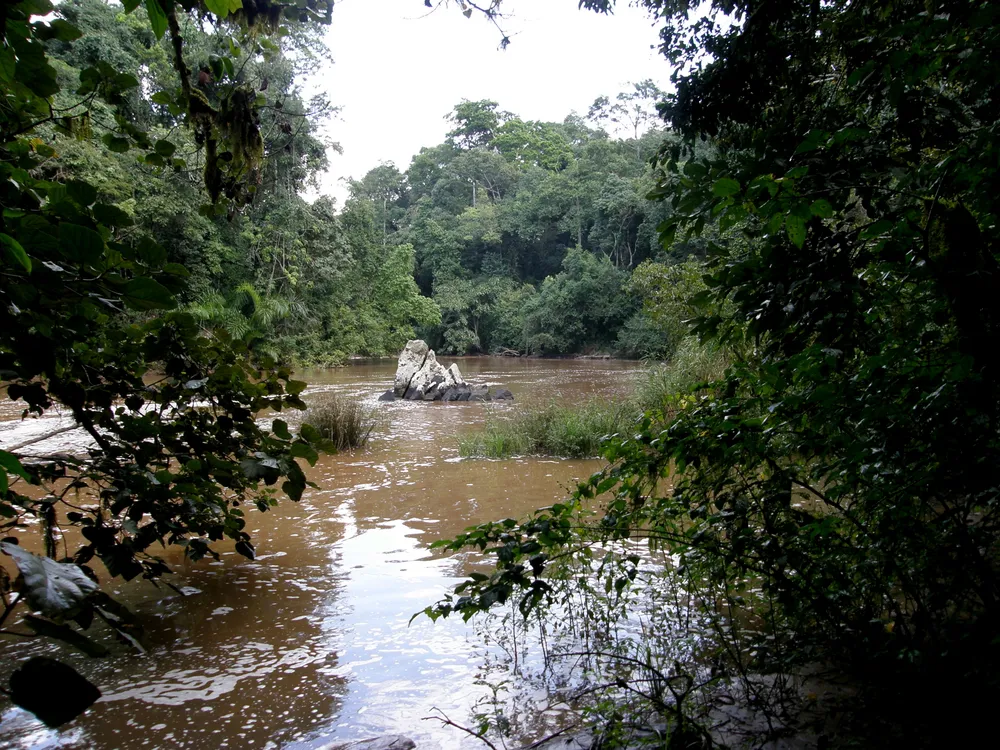
Kakamega Rainforest is the only tropical rainforest in Kenya. Located in Western Kenya, it is part of a larger area that makes up the last primeval rainforest in the country. It's also home to various monkeys and hundreds of bird species, some of which are threatened. Kakamega is the vestige of the Guineo-Congolian rainforest, and the area makes it a good spot to explore miles of canopy-filled jungles and watch nature.
Kakamega Forest旅遊指南
城市概覽
The Kakamega Rainforest is the last that remains of the tropical rainforest that once stretched from the Atlantic coast across the African continent to the Indian Ocean. Even Kakamega is interspersed with open areas, both man-made and caused by wild animals. The altitude of the forest is between 1466 m and 1779 m above the sea level and it is divided into three parts. The first part is the national reserve, composed of the forests of Buyangu and Kisere in the north, and it is administered by the Kenya Wildlife Service (KWS). The second part is the forest reserve administered by the Kenya Forest Service (KFS). The natural reserve, which is also administered by the KFS, is made up of two enclaves of the forest reserve Isecheno in the middle and Lirhanda in the south.
Landscape Geographically Kakamega is an eroded mountain massif, situated about 1500-1600 m (or about one mile) above the sea level and part of the Kavirondo rift, which itself is a part of the East African rift. The highest peaks in the forest are Ikuwya Hill (1779 m), Lirhanda Hill (1734 m) and Buyangu Hill (1633 m), while the lowest point is the Yala river (1466 m). Rivers generally flow from east or northeast to west-southwest.
History When described in the early 19th century, the rainforest covered 2400 km2 and was contiguous with the Nandi rainforest — today it has declined into about 10% of that. The Kakamega forest reserve was created in 1926, and in 1967 the Yala (nowadays Lirhanda) and Isecheno natural reserves were established. Back then, the region was used for farming and economical activity on a completely different scale than today, even as fees were eventually instated for using the forest. In 1984 large parts of the forests in the region were cut down in order to establish the Nyao-Kaimosi tea-growing zone, and thereby Kakamega was separated from Nandi. This was a watershed event in the history of Kakamega and since that measures have been taken to restore the rainforest. One year la
如何抵達
There are different directions for getting in, depending where in the Rainforest you're heading to.
National reserve
By matatu and shared transport Starting from Kakamega market, take a matatu (minibus) to Webuye and get off at Mwanza. From there, take a pikipiki (motorcycle taxi) or boda-boda (bike taxi) to Isukuti Guest House.You can also ask to be dropped off at the Kambiri track, but in that case you will need to walk for about 2.3 km by foot. A regular taxi from Kakamega to Isukuti Guest House will (as of 2014) cost you Ksh 1500.
By car From Kakamega, drive towards Webuye along Highway 1. After 15.6 km, turn right to get to the office of the Kenya Wildlife Service.
Natural reserve
By matatu and shared transport Take a matutu from Kakamega's market to Shinyalu. From Shinyalu, continue to the Forest Rest House in Isecheno by pikipiki, boda-boda, or by foot (a 6.3-km walk). If you decide to walk, take left at the Isecheno primary school and walk along the road to the Forest Rest House. You can also take a taxi from Kakamega to the Forest Rest House, the ride will also cost you Ksh 1500 (as of 2014).
By car From Kakamega, drive along Khasakhala Road (towards the airport) for about 11 km to get to Shinyalu. Then, follow the road from the Isecheno primary school to the Forest Rest House.
當地交通
In the national reserve, motor vehicles are prohibited save for on the tracks to the Buyangu housing sites. The tracks are in good condition but rather busy. Otherwise, there are several paths around the forest for getting around by foot or bike. Bring a hat and waterproof clothes. They are they useful when it rains, and morning mist is a frequent occurrence in the valleys, especially in March and April. Insect repellent is also necessary, in particular for nighttime excursions.
必看景點
See also Flora and fauna above.
Attractions 1 Isiukhu Fall. Waterfall of the Isiukhu river where it enters the Buyango forest. 2 Buyangu Hill. A viewpoint in the national reserve, 1633 m above sea level. 3 Lirhanda Hill. At 1734 m, the second highest mountain in Kakamega, and a viewpoint. 4 Batcave. A former gold mine, nowadays a good place for observing bats.
體驗活動
At the Isecheno entrance, guides are available for short walks, long walks, full day walks, and sunrise walks. The sunrise walk being particularly inspiring. The Kenya Forest Service organises walks and activities starting from the Forest Rest House in Isecheno:
birdwatching trip, starting at 6:30AM and 4:30PM, 2 hours, Ksh 500 visit to a village and its market, 2 hours, Ksh 500 nighttime excursion, 2 hours, Ksh 1200 viewing of the sunrise or sunset from Lirhanda Hill and a visit to the Batcave, starting at 5AM and 5PM, 3 hours, Ksh 1200 Trip to Isiukhu Fall and Buyangu Hill with motorised transport, 3-5 hours, Ksh 2000 Trip to Yala river, 5-7 hours, Ksh 2000 Excursion to a traditional mchezo wa ng'ombe bullfight (where two bulls fight each other) in Shibuye or Khayega. Unlike Spanish bullfighting, the point is not to harm or kill the animals. They take place about once a month. Price is negotiated with the park officers. Cultural evening with the Luya tribe, with dance performances (isukuti), recitations of stories and legends and lessons in traditional medicine. Price is negotiated with the park officers.
住宿
In the guest houses operated by the KWS, there are two rates, one for foreigners quoted in US dollars, and one for Kenyans quoted in Kenyan shillings.
1 Isukuti Guest House (Buyangu forest), ☏ +254 56 30603, [email protected]. Three huts for two persons each. USD60. 2 Udo's bandas (Buyangu forest), ☏ +254 56 30603, [email protected]. Three huts for two persons, one hut for four persons and a camping area. Hut for 2 persons: USD40, hut for 4 persons USD80, campsite USD15. Isecheno blue shouldered guesthouse, Near Kakamega Forest Station (Isecheno forest), ☏ +254 722 886833 (mobile phone). Rooms and dorms available. Owner is a guide and can arrange trips to the forest. Ksh 1,200 per night accommodation only, Ksh 3,400 per night full board. 3 Rondo Retreat Lodge, Shinyalu-Chepsonoi Road (in the forest reserve near Lirhanda Hill), ☏ +254 733 527702 (mobile phone), [email protected]. 18 double rooms in a retreat centre of the Christian Trinity Fellowship. On Facebook.
順遊推薦
Nairobi Kakamega 5 Ilesi Crying Stone. A 40-m high rock and one of several "crying stones" in the region. They got their name from the fact that they are always wet at the base, even during dry periods. 6 Kaimosi Tea Estate, Route C39A/Stendi Kisa-Yala Road, Kaimosi, ☏ +254 56 52403. A tea plantation that can be visited by appointment.
城市概覽改寫自 Wikipedia,旅遊指南來自Wikivoyage (CC BY-SA)。照片來自 Wikimedia Commons.