
Jalisco
Mexico · Americas
關於Jalisco
Jalisco, on Mexico's Pacific Coast, is one of the country's most important tourism destinations, offering many beach resorts, Mexico's second largest city, and lots of outdoor activities. Jalisco is also important as the origin of many of the characteristic traits of Mexican culture, such as mariachi, ranchera music, birria, tequila, and jaripeo.
Jalisco旅遊指南
城市概覽
Jalisco is one of the most economically and culturally important states in Mexico, owing to its natural resources as well as its long history and culture. Many of the characteristic traits of Mexican culture, particularly outside Mexico City, originate from Jalisco, such as mariachi, ranchera music, birria, tequila, and jaripeo, hence the state's motto: "Jalisco es México" ("Jalisco is Mexico"). The state is home to two significant indigenous populations, the Huichols and the Nahuas. There is also a significant foreign population, mostly from the United States and Canada, living in the Lake Chapala and Puerto Vallarta areas.
如何抵達
Aeropuerto Internacional de Guadalajara Miguel Hidalgo y Costilla (GDL IATA) Licenciado Gustavo Diaz Ordaz International Airport (Puerto Vallarta) (PVR IATA) Both airports have many connections within Mexico and flights from the USA and Canada. Puerto Vallarta is also approached from Europe (London-Heathrow), and by charter flights charter from other airports in Europe. The major highways in the state include:
Guadalajara-Saltillo Guadalajara-Nogales Guadalajara-Tampico Guadalajara–Barra de Navidad Guadalajara-Colima Guadalajara-Mexico City Guadalajara–Ciudad Juárez Guadalajara-Aguascalientes Guadalajara-Tepic Macrolibramiento Sur de Guadalajara Guadalajara-Lagos de Moreno.
By bus
Buses are often the most comfortable and economical way to get around the regions of Mexico. The main bus station in Jalisco is the Central de Autobuses Nuevo of Guadalajara which serves state, national and international destinations. A second large bus station called Central Vieja serves second-class regional bus lines. Most destinations are in the west of Mexico and Mexico City.
當地交通
Regional bus system runs seven days per week, fares are inexpensive (pesos only), and buses are reliable. Most stop frequently. Most bus drivers speak only Spanish but will understand if you know the name of the city you want to stop. Most first class buses are air conditioned. Look for blue bus signs on major roads. The drivers will stop for you. Taxis are abundant in most cities, big or small. Fares can vary. It helps to settle on a fare before getting in the cab.
必看景點
The most important tourist areas in the state are Puerto Vallarta, the Guadalajara metro area, the Costalegre and the Jalisco Highlands Regions, Lake Chapala and the Montaña Region. The Guadalajara area's attractions are principally in the city of Guadalajara (a UNESCO World Heritage site) and Zapopan, Tlaquepaque and Tonalá. Although the area is mostly urban there are also rural zones such as the Bosque La Primavera, El Diente and Ixtepete. The Zonas Altos refer to the area's altitude. The area is marked by parish churches with tall towers. Religion is important in this area, with many pilgrimages, festivals, charreds. It is home to one of the most important pilgrimage sites of Mexico, that of the Virgin of San Juan de los Lagos. Religious tourism is a major economic activity, with the town of San Juan de los Lagos completely dependent on serving the nearly seven million who visit each year. The area also has old haciendas open to tourism. The Norte Region is the home of the Wixarika or Huichols although there are significant communities of an ethnicity called the Cora as well. The area is known for its indigenous culture as well as its rugged, isolated terrain. Major communities in the area include Bolaños and Huejúcar. There is also ecotourism in the way of rappelling, rafting and camping.
體驗活動
Beaches
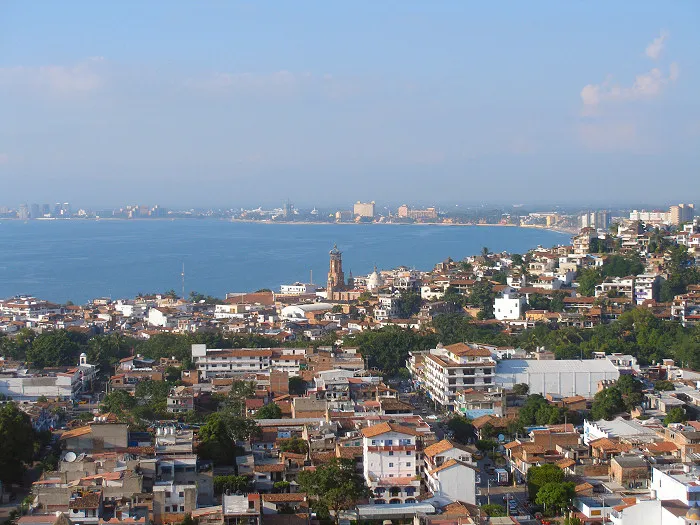
Puerto Vallarta on Banderas Bay has beaches with large hotels, bars, restaurants and discothèques. The coastline south of Puerto Vallarta is called the Costalegre, an ecological tourism corridor with beaches such as Melaque, Barra de Navidad, Tenacatita, Careyes, El Tecuán, Punta Perula, Chamela and El Tamarindo. All of these have five-star hotels along with bars, restaurants and discothèques. Majahuas is a marine turtle sanctuary in which visitors may liberate newly hatched turtles into the sea. Many coast areas offer activities such as scuba, snorkeling, kayaking, and sports fishing. Ecotourism and extreme sports such as bungee jumping and parasailing are available.
Diving Banderas Bay was a haven for pirates in the 16th century, but today it is one of Mexico's favored diving destinations because of the range of marine life and an average water temperature of between 24.4 and 30.3 °C. Expert level diving is practiced at Islas Marietas at the edge of the bay.
Lake Chapala
Beginning in the 1950s, due to the pleasant climate and attractive scenery of Lake Chapala, a substantial colony of retirees, including many from the United States and Canada, was established along its shore, particularly in the town of Ajijic, just west of the city of Chapala. An estimated 30,000 foreign residents live along the shores of Lake Chapala. It is a popular weekend getaway for residents of Guadalajara, where people sail, fish and jet ski. The Lake is surrounded by a number of towns including Chapala, Jocotepec, Ixtlahuacán de los Membrillos, Ocotlán and Tizapán el Alto. The area has been promoting ecotourism with activities such as rock climbing, rappelling, hiking, golf and tennis along with spas/water parks such as those in Chapala, Jamay, La Barca and Jocotepec.
Mountains The Montaña or Mountain Region contains mountain chains such as the Sierra de Tapalpa, Sierra del Tigre and the Sierra del Halo. The main communities in this area are Tapalpa and Mazamitla. Th
美食
In Guadalajara, try their tortas ahogadas (drowned sandwiches). It is a roll or bread stuffed with carnitas (pork) and bathed in a red sauce with chili. Birria is a flavorful stew made with goat meat, or sometimes lamb. It is an iconic element of Jalisco regional cuisine. Modern variations can be found using pork, or even beef, though these are not in keeping with the historical basis of the dish's roots in indigenous cooking.
飲品與夜生活
Puerto Vallarta is known for its nightlife along with its beaches. Its nightlife is a big draw for LGBT visitors.
Tequila The Tequila Valley is known for the liquor named after it, made from the blue agave plant. This valley is filled with tequila haciendas, archeological sites and modern distillation facilities. The main historical centers are the towns of Tequila, Cocula, Magdalena and Teuchitlán. The aggregate of the agave fields in this area have been named a UNESCO World Heritage Site. The "Tequila Express" runs from Guadalajara to the town of Tequila. This tour includes visits to tequila distilleries which often offer regional food in buffets accompanied by mariachi musicians and regional dancers. Closely related to tequila and mezcal, raicilla is a little-known distilled spirit made in a few coastal and highland communities. The historic town of San Sebastián del Oeste offers visitors a chance to learn about the drink and taste samples.
Other beverages
Tehuino (often spelled tejuino), an ancient corn-based drink that pre-dates the Spanish conques
城市概覽改寫自 Wikipedia,旅遊指南來自Wikivoyage (CC BY-SA)。照片來自 Wikimedia Commons.