
Indiana Dunes National Park
United States · Americas
關於Indiana Dunes National Park
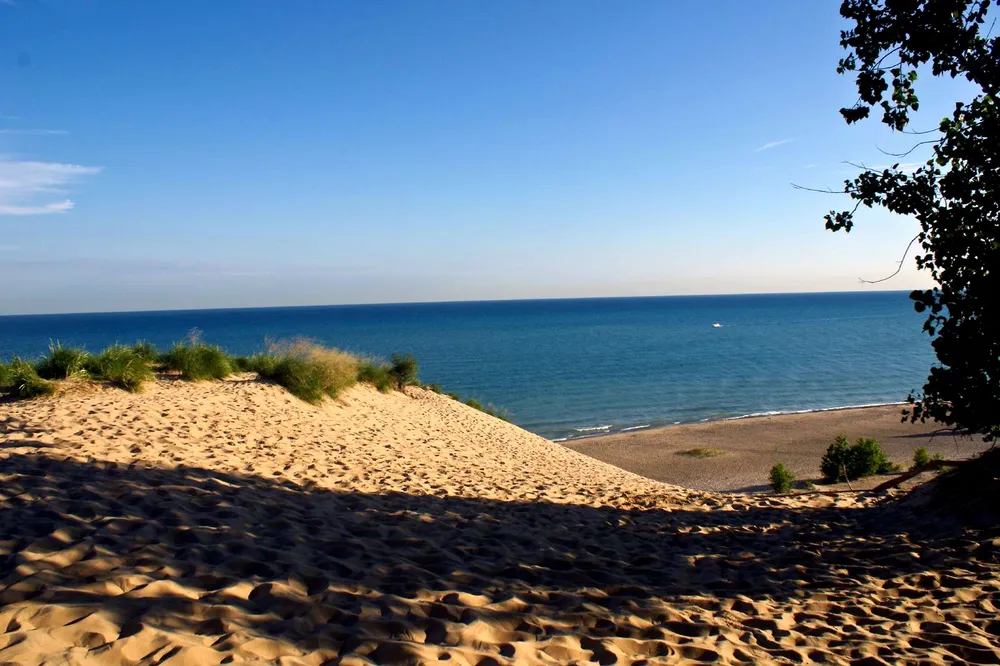
Indiana Dunes National Park, in the northwestern part of the state, is the only national park in Indiana. It's popular for its big sand dunes and plentiful beaches on Lake Michigan, and for its easily accessible location near Chicago. The park is also home to a variety of ecosystems including swamps and forests, with diverse plants and wildlife.
Indiana Dunes National Park旅遊指南
城市概覽
History The history of Indiana Dunes National Park falls into settlement, preservation, and park segments. Joseph and Monee Bailly, the fur traders, settled on the banks of the Little Calumet River in 1822. The wetlands of the Indiana Dunes proved to be a good place for contacts between the Bailly family and the Pottawatomie tribe of Native Americans. In 1822, the Pottawatomie nation had already developed an established lifestyle of duneland use, including the trapping of local beaver, raccoon, and muskrat. After the Pottawatomie people were forcibly expelled from the Lake Michigan shoreline in the 1830s and 1840s, railroads built lines through the Indiana Dunes westward to the fast-growing city of Chicago; but the Dunes themselves, with their comparatively infertile soil, were settled relatively slowly.
Preservation After the newly formed U.S. Steel Corporation began to construct a massive mill complex within the dunes at Gary, Indiana, lovers of the Dunes began efforts to preserve them. The National Park Service offered in 1916 to protect much of the remaining duneland as Sand Dunes National Park, but many locals opposed the proposal. In the 1920s, the state of Indiana preserved 2,182 acres of central duneland as Indiana Dunes State Park. Other sections of duneland were developed as the small communities of Ogden Dunes, Dune Acres, and Beverly Shores. World War II and the early Cold War years increased pressure upon the United States to increase its production of steel. For reasons of economical coal and iron ore supply, one of the most efficient geographic locations to make steel within the United States is on the southern border of Lake Michigan. During the 1950s and early 1960s, several additional steel mills were sited within the dunelands in areas that could otherwise have been preserved for parkland. After the former Bethlehem Steel Corporation acquired and built its Burns Harbor mill in 1962-64, a public outcry and pressure from activists, led b
如何抵達
By car The Indiana Dunes area is accessible from Chicago by Interstates 80, 90, and 94; from Indianapolis by Interstate 65; from Detroit by Interstate 94; and from Cleveland and the East Coast by Interstates 80 and 90. U.S. Highways 12 and 20 go directly through the park.
By train The Indiana Dunes are served by the South Shore Line from Chicago, Michigan City, and South Bend. There are approximately 12 trains through the park each way on weekends, with 9 trains each way on Saturdays, Sundays, and holidays. There are several stations near the dunes:
Dune Park is closest to the Indiana Dunes State Park. Follow the signs out of the station and walk along a sidewalk about 20 min to the park's main entrance. Portage/Ogden Dunes is closest to Ogden Dunes. To get to the West Beach Recreation Area, walk North through the town to the intersection of Diana Road and Ski Hill Road (about 20 min) and enter Long Lake Park. Follow the path past the tennis courts and along the lake; at the very end it connects to the West Beach Trail in the recreation area. You can take bikes on the South Shore Line, but they are only permitted on some trains and some stations. As of May 2021, the only station near the dunes that accepts bikes was Dune Park, but even that was not allowed due to construction.
當地交通
By bike Most of the hiking trails are closed to bikes, but the Calumet Trail runs parallel to Dunes Highway and can be used to transit between some parts of the park.
必看景點
Lake Michigan. Accessible via a short walk from any of the beach access parking areas. For visitors, who have limited mobility can view the lake from Lakefront Drive through Beverly shores or from the Dunbar Ave. Parking lot. Drive out to Portage Lakefront and Riverwalk. Here, you have a spectacular view to the north across Lake Michigan. On clear days or days when clouds hang over the water, you can see the skyline of Chicago off to the northwest. Mt. Baldy. While hiking to the top is a challenge, as worth the time, you can see the moving southface from the Mt. Baldy parking lot. In a windy year, it will move another foot towards the lot. Inland Marsh Overlook. A unique attraction is the marsh overlook. An unimposing parking area and a picnic table are the only clue that this short trail exist. It's all boardwalk and easily accessible by wheelchair or walker. You'll walk a short distance across a bridge between two tree covered dunes. From ground level to the tree tops and there are no steps. Once to the overlook, you'll see a vast inland marsh. During migration, the area can host flocks of arctic wanderers and other summer residents from the tropics. 1 Century of Progress Homes. See five buildings, all from the Homes of Tomorrow Exhibition of the 1933 Century of Progress World's Fair which took place in Chicago. They were originally intended to display the future of housing, and today are private residences with nearby plaques. (updated May 2021)
Nearby attractions The Depot of Beverly Shores - South Shore Line Passenger Depot, Museum and Art Gallery - 525 Broadway, Beverly Shores (on U.S. 12)
體驗活動
Swimming The beaches, owing to the deep blue, often clear water, as well as the huge dunes and the copious sand they bring, are beautiful. Industrial vistas in the distance can lessen the bucolic impact, although with a good sense of humor and appreciation for the weird, they can add to the experience. The worst industrial offender is the big power plant to the east of the park, which is very visible from both Central Beach and the beach below Mt Baldy. A generally useful tip is that the beaches are more crowded with proximity to Chicago. The least crowded, on average, are the two at the east (Central and Mt Baldy). Going to the beach at the state park is also a good way to get more beach space since Indiana charges an entrance fee. Now of course, if you're from a more crowded section of the country on the East Coast or California, you'll feel like you have an extraordinary amount of space no matter which beach you choose.
From East to West:
West Beach. The sole beach west of the Port of Indiana and its steel mills. It's right by Long Lake, and several nice, short trails through the woods. As it is the park's largest and most visited, it also has the most amenities. Porter Beach. Just west of the state park section of the shoreline. Kemil and Dunbar Beaches. Less than a half mile apart, Kemil is wheelchair-accessible. Lake View. Along with Kemil and Dunbar Beaches, Lake View is one of the most isolated from industrial vistas. Central Beach. As it is far enough east, Central Beach is one of the frequently visited beaches, despite being not very easy to reach—nonetheless Mt Baldy probably has claim the title of most remote.
Picnic There are numerous picnic areas for those who wish to make a day of it. Picnicking on the beaches is allowed. No glass containers are allowed on the beach. Nearby some of the beaches you'll find picnic tables, inclu
城市概覽改寫自 Wikipedia,旅遊指南來自Wikivoyage (CC BY-SA)。照片來自 Wikimedia Commons.