
Hecelchakán
Mexico · Americas
關於Hecelchakán
Hecelchakán is a small city of about 10,000 people (2010) in the state of Campeche in Mexico's Yucatán Peninsula. A historically Maya area with an interesting colonial past, several less-known archaeological sites are close by. The city is a good base for nature trips (particularly birdwatching) to the Petenes Biosphere Reserve and the Ria Celestun Biosphere Reserve.
Hecelchakán旅遊指南
城市概覽
Hecelchakán was a small Mayan settlement at the time the Spanish conquistadors arrived in the 16th century. The Franciscan missionaries established the town's first church in the latter half of the 1500s and the town grew slowly since then. It was the site of battles between federal troops and local Mayans during the Caste Wars following Mexico's War of Independence. It seems the Mayans didn't like being turned into slaves in all but name by wealthy outsiders who were "given" lands by the corrupt federal government. Federal troops put down the Mayans, but ignored their greivances, ensuring that tempers would boil again, as they did during the Mexican Revolution when land reform became a huge issue and battles against federal troops in the Yucatan were not favorable to Diaz and his cronies.
如何抵達
The nearest commercial airport is in Campeche (CPE IATA). Merida (MID IATA) is about 3 hours away. The largest airport in the region, with the widest range of international flights, is Cancún International Airport.
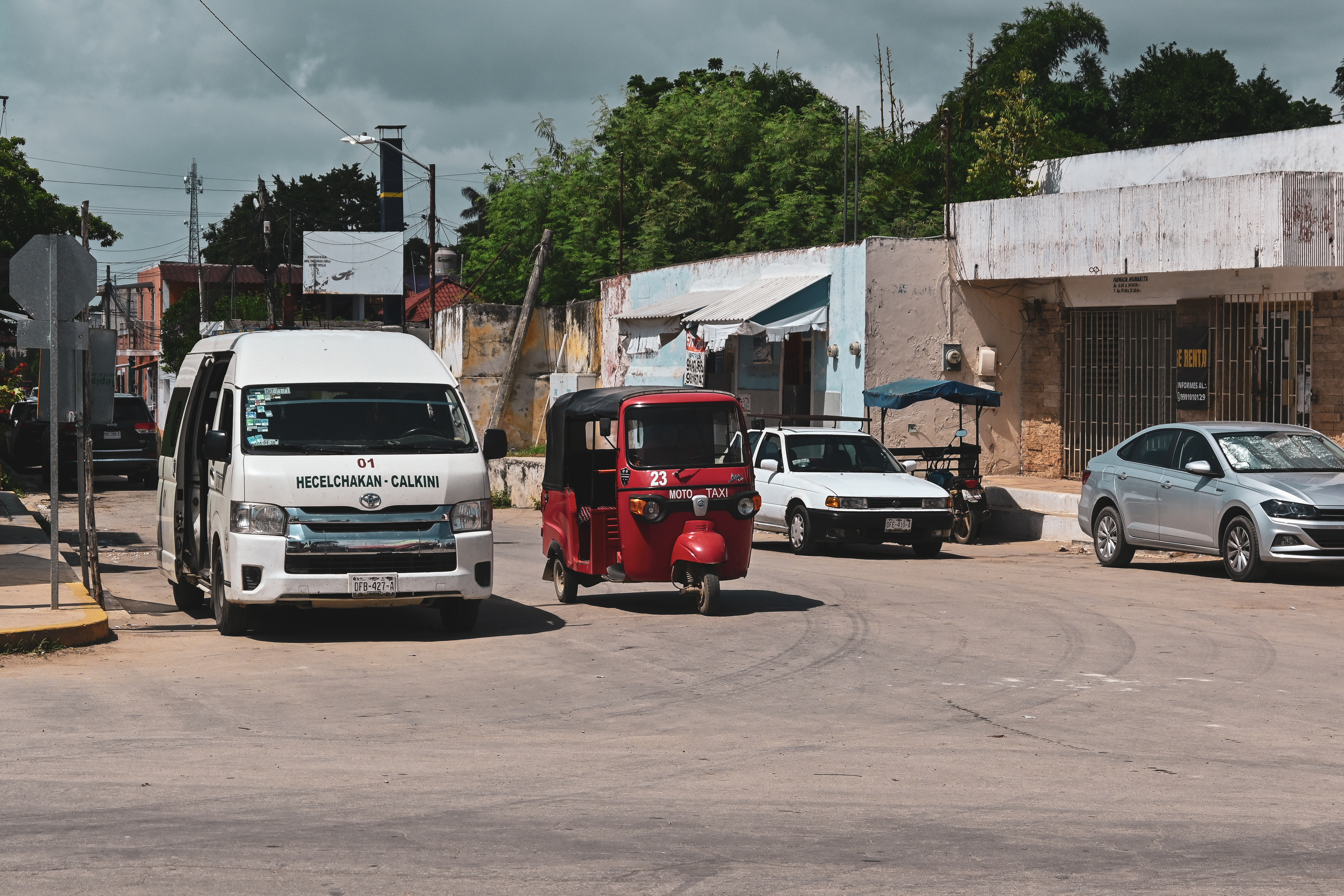
By combi Combis are used extensively in Campeche and go between the city of Campeche and Hecelchakán every 15 minutes during the day (last combi leaves Campeche at 20:00). The fare is M$40 for the 1-hour trip.
By bus From the bus station in Campeche, you can take buses operated by Autobuses Sur Mexico or Autobuses ATS. Choose whichever company has the next bus leaving. Both have tickets starting at M$20 for the 1-hour trip. The bus from Merida takes about 3 hours with tickets priced starting at M$80. Buses are operated by Autobuses ATS, Autobuses Sur Mexico, and Autobuses TRT.
By train Hecelchakán is a station for the new Tren Maya intercity railway that loops through the five states of the Yucatan Peninsula. Hecelchakán lies between Merida and Campeche. The train can be a comfortable, fast, affordable way for travelers arriving at Cancún International Airport to reach Hecelchakán.
* 1 Estación Hecelchakán Tren Maya, Calle 27 (west side of town). Hecelchakán is a large station with frequent departures in either direction. Tickets can be purchased at ticket counters in the station or online via the official Tren Maya web site. (updated Jul 2025)
當地交通
Hecelchakán is a small, compact city with most touristic sites within easy walking distance of each other. Just about every street is a numbered calle: even numbers run north-south, odd numbers run east-west. Moto-taxis buzz around town and are a cheap and fun way to get from place to place. Regular taxis are mostly small Nissans and are best for further destinations, day-trip tours, or traveling as a group (a taxi sitio is at the corner of Calle 20 and Calle 21). Combis are common in this region and are a good way to get to nearby towns. Combis can be found on Calle 20 near the Zocalo (look for the large white vans with red graphics on the side), or you can wait at pick-up points on Calle 20 (ask locals where the combi picks up, if you're unsure).
必看景點
1 Zocalo, along Calle 20, between Calle 17 and Calle 21. The town square is a large, attractive park in the heart of the city, with the historic town hall (Palacio Municipal) at one corner. It's a good place to relax and hang out on one of the benches, although there's little shade and the afternoon sun can be brutal. Strolling vendors sell snacks and knick-knacks for kids. 2 Parroquia San Francisco de Asís (St Francis of Asisi Church), Calle 20, Centro. The town's main church was built of stone by Franciscan missionaries in the late 16th century. Architecturally, it's typical of Yucatan churches of this period with little of the ornamentation that graces churches in Central Mexico of the period. The church features two large bell towers and buttresses along the side walls. The interior is likewise relatively austere but has an impressive altar with flaming hearts alongside the crucifix and several statues of saints. The church is usually open for a few hours in the afternoon and for scheduled masses. 3 Museo Arqueológico del Camino Real de Hecelchakán (Archaeology Museum), C. 18, Barrio de la Conquista. Regional history museum operated by INAH. Housed in a large historic colonial home in the center of town, the museum focuses on Mayan artifacts discovered at nearby archaeological sites. In late 2023 the museum temporarily closed for renovations and expansion as part of the government's increased focus on improving tourism infrastructure in the region. The museum's exhibits are expected to re-open to visitors in 2024. M$65.
體驗活動
Archaeological explorations
Several known Maya sites are within a few kilometers of the town of Hecelchakán. Most are small sites that have not been explored, documented, or developed for tourism. Local guides may be able to take you to these. Sites include Xcalachetzimin, Haltunchen, and Xcombek. There is one good-size site of cultural significance that is managed by INAH and is open to tourists:
1 Xcalumkin, unnamed road (From Hecelchakan, take Calle 9 east across highway MEX-180D toward the village of Dzitnup. Continue on the main road for 5 km past Dzitnup to the site entrance.). 09:00 - 17:00. Interesting 1,400-year old site that was at its peak in the 8th century and in decline by the 10th. The site is known for having a large number of architectural elements (doorways, lintels, columns) with clearly readable hieroglyphs. Linguists have been able to piece together a story told by these engravings. They tell a tale of city rulers between the years 720 and 760. Free.
Nature trips Naturalists will want to explore the wetlands to the west and north of Hecelchakan, particularly Los Petenes Biosphere Reserve and Ria Celestun Biosphere Reserve, which are adjacent to each other and protect a long stretch of coastline on the Gulf of Mexico. Both are UNESCO Biosphere Reserves and Ramsar wetlands. Birdwatching is especially rewarding in these two natural areas. More than 300 avian species inhabit the coastal wetlands, most as permanent inhabitants, but about a third as migratory species spotted only at certain times of the year. The Ria Celestun reserve is famous for its large breeding colonies of pink flamingos. Both reserves have a large number of wetland birds including herons, gulls and ducks. A number of migratory waterfowl from Canada and the United States migrate to these reserves for the winter months. The landscape of the two reserves is mostly mangrove swamps and marshes with areas of dense rainforest. The swamps are inhabited by crocodiles and the l
購物
1 Mercado Jose del Carmen Ortegon, Calle 19, Centro. Daily 06:00 - 15:30. The town's main traditional marketplace is an orgasm of the senses where mountains of fresh fruits and vegetables vie for the attention of local shoppers. Many unusual ingredients that are typical of regional cuisine and traditional Maya dishes can be found here. Prepared foods are often the most authentic regional and indigenous dishes you can buy. Local specialties that are emblematic of the region include panuchos, salbu
城市概覽改寫自 Wikipedia,旅遊指南來自Wikivoyage (CC BY-SA)。照片來自 Wikimedia Commons.