
Hartz Mountains National Park
Australia · Oceania
關於Hartz Mountains National Park
Hartz Mountains National Park is a national park in Southern Tasmania and is part of the Tasmanian Wilderness World Heritage Area. Being only a little more than an hour drive from the state capital of Hobart, Hartz Mountains National Park is an easy-to-get-to park for wilderness hiking.
Hartz Mountains National Park旅遊指南
城市概覽
History The park was first inhabited by the Mellukerdee people, with the first Europeans coming to the area in the 19th century in search of Huon pine timber, leading to the town of Geeveston being founded. A track was laid between the town and the mountains, making it one of the popular bushwalking trails in the 19th century. The park was declared a scenic reserve in 1939 and a national park in 1951. In 1989, along with numerous other Tasmanian national parks and reserves, the park became a UNESCO World Heritage Site under the Tasmanian Wilderness.
Landscape The park's elevation ranges from 160 m at the Picton River to 1,255 m at Hartz Peak, the park's peak. The backbone of rock in the park is dolerite, while the southern areas at lower altitudes are constituted from sedimentary rocks formed from sediments deposited by marine, glacial and freshwater sources between 355 and 180 million years ago. However, they've been modified over time by several ice ages, forming cirques, horn peaks, aretes and glacial troughs.
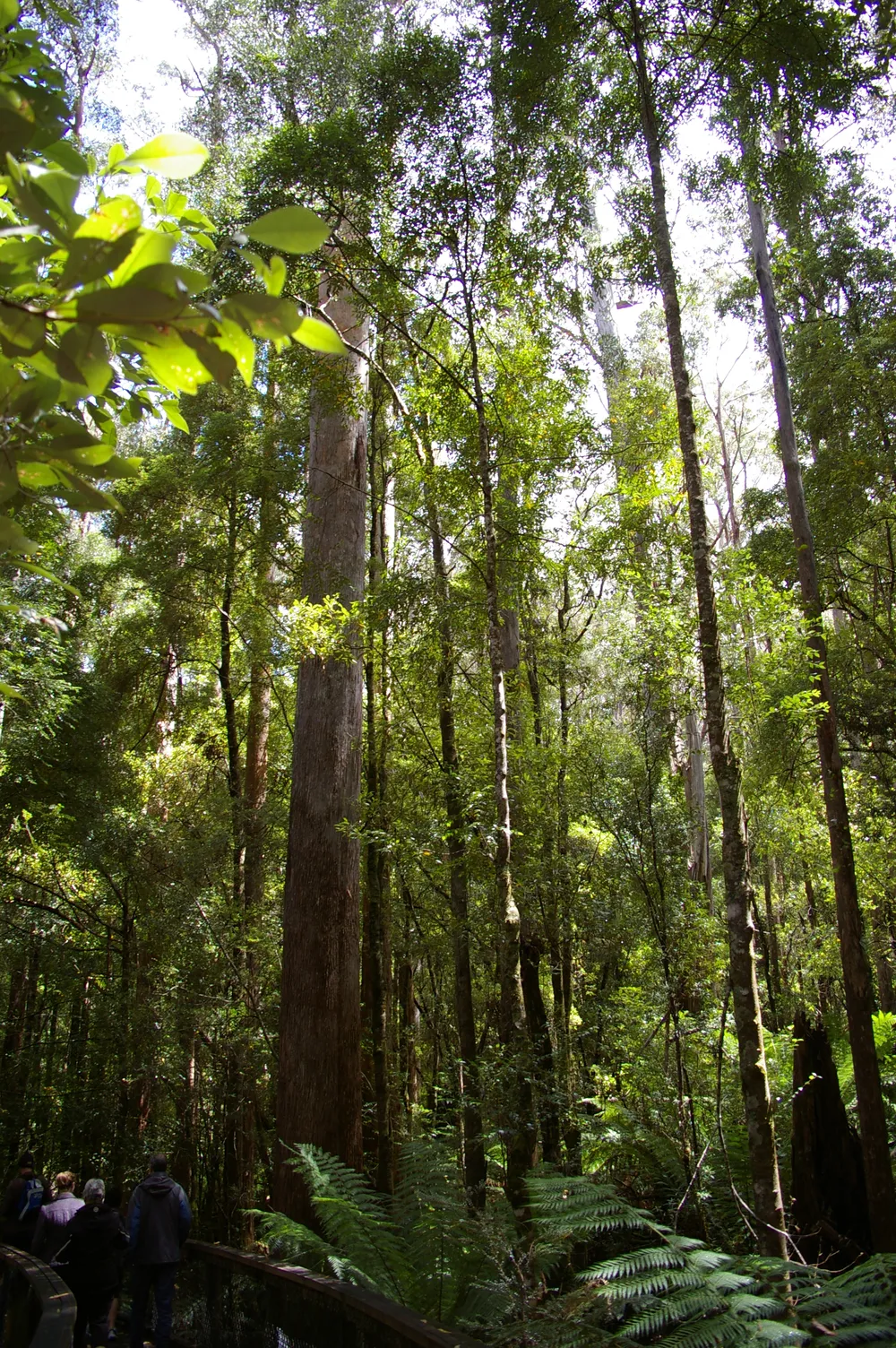
Flora and fauna The vegetation of the park is the ones that is generally found in wet eucalypt forests, rainforests, sub-alpine and alpine forests. The park also has the smallest eucalypt and yellow gum. Fauna in the park include the Bennett's wallabies, Tasmanian pademelons, brushtail possums, echidnas and platypus, with many of them being nocturnal. Birds in the park include the eastern spinebill, green rosella, forest raven and several honeyeaters.
Climate
The climate of Hartz Mountains National Park is very comparable to the climate of Europe or North America, except the greenery makes the park have more rainfall than Europe or North America. The summers are either mild, or cool and it rarely gets "hot" or even hits the 20s. In winter, the temperatures go below freezing nearly everyday, but that's the kind of climate that most of the Tasmanian Wilderness gets. Unlike the mainland, the rainier months tend to be around when winter starts, whi
如何抵達
Hartz Mountains National Park can only be accessed via car, although it's not far from the state capital of Hobart. From Hobart, head down the freeway onto A6 Huon Highway up to Kingston. Instead of continuing on the freeway at Kingston, exit onto A6 Huon Highway for about 60 kilometres until Geeveston. At Geeveston, turn right to C632 Arve Road until the very end of the road where you'll have reached the park. Note that the last 14 km of Arve Road (C632) is unsealed (mainly consisting of gravel), and the road can be closed in the snow. Unless you're coming in a vehicle on chains, even 4WDs, you likely will not be able to continue or find it difficult.
當地交通
The only bit of road in the park (which is unpaved), goes from the park's entrance to the day use shelter and toilets, and apart from that, to get to the rest of the park, you will need to walk. Nevertheless, some of the easier to access parts of the park don't divert too far off the road, and so it'll be an easy walk.
必看景點
1 Arve Falls, Arve Falls Track, Southwest. It takes about twenty minutes from Hartz Road, and about one kilometre, making it suitable for most people. But the drop of the waterfall is just one of things that make this place so unique and a UNESCO World Heritage Site. (updated Nov 2021) 2 Hartz Peak. It's the roof of the park and is accessible via a somewhat difficult trail (see details under #Do). (updated Nov 2021) 3 Lake Esperance. One of the easiest and accessible glacial lakes to get to in Tasmania, this lake was initially formed as ice, but snow later built up around the mountains surrounding the lake. If you're doing the Hartz Peak track, it's a very short diversion to get to this unique lake. (updated Nov 2021) 4 Lake Osborne, Lake Osborne Track, Southwest. Another very easily accessible glacial lake, this lake gives more an insight into the alpine and subalpine vegetation of the park surrounded by ancient King Billy pines. The vegetation seen at this lake is very uncommon to see in Australia, hence why this spot is somewhat popular. (updated Nov 2021) 5 Waratah Lookout, Waratah Lookout Track, Southwest. A lookout overlooking the Huon Valley, a valley with dense thick forests that was present near the entrance of the park, which you'd have passed to get to this lookout. If you come to this lookout in either December or January, you may as well see the Tasmanian waratah bloom in bright red, taking over the already alluring scene. (updated Nov 2021)
體驗活動
The Hartz Pass is a 6 km return trail and takes 3.5 hours return to do. The track is reasonably well marked, passing through a range of different environments and surfaces, including boardwalks, rocky paths and just the surface at times. Be particularly careful if you're heading in the winter months, as the boardwalk can come very slippery. Nevertheless, there's probably never a better trail to experience the park's glacial and alpine landscapes. If you're looking for more of a challenge than Hartz Pass, Hartz Peak goes to the peak of the park, and takes 3-5 hours return, and about 7.4 km (4.6 mi) to do, climbing 400 metres in elevation. The views are even more rewarding, especially when you get to the top, seeing a true glimpse of what a "wilderness" is. The boardwalk around Lake Esperance allows you to experience most of the beauties of Lake Esperance on a well constructed boardwalk, and sometimes with snow on the sides, but it can even cover the boardwalk in winter. For those wanting a shorter walk, and one more family friendly, Lake Osborne walk is a 2 km walk, with 45 minutes return, although there's no boardwalk on this one. Most of the walk is just either a gentle uphill or a gentle downhill, with some rocky surfaces, but apart from that, the main thing about the walk is the lake and some of the jaw dropping views surrounding it
住宿
There are no camping facilities in the park, and there are also no lodging facilities in the park too. Campfires are also not permitted in the park, in order to protect the vegetation in the park. However, given that the park is just an hour away from Hobart or just half an hour from Huonville, the accommodation in those towns give much more of a variety than in neighbouring towns.
順遊推薦
Southwest National Park borders directly to the west, but requires a 1-hour drive via car around the Tasmanian Wilderness
城市概覽改寫自 Wikipedia,旅遊指南來自Wikivoyage (CC BY-SA)。照片來自 Wikimedia Commons.