
Hakone
Japan · Asia
關於Hakone
Hakone (箱根) is a mountainous area west of Tokyo in Japan. The Hakone checkpoint on the historical Tokaido road marks the beginning of the Kanto region.
Hakone旅遊指南
城市概覽
Hakone is extremely popular among domestic and foreign tourists alike for two reasons: it's close to Tokyo, and it has good views of Mount Fuji. It's a key stop on the Golden Route from Tokyo to Osaka, and the default location for many visitors to Japan to experience a onsen hot spring and/or a ryokan traditional inn. However, due to its popularity, it's also crowded, expensive and kitschy. If you have more time on your hands, it's worth exploring other options further afield.
Tourist information site Hakone is also the name of a town (箱根町). The local tourist association has a Japanese-only guide site. Its download section has some guide maps in English - seek for 英語 ("English").
如何抵達
By plane The nearest airports to Hakone are quite a distance away in the Tokyo area. If you are interested in booking a stay at a traditional ryokan in Hakone, it is strongly recommended that you plan to arrive in Hakone at least one day after you land in Tokyo. If you go to Hakone on the same day that you arrive, there is a good chance you might miss out on (and be charged for) dinner at the ryokan, or worse, you may be locked out of (and be charged for) your room at the ryokan's curfew time, if there is one. If you land at Haneda Airport early enough, there are two direct buses to Hakone-Yumoto train station, stopping in Yokohama along the way. Buses leave starting from the International Terminal/Terminal 3 at 08:25 and 12:35, with return trips leaving Hakone-Yumoto at 13:00 and 16:30. The one-way fare is ¥2000 and the trip takes about 2 hr. Otherwise, from Haneda, take the Keikyu Line to Yokohama, the JR Tokaido Line to Odawara, and finally the Hakone-Tozan Line to Hakone-Yumoto (2 hr, ¥1650). Alternatively, take the Keikyu Line to Shinagawa and transfer to the shinkansen (see below). There are no direct transport links to Hakone from Narita Airport. Plan on allotting between 2½ and 4 hr if heading to Hakone, depending on the route taken. The easiest route with luggage may be to take the JR Narita Express or a highway bus to Shinjuku and change to the Odakyu Romancecar (see below).
By train The fastest and most expensive method of reaching Hakone from Tokyo is to take a Tokaido Shinkansen all-stop Kodama (こだま) train from Tokyo to Odawara which leave 1-2 times per hour, then transfer to the Hakone-Tozan Line for the run to Hakone-Yumoto (trains operated by Odakyu Railway). The one-way fare starts from ¥3600 for unreserved seating, but with a Japan Rail Pass you need only to pay ¥320 for the Hakone-Tozan line - easily done with a Suica or PASMO card (Limited Express trains require an extra ¥200 surcharge). With a good connection, the trip takes one hour. Be aw
當地交通
Modes of transport in the Hakone region are many and varied. Your options include:
The scenic Hakone-Tozan Line mountain railway from Odawara to Gora via Hakone-Yumoto The Hakone-Tozan Cablecar up the mountainside from Gora to Sounzan The Hakone Ropeway from Sounzan down to Togendai on Lake Ashinoko via the boiling sulphur pits of Owakudani The Hakone Sightseeing Ships, decked out like Disneyland versions of pirate ships, sailing across the lake from Togendai to Moto-Hakone and Hakone-machi And positively dull in comparison, the Hakone-Tozan Bus back to Hakone-Yumoto or Odawara. The last bus from town to some of the faraway places leaves around 20:00. Information on these are gathered on Odakyu's Hakone Navi website with a journey planner, info on how to pay the fare and route maps. Some modes of transportation - in particular the ropeway - close from time to time for regular inspections, or in windy conditions. Buses will run replacement services in these cases. Most people opt for the Odakyu Hakone Free Pass, which includes a return trip from Shinjuku and allows unlimited use of all of the above forms of transport for several days. In addition, pass holders can receive discounts at many hot springs, museums, restaurants, and other locations by showing their pass. The 2-day Free Pass costs ¥6100 from Shinjuku and ¥5000 from Odawara. A 3-day pass can be purchased for an extra ¥400. Additionally, if you have a Free Pass from Shinjuku you can use the Hakone Limited Express train by paying a surcharge of ¥1110 each way. You can also travel in a saloon compartment, if offered, at a cost of ¥4440 for the compartment. Holders of the Japan Rail Pass and JR East Rail Pass should travel to Odawara station by JR using the methods described earlier, and pay for the Free Pass from Odawara.
Accessibility Despite the mountainous location and numerous transfers, travelers with disabilities can enjoy the entire Hakone Round Course. Unfortunately, getting to the many hot sprin
必看景點
The volcanically active Fuji-Hakone-Izu National Park, centered on Lake Ashinoko, is a popular tourist attraction well known for its onsen (hot springs) and its views of Mount Fuji.
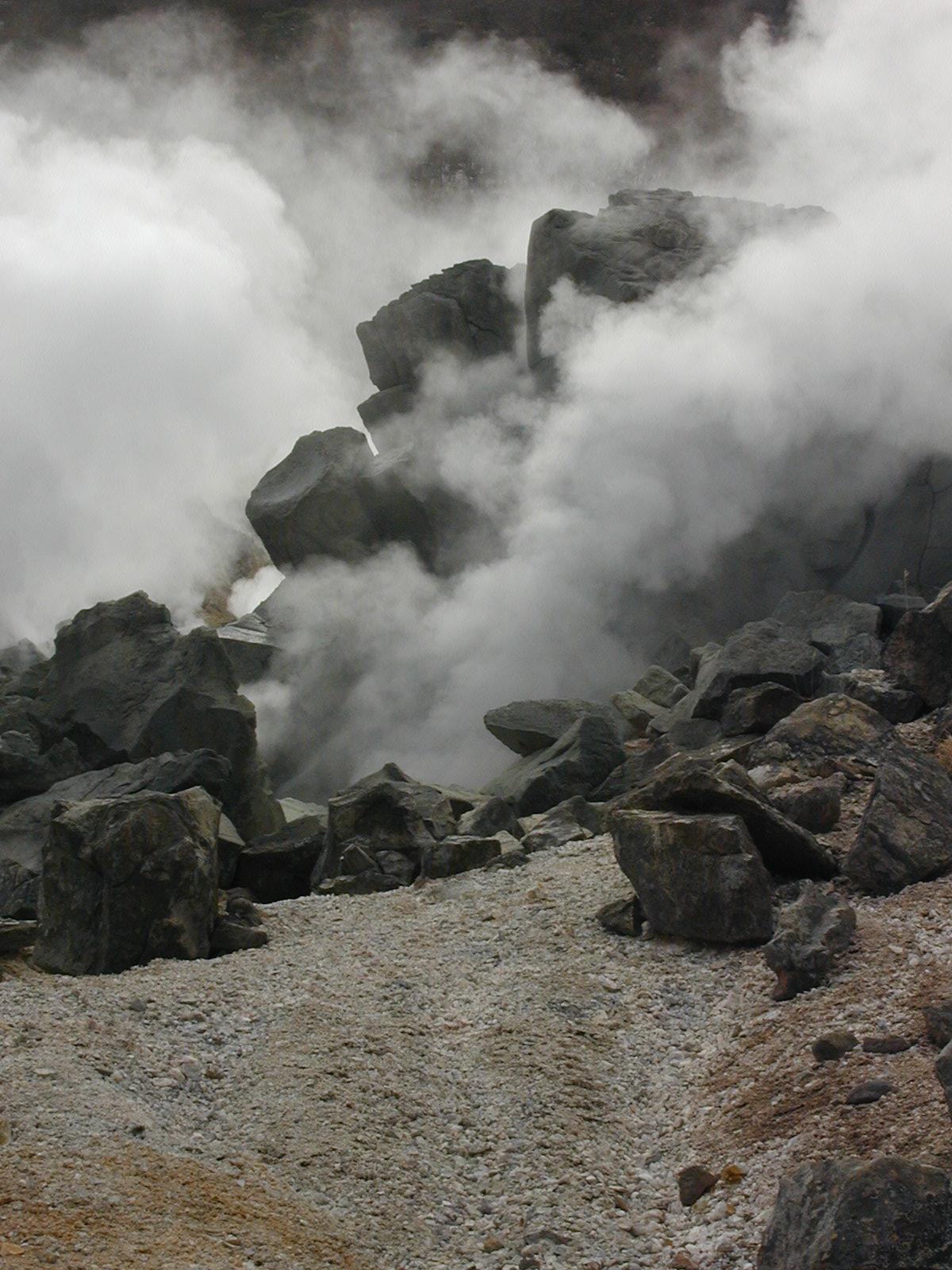
1 Great Boiling Valley (大涌谷 Ōwakudani) (Hakone Ropeway Owakudani Station). Volcanic hot spot full of sulphurous springs. 2 Hakone Jinja Shrine. Nestled on the south shore of the lake, close to Moto-Hakone, is a picturesque Shinto shrine with torii gates in water. 3 Lake Ashi (Ashinoko). Beautiful views of Mount Fuji but only on a clear day. As many tourists have found out, a visit to Lake Ashinoko does not guarantee a view of the mountain. The lake is crisscrossed by cartoonishly decorated "pirate ships". 4 Hakone Open Air Museum (箱根 彫刻の森美術館, Hakone Choukoku no Mori Bijutsukan), 1121 Ninotaira, ☏ +81 460-82-1161. Daily 09:00-17:00. One of the top attractions in Hakone. Displays a wide variety of sculptures and artwork from celebrated Western and Japanese artists within a beautiful parkland setting. Also includes a dedicated Picasso pavilion (paintings and pottery). ¥1,600 (¥200 discount for holders of Hakone Free Pass, a ¥100 discount voucher is available on the museum's website). (updated Dec 2019) 5 Pola Museum of Art (ポーラ美術館, Pola Bijutsukan), 1285 Kozukayama, Sengokuhara, ☏ +81 460-84-2111. Daily 09:00-17:00. The Pola Museum of Art's permanent collection is centered on works gathered over a 40-year period by Suzuki Tsuneshi, the son of the founder of Pola, a Japanese health and beauty company. The collection of around 10,000 items spans a wide range of genres including Western painting, Japanese Western-style painting, Japanese-style painting, prints, sculpture, Oriental ceramics, Japanese modern and contemporary ceramics, glasswork, and cosmetic utensils and other objects. Amongst Western masterpieces, the collection includes impressionist works from Monet, Manet, Renoir and Degas, as well as from Picasso. ¥1800. (updated Dec 2017) 6 Hakone Museum of Photography (箱根写真美術館 or Hako
體驗活動
No trip to Hakone would be complete without a dip at a Japanese hot spring (onsen). If you're staying overnight, your lodgings may include bathing facilities, but if not many hotels open up their baths to visitors for around ¥500 or so.
1 Tenzan Tōjigō. (天山湯治郷), Hakone-Yumoto, Chaya 208. Large, popular hot
城市概覽改寫自 Wikipedia,旅遊指南來自Wikivoyage (CC BY-SA)。照片來自 Wikimedia Commons.