
Haenam County
South Korea · Asia
關於Haenam County
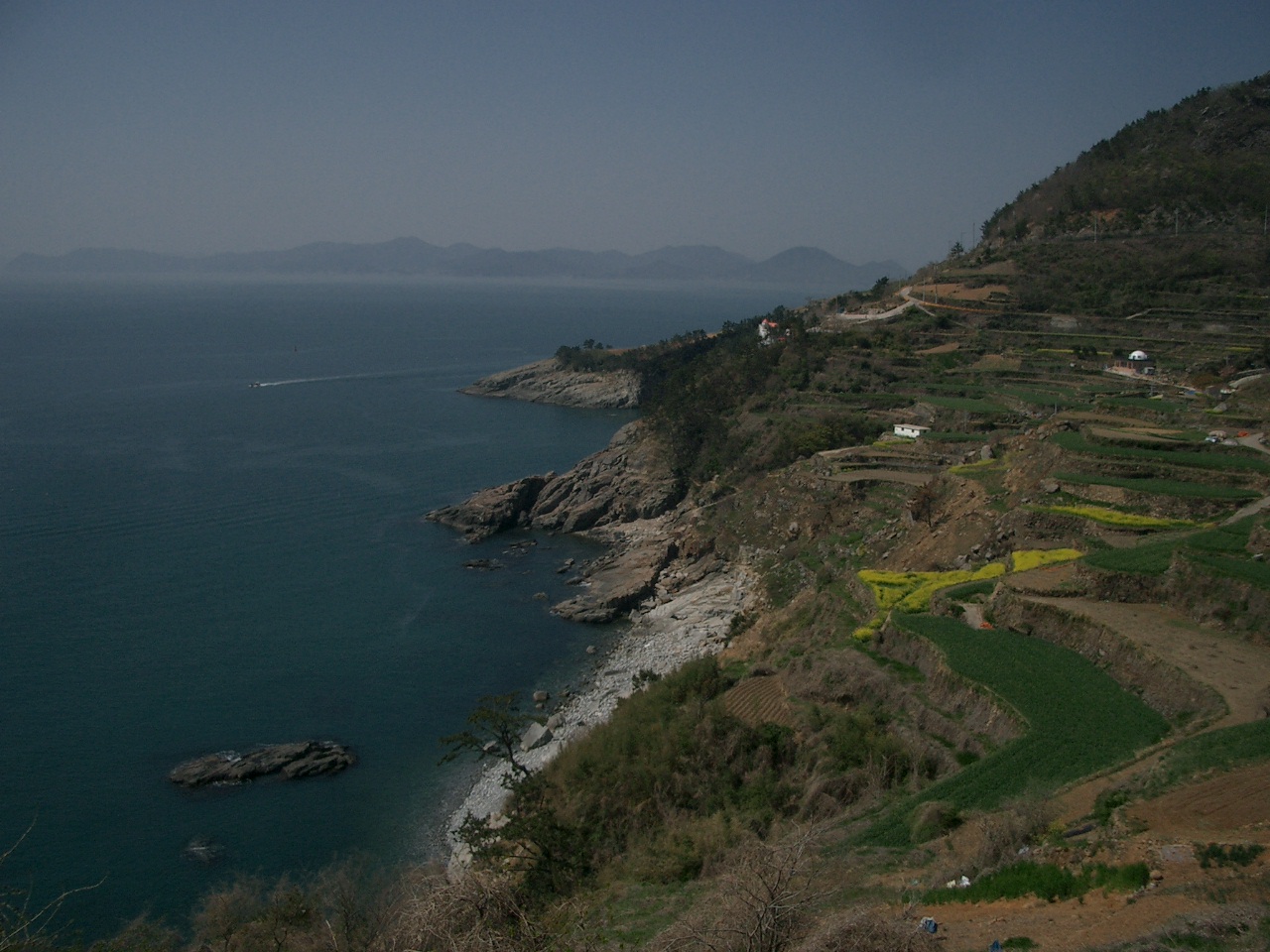
Haenam is a county in the southwestern part of South Jeolla, South Korea. This is a hilly area in the southern part of the Korean peninsula and has a warm maritime climate, making it an area where agriculture and fishing thrive.
Haenam County旅遊指南
城市概覽
Haenam is the largest county in Jeollanam-do, located in the southwestern corner of the Korean Peninsula. It is a peninsula with land on all three sides connected to Gangjin and Yeongam, and sea on all three sides. As the largest county in Jeollanam-do, located in the southernmost part of Korea, the reclaimed land area is 203.9 ㎢, with an extension distance of 44 km between east and west and 55 km between north and south.
Climate
Haenam is located at the southernmost tip of the country and has a mild climate. The average annual temperature is 13-14 °C, and the average temperature in January, the coldest month, is above 0 °C, showing a climate characteristic of mild winters with limited snow cover. The average annual relative humidity is 75%, and the average annual rainfall is around 1,300 mm, with rainfall from June to September accounting for 63% of the total rainfall. In summer, it is hot and humid due to the influence of the southeast monsoon, and in winter, it has a cold and dry continental climate due to the influence of the northwest monsoon, but the coastline area has a warmer climate than the inland due to the maritime influence. It has a coastline with the sea on all three sides, so it has a relatively hot and humid climate due to the influence of warm currents and a maritime climate, and has good conditions for the cultivation and growth of crops.
如何抵達
Options for getting into Haenam are bus and car.
By bus 1 Haenam Bus Terminal is right in the middle of Haenam town and served by intercity buses from Masan, Seoul, Busan, Gwangju, Mokpo, Yeosu, Jindo, Wando and Seongnam. The closest airport is in Mokpo.
By car National Road No. 13: It crosses from Wando-gun, passes through Bukpyeong-myeon, Hyeonsan-myeon, Samsan-myeon, Haenam-eup, Okcheon-myeon, and Valley-myeon before crossing into Seongjeon-myeon, Gangjin-gun. It is the national road with the most traffic as it connects the metropolitan area and Gwangju to Haenam and is the most linear road when going to Wando. The entire section has been improved to have at least 4 round-trip lanes. National Road No. 18: It comes from Jindo-gun and passes through Munnae-myeon, Hwangsan-myeon, Masan-myeon, Haenam-eup, and Okcheon-myeon to Doam-myeon, Gangjin-gun. Some sections of Haenam-eup overlap with National Highway 13. It used to be the only road to Jindo, but with the construction of the Yeongsan River Estuary Dam in Geumho-dong, traffic was concentrated in the direction of Mokpo-si. Perhaps that is why the section between Woosuyeong and Haenam is almost Autobahn-level even though it has been expanded to four lanes. National Highway 77: As soon as it crosses from Wando like National Highway 13, it heads south. It goes along the coast of the Haenam Peninsula, passes through Ttangkkeut (Galdu), Songji-myeon, and Hwasan-myeon, and overlaps with National Highway No. 18 in Hwangsan-myeon, then branches off at Usuyeong in Munnae-myeon and heads north, penetrating Hwawon-myeon, and ends at Maewol-ri in the north. There are 4 round-trip lanes from Usuyeong to Guji Intersection, and this section is mainly used by vehicles going from the metropolitan area, Gwangju, and Mokpo to Jindo, and has a lot of traffic along with National Highway 13 above.
必看景點
1 Songho Beach (송호해수욕장), 1827, Ttangkkeuthaean-ro, Songji-myeon. Songho was named because the beach is full of old pine trees, and the fine sand and clear, calm waves of the beach resemble a lake. In particular, Songho Beach has fine sand and shallow water, making it great for children and families to play, and is home to a forest of hundreds-year-old sea pine trees. (updated Sep 2023) 2 Daeheungsa (대흥사), 400, Daeheungsa-gil, Samsan-myeon. A Buddhist monastery on Mt Duryunsan, believed to be founded in 514 CE, during the time of the Baekje nation, by the monk Adohwasang. One of the main temples of the Jogye Order of Korean Buddhism, it was one of seven to be inscribed on the UNESCO World Heritage List in 2018. Today, it can be reached by a hike through some of the oldest forests in the country. It features a central courtyard, a main hall with slanted wooden pillars, a stream and a Confucian shrine. (updated Sep 2023)
3 Mihwangsa (미황사), 164, Mihwangsa-gil, Songji-myeon. A temple on Mt Dalmasan. It is nearly 1,300 years old, founded in 749 CE during the Shilla Dynasty, which had by then conquered Baekje lands. Positioned amidst a dense forest and jagged peaks, it features a monochrome roof rather than the usual colorful Buddhist decorations, as well as carvings of sea creatures such as turtles and crabs. (updated Sep 2023) 4 Nogudang (녹우당), 135, Nogudang-gil, Haenam-eup. Nogudang is a part of Haenam Yun Clan Nogudang surrounding a house from the Joseon Dynasty in Yeondong-ri, Haenam-eup, and was designated as Historic Site No. 167 on December 19, 1968. It is the head family house of Eocho Eungong faction of the Haenam Yun clan, and there is the Gosan Yun Seon-do Museum nearby. (updated Oct 2023)
Forest of Memory (해남 기억의 숲). In 2014, a passenger ferry Sewol from Incheon to Jeju sank near Paengmok harbor in Jindo. The forest was built to remember the Ferry Sewol disaster, commemorate the victims, and comfort the bereaved families. (updated Dec 2023) 5 Sani Garden (산
體驗活動
Festivals and events Haenam Minam Festival (해남 미남 축제). It is a food festival held every year during the harvest season of agricultural and marine products at Duryunsan Provincial Park in Daeheungsa, UNESCO World Heritage Site. It was held to lay the foundation for revitalizing food tourism by developing Haenam's specialized food and holding a food festival by applying all of Haenam's agricultural, fishery, and livestock products as food ingredients, focusing on cabbage, seaweed, and sweet potato. (updated Oct 2023) The Great Battle of Myeongnyang Festival (명량대첩 축제). It is a festival held in the Uldolmok area by Haenam-gun and Jindo-gun in Jeollanam-do to commemorate the Battle of Myeongnyang during the Japanese invasions of Korea. The Battle of Myeongnyang was a battle in which Admiral Lee Sun-sin led 13 Joseon naval fleets against 133 Japanese naval ships at Uldolmok on September 16, 1597, and defeated 31 of them. Haenam-gun held an event in 1997 to commemorate the 400th anniversary of the Battle of Myeongnyang, and has been holding the event together with Jindo-gun since 2008. (updated Oct 2023) Dalmagodo Healing Festival (달마고도 힐링축제). This festival, hosted by Haenam-gun and sponsored by Jeollanam-do and Mihwangsa, includes walking programs (6.51-km course), fusion Korean music/mime performance/busking performances, and tasting of Haenam sweet potatoes and water kimchi. It provides an experience program that satisfies all five senses. In addition, for the convenience of visitors, a shuttle bus departing from Haenam(bus terminal) is operated. (updated Oct 2023) Ttangkkeut haeneomihaemaji Festival (땅끝 해넘이해맞이 축제), San 43-24 Songho-ri, Songji-myeon, Haenam-gun, Jeollanam-do, ☏ +82 61-530-5157. Ttangkkeut Village is a p
城市概覽改寫自 Wikipedia,旅遊指南來自Wikivoyage (CC BY-SA)。照片來自 Wikimedia Commons.