
Fujigaoka
Japan · Asia
關於Fujigaoka
For the city in Batam, Indonesia, see Nagoya (Indonesia).
Nagoya (名古屋) is the capital and largest city of Aichi prefecture, in the Chubu region of Honshu. It's not one of Japan's top tourist draws as most tourists just zip through on the bullet train on their way between Tokyo and Kyoto. But if you do decide to stick around, there are plenty of car-related attractions, a restored castle, an ancient shrine, and a surprisingly happening nightlife.
Fujigaoka旅遊指南
城市概覽
The hub of Aichi prefecture, Nagoya is Japan's fourth-largest city after Tokyo, Yokohama, and Osaka and one of the nation's major economic centers. In terms of manufacturing, as home to auto-making giants Toyota, Honda, and Mitsubishi Motors, Nagoya is to Japan what Detroit is to the United States — and it was completely flattened during World War II.
History
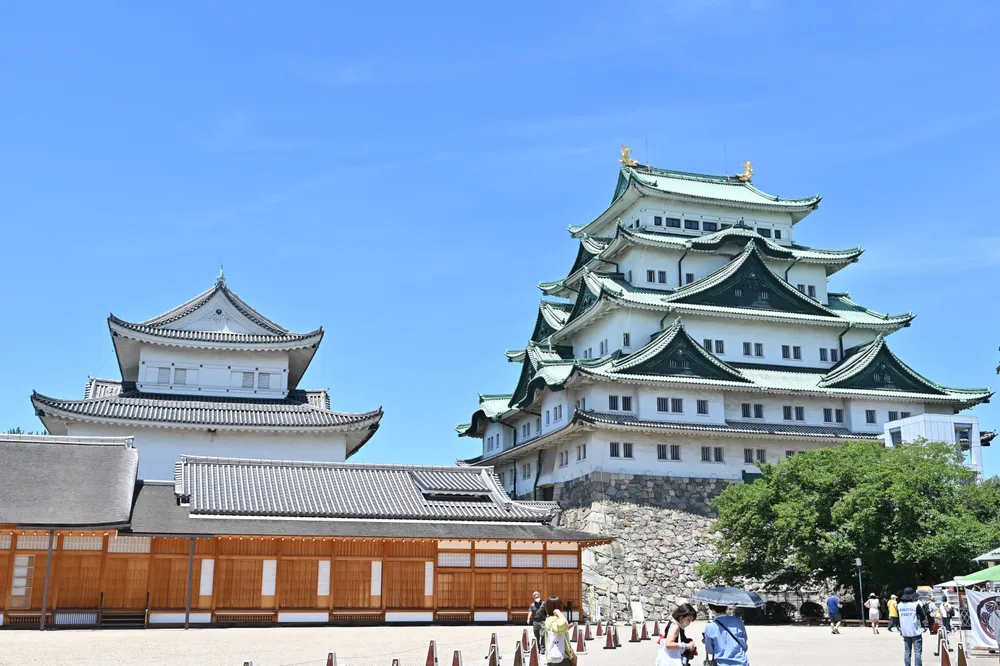
Now a modern metropolis, Nagoya gets its name from an old manor called Nagono which was built in the area in the 12th century. The manor prospered for two hundred years, and people began to refer to the area by the manor's name. Over time, the pronunciation of the Chinese characters in the name "Nagono" shifted to "Nagoya", by which the city is now known. Three famous local figures later helped to put Nagoya firmly on the map of Japan. Oda Nobunaga, Toyotomi Hideyoshi and Tokugawa Ieyasu all hailed from around Nagoya, and all shared the ambitious goal of unifying Japan under one government. Tokugawa finally succeeded in 1603 after winning in the Battle of Sekigahara, and established the Tokugawa Shogunate, which would rule Japan for the next 250 years. Soon after uniting the country, Tokugawa Ieyasu ordered the construction of Nagoya Castle for his son. He then ordered the people of nearby Kiyosu (on the outskirts of Nagoya) to move to the area around the castle, and a town soon came into being. Cotton, ceramics and lumber were the main industries sustaining the town as it grew into a small city. Following Japan's opening to the world during the Meiji era, Nagoya rapidly industrialized and established transportation links with the rest of Japan that would allow it to easily export its goods. During World War I, Nagoya became known for its foundries as well as its machinery and heavy industry exports, which would continue to grow throughout the 1930s. The 1920s marked the beginning of the automotive industry in Nagoya, which continues in importance to the current day. At the heart of the industry is the Toyo
如何抵達
By plane
1 Chubu Centrair International Airport (中部国際空港 Chūbu Kokusai Kūkō, NGO IATA). Japan's third major international gateway is on an artificial island 30 minutes south from the center of town. Facilities include two hotels, restaurants, a shopping concourse, and an onsen spa with views of the runways. The best way of connecting between Centrair Airport and central Nagoya is the Meitetsu Airport Line. The fastest trains are the all-reserved "μSKY" trains, which depart for Nagoya every 30 minutes. The journey takes 28 minutes at a cost of ¥1230. Slower Limited Express trains offer first class (reserved) and ordinary class (non-reserved) seating and take 37 minutes for the run to Nagoya - the standard fare is ¥870. Japan Rail Passes are not valid for the Meitetsu, though you can exchange your rail pass voucher at either the airport or at Nagoya station. Buses run hourly from Centrair Airport to the Meitetsu Bus Terminal, taking about 1 hr 20 min at a cost of ¥1200. The bus also stops at a few major hotels, including the Nagoya Tokyu, Nagoya Kanko and Hilton Nagoya. For large groups, Tsubame Airport Limousine offers private van service between Nagoya and Centrair Airport. Vans seat between six and nine passengers, and the cost for the service depends on the destination. As an example, trips to Nakamura-ku, where Nagoya Station is located, cost ¥12000. Slightly more expensive than the van is a taxi. A trip to Nagoya station will run ¥15000-16000.
Nagoya Airport
2 Nagoya Airport (also known as Komaki Airport, NKM IATA) (to the north of the city). While all other companies have moved to Chubu, regional flights by Fuji Dream Airline still use the old Nagoya Airport (NKM IATA). Flights are available from a number of domestic destinations: Aomori, Iwate, Niigata, Kochi, Fukuoka, Kitakyushu, Kumamoto, and Yamagata. Most flights are code-shared with Japan Airlines. Shuttle buses connect to Nagoya station in 30 minutes for ¥700.
By train
3 Nagoya Station (名古屋
當地交通
Nagoya is a big automotive industry center, and it shows. The street network is extensive and even downtown locations can be easily reached by car. On the downside, trains and subways are less convenient than in Tokyo or Kansai, and more expensive. If you're travelling with a JR Rail Pass, the train network doesn't have many stations in the city and you'll probably find yourself using the bus or subway a lot, something your pass won't cover. A city ordinance requires commuters to stand still on escalators. Walking or running on escalators is prohibited to prevent accidents.
By subway
There are 6 subway lines:
The red Sakuradōri Line (桜通線, S) curves southwest from Nagoya Station. The purple Meijō Line (名城線, M) runs in a loop around the eastern side of the city, connecting Sakae and Kanayama. The Meikō Line (名港線, E) spur branches from Kanayama to Nagoya Port. The yellow Higashiyama Line (東山線, H) connects Nagoya, Fushimi, Sakae, and Fujigaoka. The blue Tsurumai Line (鶴舞線, T) connects Fushimi and Osu Kannon, then goes south. The pink Kamiiida Line (上飯田線, I) is the shortest line in the system, with only two stations: Kamiiida and Heian-dori. Subways run every several minutes between about 05:30 until about 00:30. Fares range from ¥200 to ¥320. One day passes can be bought for ¥620 (bus), ¥760 (subway), and ¥870 (bus & subway). If you are visiting on a weekend, public holiday, or the 8th of the month, buy the 'Donichi Eco Kippu'. It allows unlimited rides on city buses and subways for just ¥620, which is cheaper than the standard 24-hour pass. On Saturdays, Sundays and public holidays you can also take advantage of the cheaper Donichi-Eco-Kippu (ドニチエコきっぷ) one-day subway ticket which offers unlimited subway travel for ¥620. This pass is available from ticket machines, or can be purchased in person from a station employee at the ticket gate. City transportation one day passes also offer discounted entry at various attractions in Nagoya, including Nagoya Castle and the
必看景點
1 Port of Nagoya Aquarium (名古屋港水族館 Nagoya-kō-suizoukan) (a short walk from Subway Nagoyakō Stn. (Meikō line)), ☏ +81 52 654-7080. Daily 09:30-17:00 (until 20:00 Jul 21-Aug 31). (site in Japanese) Large aquarium featuring a number of different marine environments, including killer whales. Adults ¥2,000. 2 Toyota Commemorative Museum of Industry and Technology (トヨタ産業技術記念館 Toyota-sangyō-gijutsu-kinenkan), 4-1-35 Noritake Shinmachi, Nishi-ku (3 minute walk from Meitetsu Sako Stn (Nagoya line), 10-minute walk from exit 2, Subway: Kamejima Station (Higashiyama Line)), ☏ +81 52-551-6115. Tu-Su 09:30-17:00 (last admission 16:30), (restaurant open until 21:00), closed M (Tu if M is a holiday), New Year's holidays. Built on the site of one of Toyota's original loom factories, this museum tells the story of the Toyota corporation, from its beginnings as an industrial loom manufacturer to its transformation into one of the world's largest car manufacturers. Includes large loom machinery and car d
城市概覽改寫自 Wikipedia,旅遊指南來自Wikivoyage (CC BY-SA)。照片來自 Wikimedia Commons.