
East Zone of São Paulo
Brazil · Americas
關於East Zone of São Paulo
Far East is a region of São Paulo. With about 2.7 million people, it is the most populous region and the main reduct of São Paulo's working classes, a true "City of Workers". Known as one of the poorest areas of the city, the Far East contains some interesting attractions, including two huge parks and the oldest surviving church of São Paulo.
East Zone of São Paulo旅遊指南
城市概覽
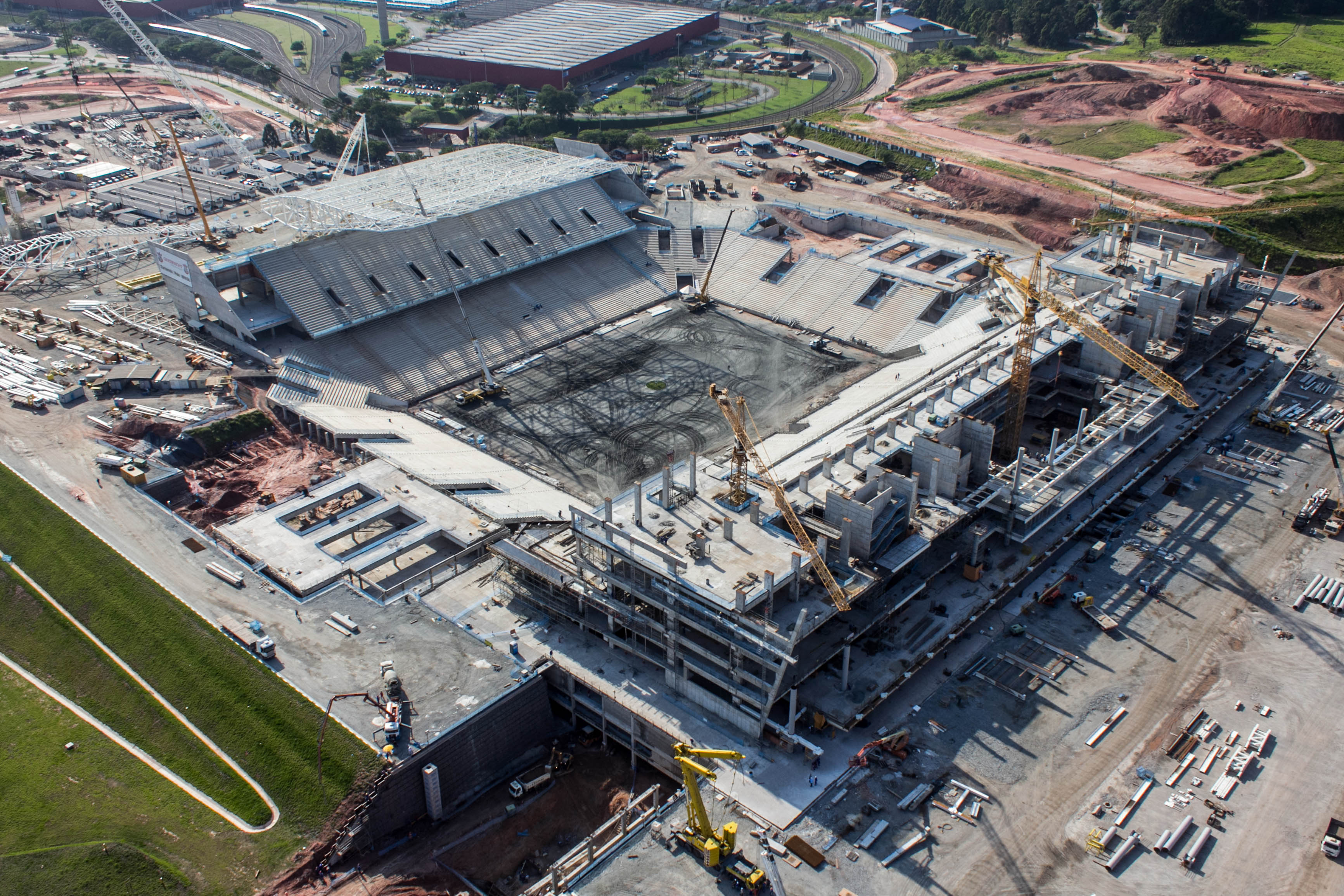
The Far East used to be occupied by farms and industries. During the second half of the 20th century, the fast economic growth of São Paulo attracted a large number of migrants from the Northeast of Brazil, who settled mainly in the city's peripheral areas. The Northeastern migrants and their descendants are now the predominant population in the Far East, although a significant Japanese community, that arrived during the farming era, is still present and remains culturally important to the region. The Far East is known as a "dormitory city", with a very large population and few opportunities of employment within the region, and unfortunately, with high levels of poverty and crime. However, there is a lot of perspective for the region, due to the fact that Itaquera was chosen to host the opening of the FIFA World Cup 2014. Together with a new stadium, which will become the home of Brazil's 2nd most popular football team, Itaquera is being remodelled to become a new center of services and business in the East. It is yet to be seen what all of these will end up, but there is at least a big hope that in São Paulo, the time of the East has finally arrived.
如何抵達
By metro and train The Line 3-Red is the busiest metro line of São Paulo, carrying everyday, along with Line 11-Coral and Line 12-Saphire, hundreds of thousands of workers from the East to the city center. These are the metro and train stations located at each district:
between Penha and Vila Matilde: Penha, Vila Matilde, Guilhermina-Esperança, Patriarca Artur Alvin: Artur Alvin Itaquera: Corinthians-Itaquera, Dom Bosco José Bonifácio: José Bonifácio Guaianases: Guaianases Cangaíba: Engenheiro Goulart Ermelino Matarazzo: USP Leste, Comendador Erlmelino São Miguel Paulista: São Miguel Paulista Jardim Helena: Jardim Helena-Vira Mara, Jardim Romano Itaim Paulista: Itaim Paulista The Line 15 Monorail connects Line 2-Green (Vila Prudente station) to Jardim Planalto.
By car Main accesses to the Far East region are Marginal Tietê (gives access to Parque Ecológico do Tietê), Radial Leste (gives access to the Itaquera district) and Avenida Aricanduva (gives access to Parque do Carmo).
當地交通
By bicycle Cycleway Radial Leste (see São Paulo main section) is partly located in this region. The other cycleway is:
Cycleway Várzeas do Tietê, Rod. Ayrton Senna, km 12 to km 23. The 11.41-km-long cycleway runs more-or-less in the south shore of the Tietê river, although the river is not visible in some parts. The cycleway is part of Parque Várzeas do Tietê, and it is expected to gain 12.44 km in the coming years. The cycleway gives access to Parque Ecológico do Tietê, Parque Jacuí, and USP Leste (the East campus of University of São Paulo). It also passes through residential areas, mostly lower class.
必看景點
Basílica Nossa Senhora da Penha, Rua Santo Afonso, 199 (10 min walk from Penha station). 11 2295-4462. The church is one of the most beautiful of the city, and sits in the top of a hill in the neighborhood of Penha, a former village from the colonial period. The neighborhood and the original church were founded around 1667, and the statue of Our Lady of Penha, from that era, can still be seen in the basilica. 1 Parque Ecológico do Tietê, Rua Guirá Acangatara, 70 - Cangaíba (near Engenheiro Goulart station, car access by Rodovia Ayrton Senna km 17), ☏ +55 11 2958-1477. everyday, 08-17. The huge park, with 14 million square meters, is part of the larger Parque Várzeas do Tietê, which when finished, will cover most of the east part of the Tietê river. The visitable area is the south shore of the river, which includes many sport/recreational facilities, a lake surrounded by preserved rainforest (where animals such as monkeys, coatis and capibaras can be easily spotted), and Museu do Tietê, an educative space about the pollution of the Tietê river. Bicycles and paddle boats (for the lake) are available for renting. free. (updated May 2019) 2 Parque do Carmo, Av. Afonso Sampaio Souza, 951 - Itaquera, ☏ +55 11 2748-0010. Parque do Carmo has 9 million m², with the area open for visits having 1.5 million m² - the same size of Parque do Ibirapuera (see São Paulo/South Central). This causes the two parks to be often compared to each other, but they are fundamentally different: while Ibirapuera has far more cultural and sport facilities, the main characteristic of Parque do Carmo is its lush nature, including 390,000 m² of preserved rainforest. The park also provides an excellent opportunity to observe the culture of the East of São Paulo, like the many families and groups of friends making barbecues in the park's recreation areas. Other interesting areas of the park include the 8.2-km cycleway (bicycles for rent are not available) and the garden of cherry trees maintained by
體驗活動
1 SESC Itaquera, Avenida Fernando Espírito Santo Alves de Mattos, 1000 - Parque do Carmo (Next to Parque do Carmo), ☏ +55 11 2523-9200. 09-17. Adjacent to Parque do Carmo, SESC Itaquera is one of the most important cultural, sport and recreation centers of the East. Highlights are the 5,000 square meters waterpark and the forest trails suited for families with kids. As other SESC units, it hosts cultural and musical performances. Note that to use the waterpark, it is necessary to perform a medical exam, which costs R$6 on the spot. Unfortunately, the place is rather dangerous and it is good to mind your bags. It is always good to take your padlocks with you to put your stuff in the available lockers. Also, it is not recommended to use the swimming pool, as the place is often dirty and, sometimes, it is possible to find human feces in the water. free to R$ 7. Expresso Brasil, Avenida Aricanduva, 11500 - Jardim Aricanduva, ☏ +55 11 94161-8600. The largest and most well-known performance venue of the region. Musical presentations are usually from popular Brazilian music styles such as samba, pagode, forró, axé, sertanejo, and funk carioca (a style originary from Rio de Janeiro's favela's) . Marisa Parque de Diversões, Avenida David Domingues Ferreira (At the crossing of the long bridges of Avenida Jacu Pêssego with Avenida José Pinheiro Borges, beside the bus stop hub of central Itaquera and the police station of the 32nd District. There are many bus lines connecting the amusement park to Itaquera railway station and to São Paulo city centre, as well as to other points of São Paulo and to some nearby municipalities at the East of the capital.). Open only on Saturdays, Sundays and holidays from 16:00-23:00. They often extend the closing time a little more, but never beyond midnight.. The amusement park of Itaquera. Inaugurated in 1987 at its current location, the park has roller coaster, little train, electric cars, Viking ship, space ship, terror tunnel, and other
購物
Shopping centers 1 Centro Comercial Leste Aricanduva, Av. Aricanduva, 5555 - Cidade Lider, ☏ +55 11 3444-2000. The largest shopping mall in Latin America, with 425,000 m² of constructed area. Focused on low to middle
城市概覽改寫自 Wikipedia,旅遊指南來自Wikivoyage (CC BY-SA)。照片來自 Wikimedia Commons.