
Daisetsuzan National Park
Japan · Asia
關於Daisetsuzan National Park
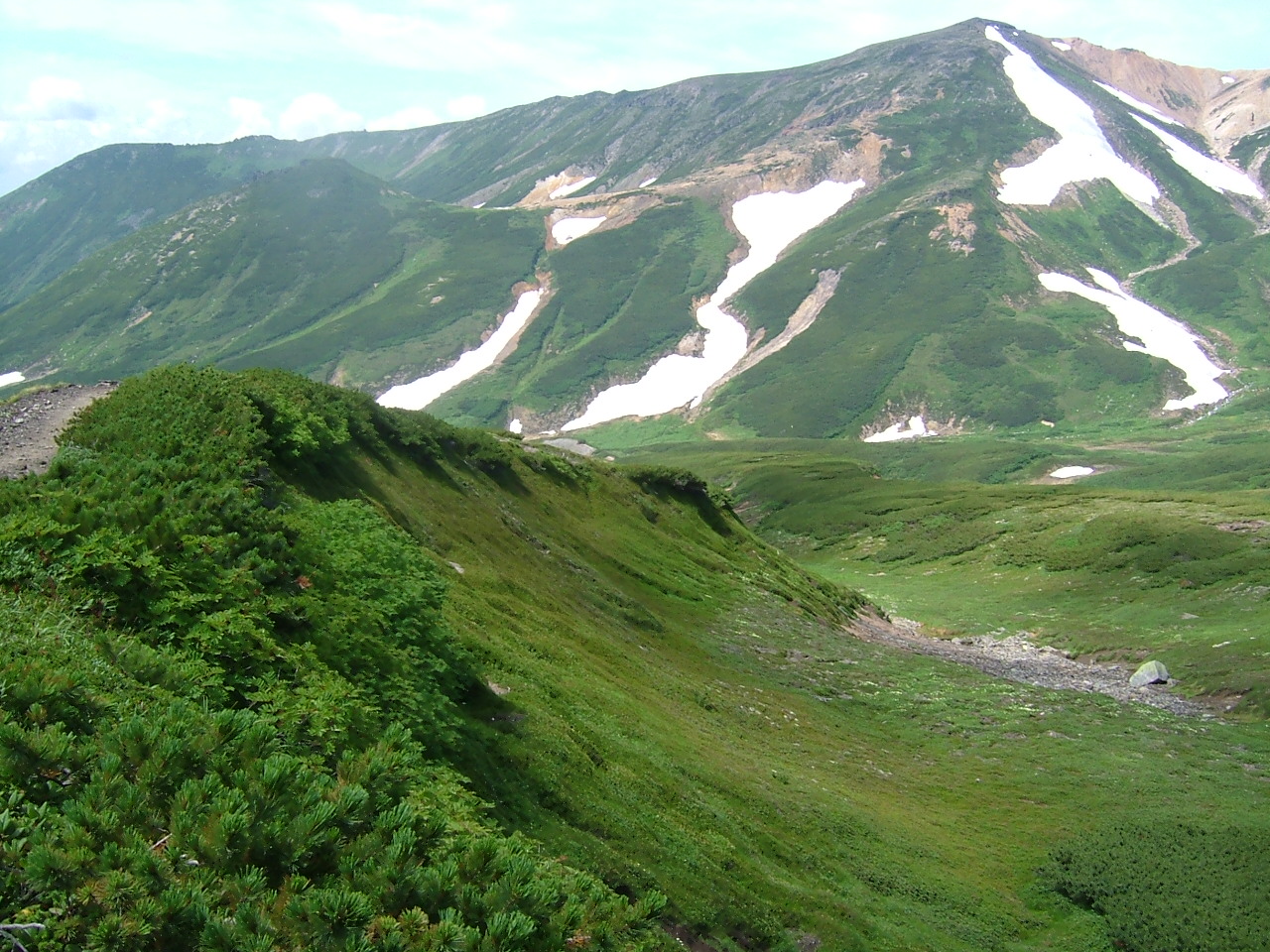
Daisetsuzan National Park (大雪山国立公園 Daisetsuzan-kokuritsukōen, also pronounced Taisetsuzan) is in the mountainous center of the island of Hokkaido. Formed by a large number of volcanoes which get mostly covered in snow during the winter, the Daisetsuzan is truly a land of ice and fire, with some of the most amazing landscapes of Hokkaido and Japan.
Daisetsuzan National Park旅遊指南
城市概覽
At 2267.64 km², Daisetsuzan is the largest national park in Japan. The name means Great Snowy Mountains, an apt description of these peaks — 15 of them over 2000 meters — that offer some of the most rugged hiking in Japan. The Ainu name for Daisetsuzan, kamui-mintara, translates to "playground of the gods". Other than multi-day hikes, the national park offers a plethora of activities for different styles of traveller, including day hikes, leisurely walks, flower- and autumn foliage-viewing and skiing.
History
Landscape It is common to confuse the Daisetsuzan National Park with the "Daisetsuzan Mountains", which are actually the north-most of the three groups of volcanoes that compose the Daisetsuzan National Park, although undoubtedly the most famous and most visited. The southwestern group are the Tokachi Mountains and the southeastern group are the Shikaribetsu mountains. At high elevations, there is varied vegetation which is excellent for autumn leaves viewing by the second half of September, picturesque ponds and sulphur springs. At lower elevations there is lush forest, lakes, waterfalls and the autumn leaves are best viewed in the first half of October.
Flora and fauna At the base of the mountains you are likely to see several birds, deer and foxes, and bears also roam the forests of the national park, especially the Daisetsu Kogen trail. Naturally, as you go up in the mountains the number of animals decreases.
Climate The mean annual temperature observed on the top of Mt. Kurodake (1,984 m) from October 1989 to September 1990 was -2.3°C. The lowest temperature was -21.8°C in January, and the highest one was 18.7°C in July. From October to June is a harsh season, with severe cold and snowfall. The monthly mean temperature was below zero from October 1989 to April 1990, and the study area was completely under snow until early May in 1990. Winter snow usually starts disappearing in May with some snow patches remaining year round.
Tourist informat
如何抵達
By bus There are no train lines within the park. The nearest stations are Asahikawa (west), Furano (south) and Rubeshibe (east). The best way to get to the park is the 09:10 bus from the front of the Asahikawa Station to the Asahidake Ropeway (¥1300) or to Sounkyo Onsen. There is also a bus from the Kami-Furano Station to the trailheads of Tokachi-dake and Furano-dake. If you plan to stay at one of the onsens, enquire before travelling since some of them offer a discount for the bus, or they may even provide a shuttle bus from Asahikawa Station to the onsen.
By car Unless you are going for multi-day hikes, it's generally better to visit the national park by car if you plan to do multiple activities during your stay there. Many attractions of the park are inaccessible by public transport (such as Ginseidai), or buses are only available during peak visitations period (such as Daisetsu Kogen). A car would also give you far more flexibility due to the low frequency of buses.
當地交通
Basically there are only two effective ways to get around the national park: by car or by hiking. There are a few buses that go to certain attractions during peak visitation periods, and some onsen hotels are also to provide bus transfers. If you don't plan to neither drive or to do multi-days hikes, it is perhaps best to base yourself in Sounkyo, which has direct access to the Kurodake, convenience stores, and a number of good walking trails. Note that the roads basically circle the national park, rather than crossing it, which means that driving distances can be quite long for places that look relatively near in a map, for example Asahidake and Kurodake.
必看景點
Daisetsuzan Mountains The Daisetsuzan Mountains are the most impressive and famous volcanic group of the national park, and for that reason, often confused with the national park itself. They can be described by a circle of volcanoes surrounding a vast caldera, the Ohachi caldera. A typical multi-day hike consists of climbing one of the mountains, circling the Ohachi caldera, and descending via another mountain of the park. The mountains are surrounded by hills covered in lush forest which offer more leisurely walks.
Sounkyo Onsen. Famed hot spring resort on the far north park of the park close to Kuro-Dake. See Sounkyo Onsen. 1 Kuro-dake (黒岳). The most accessible of the Daisetsu Mountains (the ropeway is just inside Sounkyo) and the easiest hike as a combination of ropeway and chair lift will leave you at about 1-2 hours from the top. Not surprisingly, it's also a quite popular hike and can be quite crowded during peak seasons. If you are not interested in hiking to the top, there are also quite a few easy walking trails and observation platforms.. 2 Asahi-dake (旭岳). The tallest mountain in Hokkaido (2,290 m) and one of its main attractions. The easiest way to reach Asahidake is by bus from the city of Asahikawa. Catch a Chuo bus from outside Asahikawa JR station to Minamikawa, and catch a coach from there into the park. The coach runs twice a day in the off season (about November to May) and three times a day in the on season (about May to October). Chuo buses to Minamikawa run every hour. The bus will take you to the beginning of a cable car ("ropeway", ¥2000 return). The top of the cable car leads to a plateau with a short scenic walk to a set of fumaroles, and a longer walk (1.5-3 hours each way) to the summit of Asahidake.. 3 Daisetsu Kogen Onsen (大雪高原温泉), 〒078-1701 北海道上川郡上川町字層雲峡. The Daisetsu Kogen Onsen is a nature area containing the onsen hotel of the same name, and two trails: one 5-hour circular trail across several pounds in the area, and the hi
體驗活動
Winter Furano, on the southern side of the park, is a popular ski resort. Asahidake and Sounkyo Onsen also have ski slopes. Asahidake is particularly popular for snowboarding. If you want to try something different, join a guided tour to walk down from the top of the Asahidake cable car using snow shoes. You will have time to enjoy the breathtaking scenery and walk on deep powdered snow. You can enquire at the visitor center in Asahikawa.
Summer and Autumn Summer is the top hiking season, where you can view alpine flowers and where the weather is more suitable for multi-day hikes. Second half of September is the top autumn leaves viewing season for the mountains, while first half of October is top autumn leaves viewing season for the base of the mountains. Day hikes are also extremely popular in this season, but multi-days hikes are more common among experienced hikers as the weather in the mountain top can be unpredictable at this time.
美食
Small eateries and snack bars can be found at the top of the Asahidake and Kurodake ropeways. There is a Seicomart and a 7-Eleven in Sounkyo with the usual assorted lunch boxes (bento). Sounkyo has also some restaurants, mostly curry or ramen shops. Most hotels inside the park provide breakfast and dinner. There is no food for sale in the hiking paths themselves, so bring your food with
城市概覽改寫自 Wikipedia,旅遊指南來自Wikivoyage (CC BY-SA)。照片來自 Wikimedia Commons.