
Daebudo
South Korea · Asia
關於Daebudo
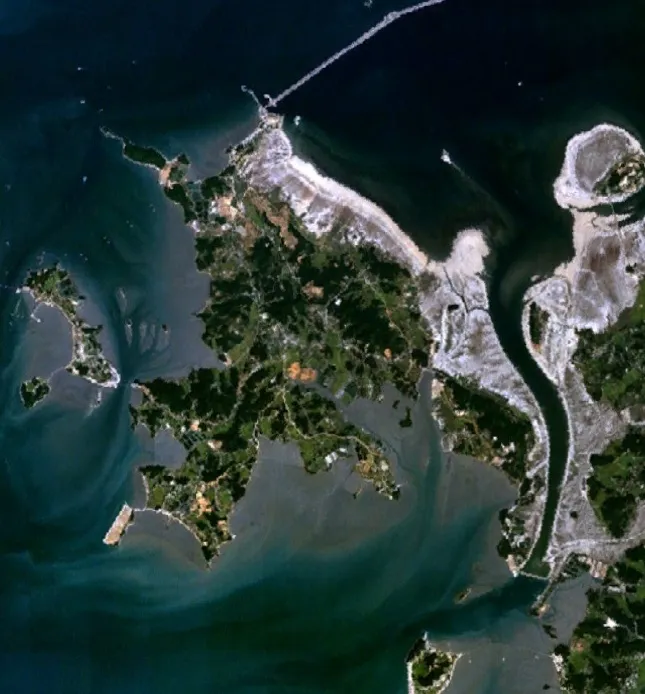
Daebudo (대부도) is an island that is part of Ansan city in the province of Gyeonggi, South Korea. Daebudo is known as 'the Hawaii of Ansan'. The northern tip of the island is connected to the Ansan mainland by the Sihwa seawall, which has a road running along it. However, Daebudo still has the romance and lyricism of an island in various places. That's why people are constantly walking towards this place.
Daebudo旅遊指南
城市概覽
Built for the Sihwa Lake reclamation project, the Sihwa Seawall (north), ballistic Seawall (south), and two seawalls are connected to the land, so the entry itself is convenient. Even if you don't have a car, you can go to Ansan Station and Oido Station by train and transfer to the bus bound for Daebudo Island, and the integrated fare in the Seoul metropolitan area is applied, so you can get there cheaply. The largest of the two seawalls, the Northern Embankment, was a one-lane round-trip road in the late 1990s, and the speed limit was low, making it very inconvenient compared to now. It was formal, but until the 1990s, there were military checkpoints, so every time they passed, they had to be checked by soldiers. In 2002, the expansion work was carried out, and now the road has been greatly expanded, and the speed limit has been considerably eased, but the traffic of the southern seawall is still inconvenient. You can go to Seonjae-do and Yeongheung-do under the jurisdiction of Ongjin-gun through Seonjae Bridge. The Bangamori Dockyard, which is located as soon as it enters Daebudo Island by taking the Sihwa Seawall Road, also operates passenger ships to the island area under Ongjin-gun, which serves as an assistant to the coastal pier. In the 2010s, a rest area, a park, and an observatory were built in the middle of the Northern Embankment road, and it became a tourist attraction.
Three Islands Connected as One Although Daebudo has effectively become part of the mainland thanks to the massive 12.6km Sihwa Embankment, it still retains all the romance and charm of island life. The vast mudflats revealed at low tide offer hands-on experiences, while the sunsets are simply breathtaking. The coastline is lined with restaurants famous for bajirak kalguksu (clam noodle soup) and grilled clams, making it a beloved day-trip destination for residents of the Seoul metropolitan area. From Daebudo, you can cross the Seonjaedaegyo Bridge to reach Seonjaedo, and from there, cr
如何抵達
There is no direct subway route from Seoul or the suburbs of Seoul to Daebudo. Therefore, you are recommended to use both of the subway and bus. If you want to go to Daebudo with transportation, you could get off at 4 line subways and take on the buses that connect downtown of Ansan to Daebudo. In addition, if you are from the Ansan City Hall or region of Gojan new town, you should get on the bus number 123. If you are from the Suwon or Hwaseong, you should get on the bus number 1004-1 and 727–1. Additionally, if you are from the Incheon, you should get on the bus number 790.
By bus
Daebudo Taxi Association : 032-886-8883
當地交通
There is no subway line through Daebudo. There are a few buses, but service is not very frequent. Furthermore, Daebudo is very big and much of the area is separated by the sea. So the easiest method for getting around town is driving. If you'd prefer to use a bicycle, Ansan's public bicycles are called 'Pedalro', but there are only 2 bicycle stops in the whole area. The first stop is located near the Daebudo tourist office (Green Number 1) and the other one is at Daebu Bada Hyanggi Theme Park (Blue Number 4).
必看景點
1 Ansan Fishing Village Folk Museum (안산어촌민속박물관), 7, Daebuhwanggeum-ro, Danwon-gu, ☏ +82 32-886-0126. 09:00–18:00. Holiday on M. You can see the history of west coast foreshore and fishing village at Daebudo. You can directly experience the fishing industry culture and traditional folk in the fishing village of Ansan. Adult ₩2,000, soldier or teenager ₩1,500, child (7-13 years old) ₩1,000. 2 Ansan Sihwaho Tidal Power Plant, Choji-dong, Danwon-gu, ☏ +82 32-885-7530, fax: +82 32-890-6599. A tidal power plant that is located in Ansan, and the largest tidal power plant in the world. 3 Chungmunkyu Museum, 153-9, Daebuhwanggeum-ro, Danwon-gu, ☏ +82 32-881-2753, fax: +82 32-881-2754. 11:00–19:00. The representative museum in Daebudo. You can enjoy exhibition and concert together. Adult ₩3,000, child or teenager ₩2,000. 4 Daebudo Bada Hyanggi Theme Park (대부도 바다향기테마파크), Daebubuk-dong, Danwon-gu, ☏ +82 31-481-3409. You can take a walk in Daebudo Bada Hynaggi Theme Park. The park is full of beauty of nature. The walk is about 4.3 km and water way and pond are nicely laid out. The five windmills, the landmark of Daebudo, are displayed in the park. 5 Daebudo Bangameori Food Culture Street, Daebubuk-dong, Danwon-gu. This is the food culture street that is located at the north Daebudo. The most famous food is 'Bajilack noodle soup'. It is a noodle soup with clams. The Daebudo Bangameori Food Culture Street also known as 'Bajilack Noodle Soup Street'. You can enjoy sliced raw fish, a shellfish baked, Soy Sauce Marinated Crab, Soybean paste stew with clams and more. 6 Grande de Haute Perche, Coteaux Winery, 107, Ppeokkuksan-gil, Danwon-gu, ☏ +82 32-886-9873, fax: +82 32-886-6243. A winery that makes the wine with Daebudo grapes.
7 Gubongdo Island, San 25, Daebubuk-dong, Danwon-gu. There are nine mountaintops ('Gubongdo' in Korean) at the end of the seaside in the northern part of Daebu. There are also two towering rocks; the small one is called 'Grandmother' and the bigger one
體驗活動
Activities
Mud Flat The mud flat in western sea of South Korea is one of the 5 largest mud flats in the world. The gap between in/out of tide is huge, which makes Daebu's mud flat much more fertile than others. Especially after the tide's out, hidden black mud flat comes out, which is the most beautiful part of Daebudo. You can find various marine creatures in the wetlands while the tide is out. If you'd like to experience this mud flat as it is, do not hesitate to choose mud flat activities. You can easily find people who are trying to catch various marine creatures such as shellfish, razor clams, small octopuses and small crabs on the mud flat. This activity is especially famous regionally for families because parents want to give a precious memory to their children. The mud flat activity is generally open from spring to fall.
1 Mud field. (updated Sep 2023)
Salt Field Daebudo's salt field produces bay salt, using the traditional, old-fashioned method of salt-making. This is a very suitable place to produce salt because there is plenty of wind and sunshine. Bay salt is known for good health, because it has lots of minerals. According to a study by Gyeonggi Institute of Health & Environment, salt from here, analysed by ingredients, is more healthful compared to 'Guérande' bay salt from France, which is well known for high quality of salt in the world. That's because salt from Daebudo is made by 'Kkaempari', which means pieces of pottery. That's why salt from here are known as 'Kkaempari salt'. These pieces of pottery simplify the collection of minerals. Not only you can buy this bay salt, but you can make salt, yourself. Go to the 'Dongju Salt Field' website for more information. You can make your own salt with plenty of explanation.
2 Dongju Salt Field, 240, Gubong-gil, Danwon-gu (http://www.djsalt.co.kr/fr
城市概覽改寫自 Wikipedia,旅遊指南來自Wikivoyage (CC BY-SA)。照片來自 Wikimedia Commons.