
Cuyabeno Wildlife Reserve
Ecuador · Americas
關於Cuyabeno Wildlife Reserve
Cuyabeno Wildlife Reserve (Reserva de Producción Faunística Cuyabeno) is well-known to be one of the areas with the most biodiversity on earth. The reserve is located in the Sucumbíos province, in the Ecuadorian part of the Amazon rainforest.
Cuyabeno Wildlife Reserve旅遊指南
城市概覽
History Indigenous groups (Siona, Secoya, Cofan) live in the reserve. These communities mainly lived through farming, hunting and fishing until the 1980s, but with the increase of ecotourism their lives changed in the 1990s. Different agreements have been signed in order to protect the ecosystem of the reserve and its indigenous communities.
Landscape The Cuyabeno Wildlife Reserve is a great example of the ecosystem of the Amazon Rainforest. Three rivers — the Cuyabeno, Aguarico and San Miguel — flow through the reserve, and there are 13 lakes. The Laguna Grande (Big Lake) is the largest and the only one open to tourism. There are unique flooded forests and a rich variety of plants and animals that make the reserve a paradise for nature lovers.
Flora and fauna Many plant and animal species have been identified in the reserve, making it one of the areas with the highest biodiversity on earth with the Yasuna National Park (further south). 550 bird species, 12000 plant species, 350 fish species and many insects, mammals and reptiles have been identified. The Cuyabeno Wildlife Reserve has the record of the most tree species per hectare (307).
Climate The climate corresponds to a wet tropical rainforest, with high humidity ranges (85% to 95%). There are two seasons: dry and rainy. The rainy season is from April to July, followed by a season of mixed rain and drought from August to November and a dry season from December to March.
Visitor information Cuyabeno Wildlife Reserve website
如何抵達
The reserve is guarded by national park rangers. It is compulsory to take pluvial transportation through a tour with an accredited guide to get in. Transportation with motorized canoe is provided by the local communities. From Quito, it is necessary to go to Lago Agrio, either by public bus (7 hours), shuttle van or by plane (30 minutes). From Lago Agrio to El Puente en Cuyabeno (1½-2 hours), private transportation is organized by the lodges in Cuyabeno From Banos it is necessary to take a bus to Coca and then to Lago Agrio, approximately it takes 8h.
當地交通
By motor canoe or on foot, accompanied by a guide.
必看景點
Cuyabeno Lagoon: The most visited area of the reserve is entered by navigating along the Cuyabeno River. The Laguna Grande is the largest of the 14 lagoons in this area. From here, through small canals, you can visit other lagoons such as Caimancocha, Mateococha, or Canangueno. There are several trails that go into the forest. The most visited are Palma Roja, Saladero de dantas, and Quebrada la Hormiga. Lagartococha: The Lagartococha River marks the border with Peru and it also is the eastern limit of the reserve. Navigating through this river and its small canals, you will see flooded jungle scenery, a huge variety of wild flora and fauna, especially birds and monkeys. You can navigate several lagoons, especially Imuya, Redondococha, and Delfincocha. Zancudococha: The largest lagoon of the Ecuadorian Amazon is found in the lowest part of the reserve, next to the Aguarico River. Its name comes from the Sianosecoya Soncari word, and means “sonco´s lagoon” referring to a small fish that is abundant here. Close to the lagoon is the Kichwa de Zancudo community that maintain a community tourism program.
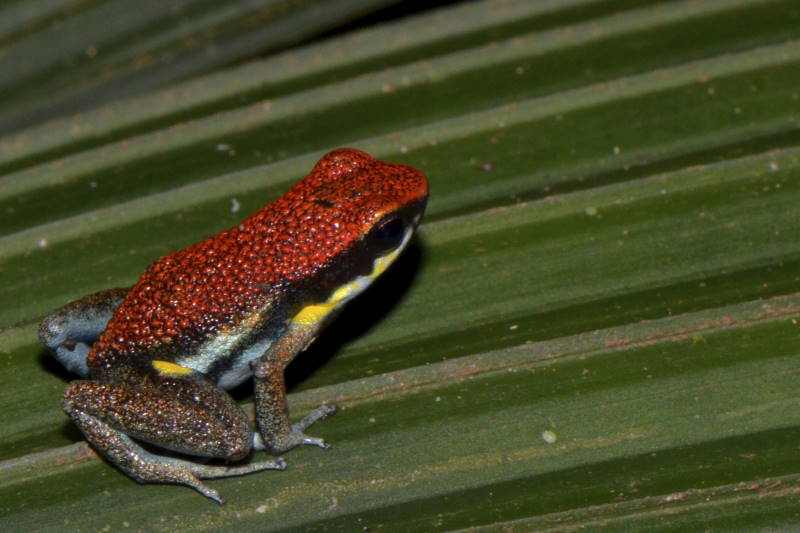
Fauna Monkeys: capuchins (Sapajus apella), red-handed howler (Alouatta discolor), orabassu titi monkey(Callicebus moloch), spider monkeys, sakis Mammals: Tapir, white lipped and collared peccary (Tayassu pecari and Tayassu tajacu) and capybara (Hydrochoerus hydrochaeris), giant river otter (Pteronura brasiliensis) and neotropical otter (Lontra longicaudis), Three-toed and two-toed sloths (Bradypus variegatus and Cheloepus didactylus) , Jaguars, Butterflies: 1,000 species of butterflies and moths Turtles, Terrapins, tortoises Reptils: spiny-tailed lizard (Hoplocercus spinosus), spotted treefrog (Hyla albopunctata), Amazon horned frog (Ceratophrys cornuta), rusty treefrog (Hypsiboas boans), Tukeit Hill frog (Allophryne ruthveni), white-lined leaf frog (Phyllomedusa vaillanti), cane toad (Rhinella marina) and glass frogs (Cachranella sp.), striped forest whiptail (Kentro
體驗活動
Rainforest treks (night and day) Bird Watching Caiman Watching Sportfishing (catching and releasing the fish) Shamanism Discovery of the indigenous communities Camping Cuyabeno and Laguna Grande area: Surrounding the Laguna Grande lagoon there are several trails: Palma Roja. A 1.6-km-long trail that runs through the non-flooded tropical forest and part of the flooded forest, characteristic of the reserve. Medium difficulty. El Saladero. A 1.7-km-long trail that runs through the lagoons and non-flooded forest. It ends in a salting or quagmire where you can observe an infinity of macaws, parrots, and several mammals. Medium difficulty. Copal. A 2.5-km-long trail that runs through the lake system, the rivers, and the flooded and non-flooded tropical rain forests. Medium difficulty. Aguarico and Lagartococha area: Community tourism activities are offered by the Siona indigenous community of Puerto Bolivar, on the Cuyabeno riverside, the Cofan community of Sabalo, on the Aguarico riverside, and the Kichwa community of Zancudo, on the Zancudococha lakeshore. You can explore the tropical rainforest, go canoeing on the rivers, and buy artisan crafts.
購物
Indigenous handcrafts can be purchased from the local community members.
美食
The food is provided by the local operators (the ecolodges in the reserve). It is possible to buy food at the entrance of the reserve (El Puente).
飲品與夜生活
It is necessary to bring drinking water into the reserve, this will be organised by the tour operator. The tap water is not drinkable.
住宿
Cuyabeno Caiman Eco-Lodge, ☏ +593 999093488, +593 985341575, [email protected]. Cuyabeno Caiman Eco-Lodge is on the Cuyabeno River, it gives people the possibility to explore the cuyabeno wildlife reserve with bilingual (English and Spanish) guides. (updated May 2024) Geolodge Sanctuary Retreat, ☏ +593 2 443 633, +593 9 96892931, [email protected]. Geolodge Sanctuary Retreat is an ecolodge in the heart of Cuyabeno Wildlife Reserve on the edge of the Cuyabeno River, under the thousands trees that grow in abundance on the river banks. The lodge is suited to private parties, families, groups and solo travellers who seek the middle of the Amazon Jungle. Green Forest Ecolodge (Green Forest Ecolodge), Cuyabeno River, ☏ +593 960139085, +593 996892931, [email protected]. Check-in: 13:30, check-out: 11:30. Green Forest Ecolodge: Experience the wonders & the wildlife of the Real Amazon Jungle in Ecuador. Tours for 3, 4 and 5 days all inclusive.. The lodge is suited to private parties, families, groups and solo travelers who seek the middle of the Amazon Jungle. 80. (updated Mar 2018) Cuyabeno Lodge, ☏ +593 2 252-1212, +593 2 290-6036, [email protected]. Built in 1989, the Cuyabeno Lodge, owned by Neotropic Turis was the first ecolodge to be built in the reserve, offering tours. It was built by a group of conser
城市概覽改寫自 Wikipedia,旅遊指南來自Wikivoyage (CC BY-SA)。照片來自 Wikimedia Commons.